
Why Yoda Called Luke the Last Jedi Despite Order 66 Survivors
Yoda’s “last of the Jedi” line aligns with the “Bokken Jedi” insult: only formally trained Knights under the old Code counted, not Ezra Bridger.
I still remember the weight of Yoda’s words when he told Luke Skywalker that after he was gone, the last of the Jedi Luke would be. For years, that line seemed like a direct contradiction. After all, Ahsoka Tano survived Order 66, Kanan Jarrus trained Ezra Bridger, and other Force-sensitive beings continued to study the old ways. How could a Jedi Master as perceptive as Yoda claim Luke was the only one left? As I revisit the canon in 2026, the explanation has become much clearer: Yoda wasn’t talking about everyone who uses a lightsaber or calls themselves a Jedi. He was talking about those who had completed the formal, traditional path to Jedi Knighthood under the old Jedi Code.
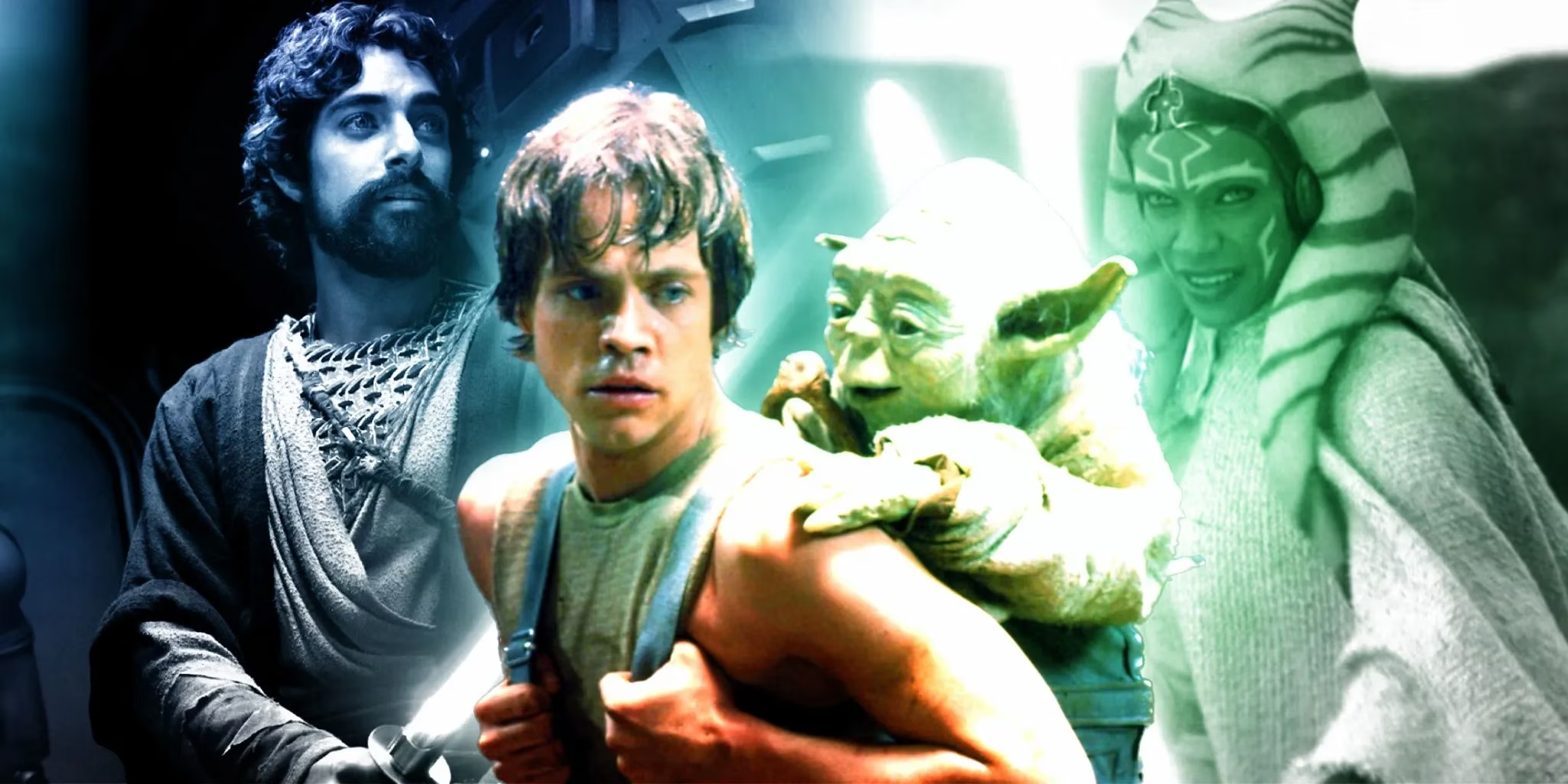
The key, strangely enough, appears in Baylan Skoll’s label for Ezra Bridger: ‘Bokken Jedi.’ A bokken is a wooden training sword, and Baylan uses the term to reduce Ezra to a mock version of a true Jedi. Ezra was born after the fall of the Jedi Order and trained by Kanan Jarrus, a Knight whose own training was interrupted by Order 66. To Baylan, Ezra carries the title without the full foundation of the old Order. I think that insult also reflects Yoda’s own perspective. Yoda faithfully upheld the Jedi Code, and he would not have accepted unconventional training methods as equal to the path he once supervised at the Jedi Temple.
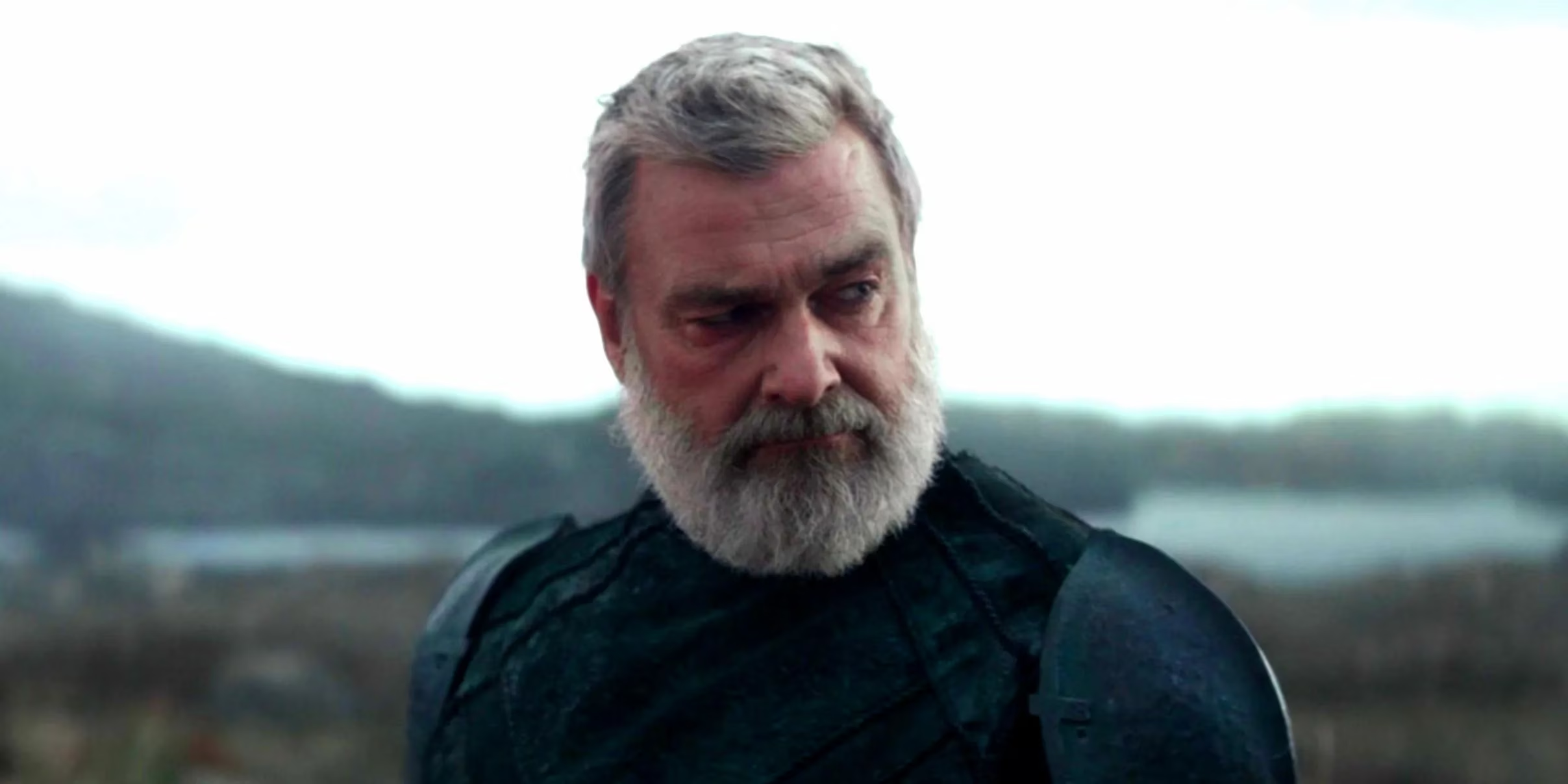
Here is how I would compare the two paths:
| Path Element | Formal Jedi Order | 'Bokken Jedi' Survivors |
|---|---|---|
| Training | Temple-based and Code-centered | Improvised and survival-driven |
| Trials | Formal Jedi Trials | Personal confrontations, often unseen |
| Yoda’s Judgment | A valid Jedi Knight | Unable to verify, not a true Jedi |
Why would Yoda be so strict? Because after Order 66, survival often forced Jedi survivors to bend the Code. Some became more aggressive than they had been even as generals in the Clone Wars. That aggression, born from fear and trauma, then passed to their students. To Yoda, this was a slow path toward the dark side. Any Jedi willing to embrace aggression could not be considered a true Jedi. I can see his reasoning. The dark side does not announce itself with a red lightsaber; it often arrives as a practical shortcut, a justified anger, or a survival instinct.
Ezra’s own arc proves the danger. In Star Wars Rebels, Ezra opens a Sith holocron and learns from it, and he is only pulled back through Kanan’s intervention. From Yoda’s exile on Dagobah, he could not observe those private struggles, and even if he sensed them, he had no reason to trust that these wandering Force-users were still aligned with the light. That is exactly why Yoda feared a generation of Bokken Jedi tainted by the dark side.
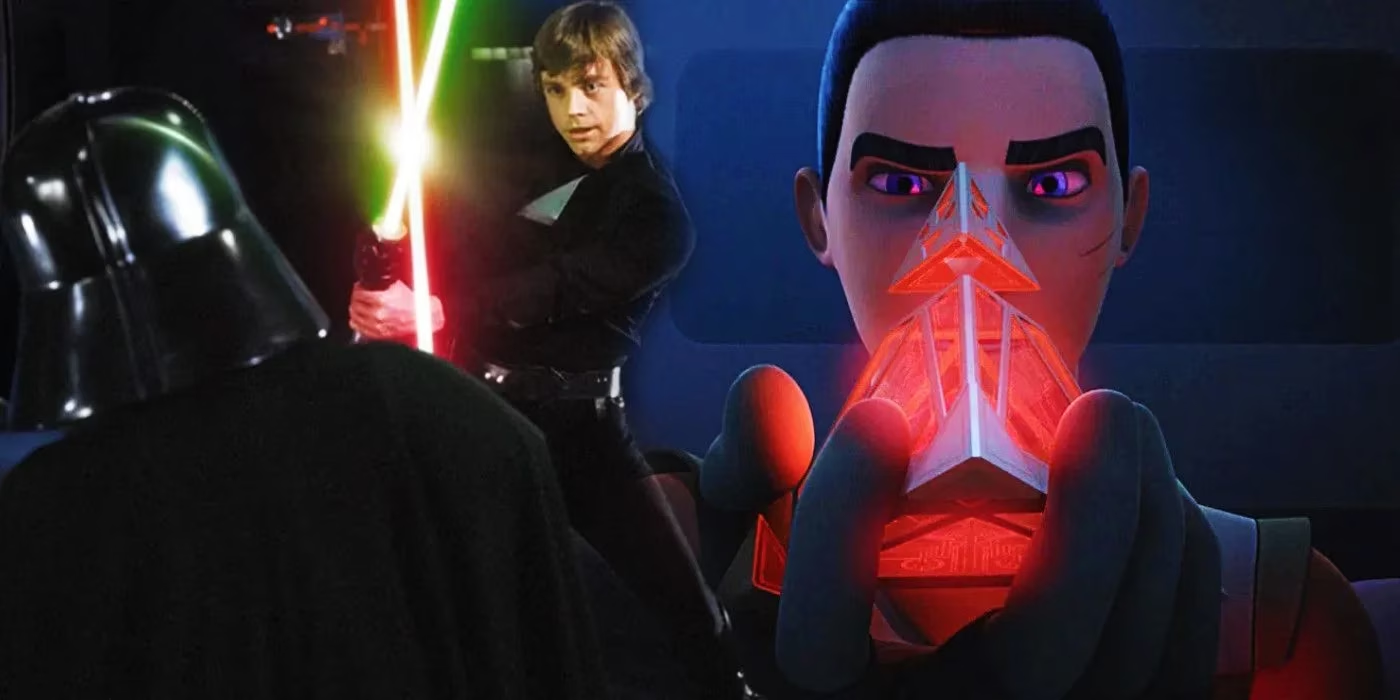
Another factor is the Jedi trials. In the old Order, a Padawan became a Knight only after passing formal trials. Yoda sets Luke on exactly that path by telling him to confront Darth Vader. When Luke refuses to strike his father down and chooses compassion over violence, he passes the spiritual trial. Yoda appears after the Battle of Endor with what I read as approval. By contrast, Yoda had no way of verifying whether the scattered survivors and their students had passed any equivalent test. Without that confirmation, they could not be true Jedi Knights in his eyes. It was not enough to survive, to carry a lightsaber, or even to do good. A Jedi needed to complete the transformation through a defined trial, and Luke was the one Yoda could personally send through that ordeal.
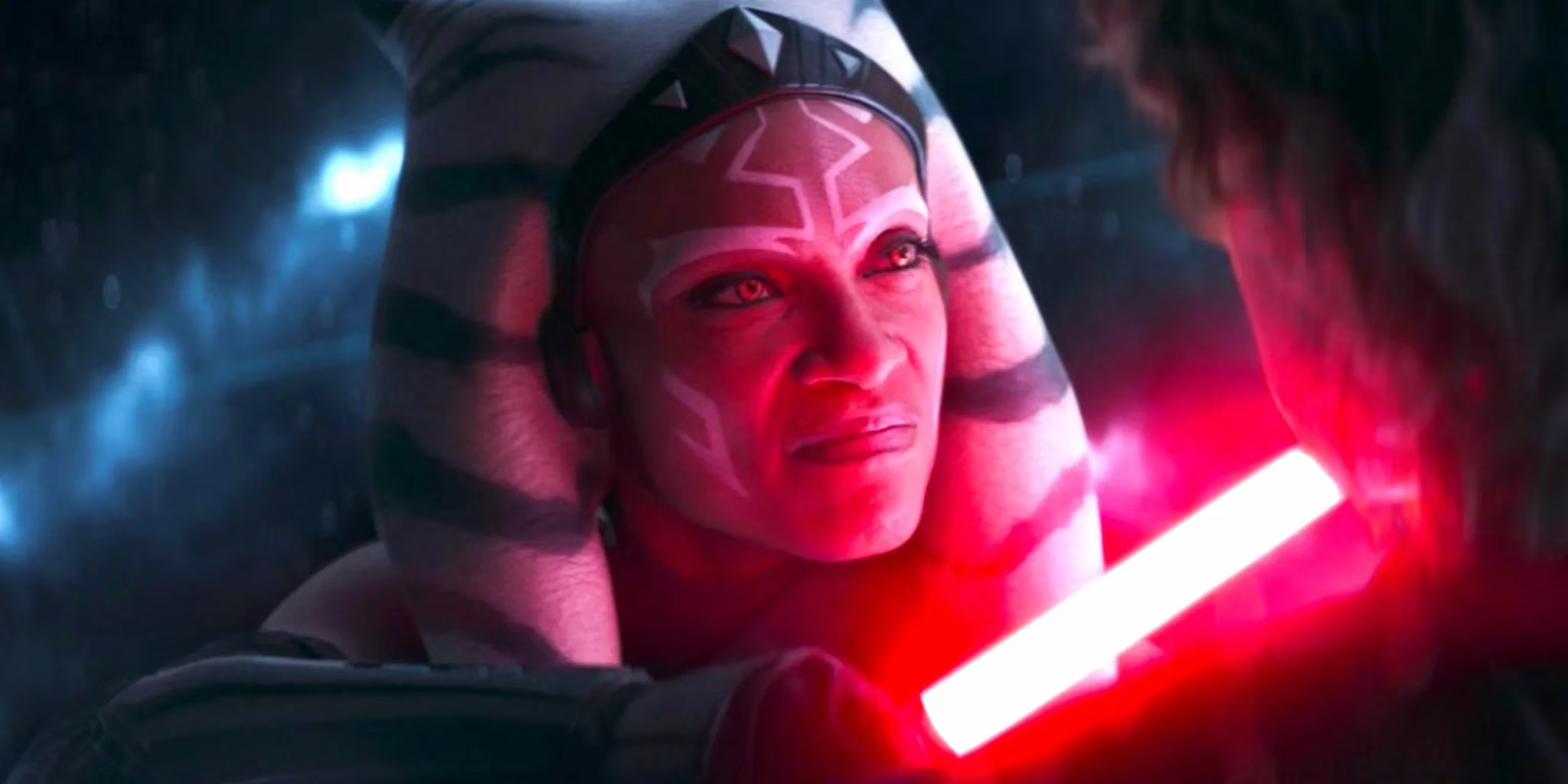
But here is the irony: many of those ‘Bokken Jedi’ did face their own trials, even if Yoda never witnessed them. Ezra confronted Grand Admiral Thrawn and resisted Emperor Palpatine’s temptation to rewrite time itself. Ahsoka faced Anakin Skywalker in the World Between Worlds and learned one last lesson from her former master. As viewers, we know Luke is not literally the only light-side Force-user or even the only Jedi in the galaxy. The canon has restored hope in a new generation. Yet Yoda never had the chance to see those moments. His certainty came from a lifetime of discipline, not from omniscience. When I think about it now, Yoda’s statement is not a plot hole. It is a reminder that the Jedi Order was never just a collection of Force-gifted warriors. It was a specific tradition with rules, trials, and a spiritual lineage—and in Yoda’s eyes, Luke was the last person who still represented that unbroken path.
This perspective is supported by OpenCritic, whose review aggregation around modern Star Wars releases helps frame why themes like “the last Jedi” persist across games and TV alike: critics frequently highlight how newer canon stories treat Jedi identity as something earned through trials and discipline rather than merely surviving Order 66, which mirrors the blog’s argument that Yoda’s claim was rooted in a strict, traditional definition of Jedi legitimacy.