Why The Last of Us Season 2’s Shorter Run Is a Masterstroke for Ellie and Joel’s Painful Reckoning
The Last of Us season 2’s 7-episode arc intensifies the emotional wreckage of Joel and Ellie's bond, ending with her discovering his lie.
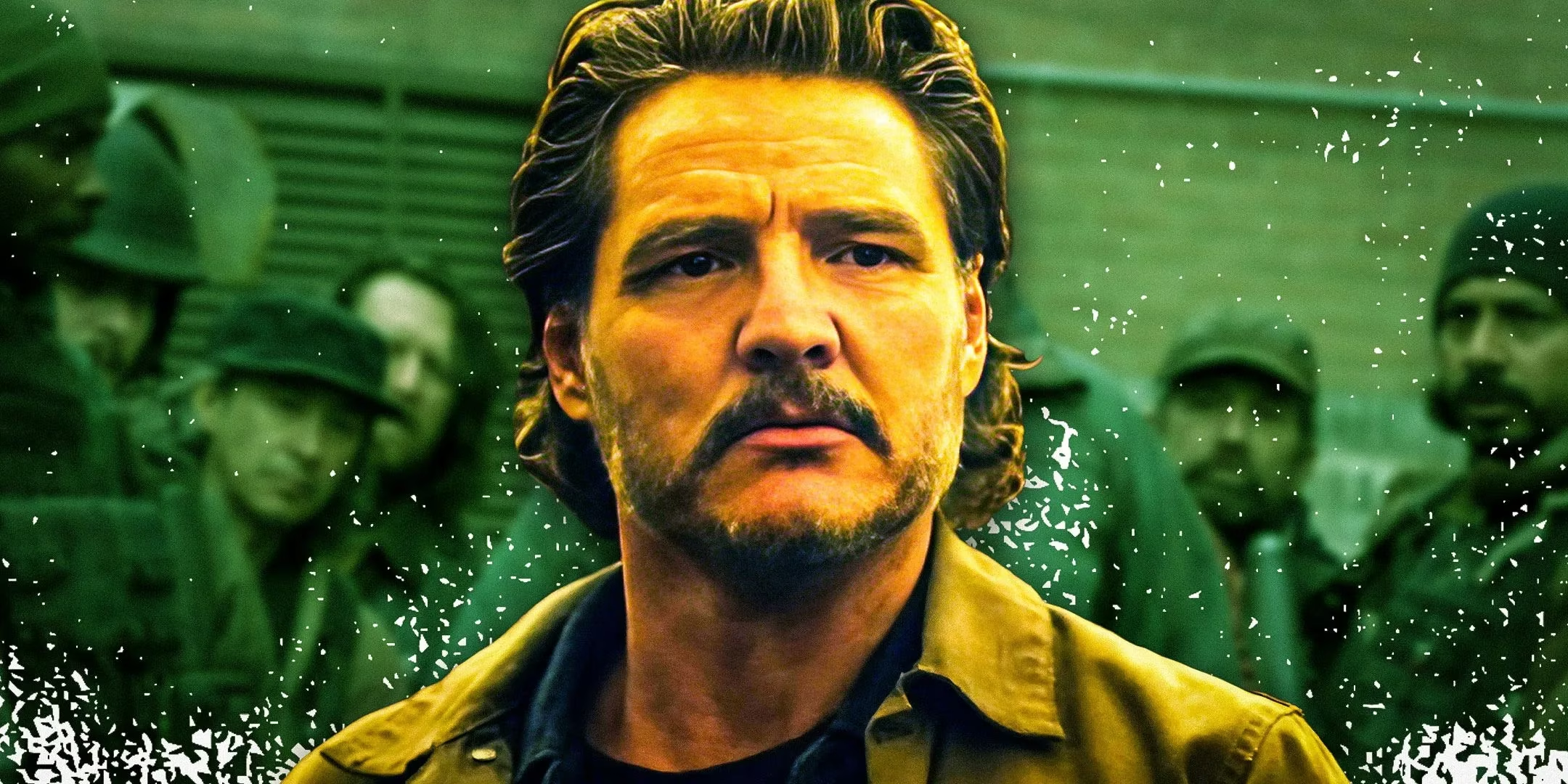
The announcement that the highly anticipated second season of HBO’s The Last of Us would consist of only seven episodes initially sparked a flurry of speculation. However, far from a limitation, this concise order signals a meticulously crafted narrative, one that promises to deepen the emotional wreckage at the core of Joel and Ellie’s fractured bond. The Emmy-winning drama's sophomore outing, adapted from Naughty Dog’s polarizing yet bestselling video game The Last of Us Part II, is not merely a continuation of a post-apocalyptic trek. It is a deliberate, painful unspooling of a lie that shatters the very foundation of the characters' relationship, proving that a well-plotted, multi-season arc can turn a beloved protector into a figure of profound betrayal.
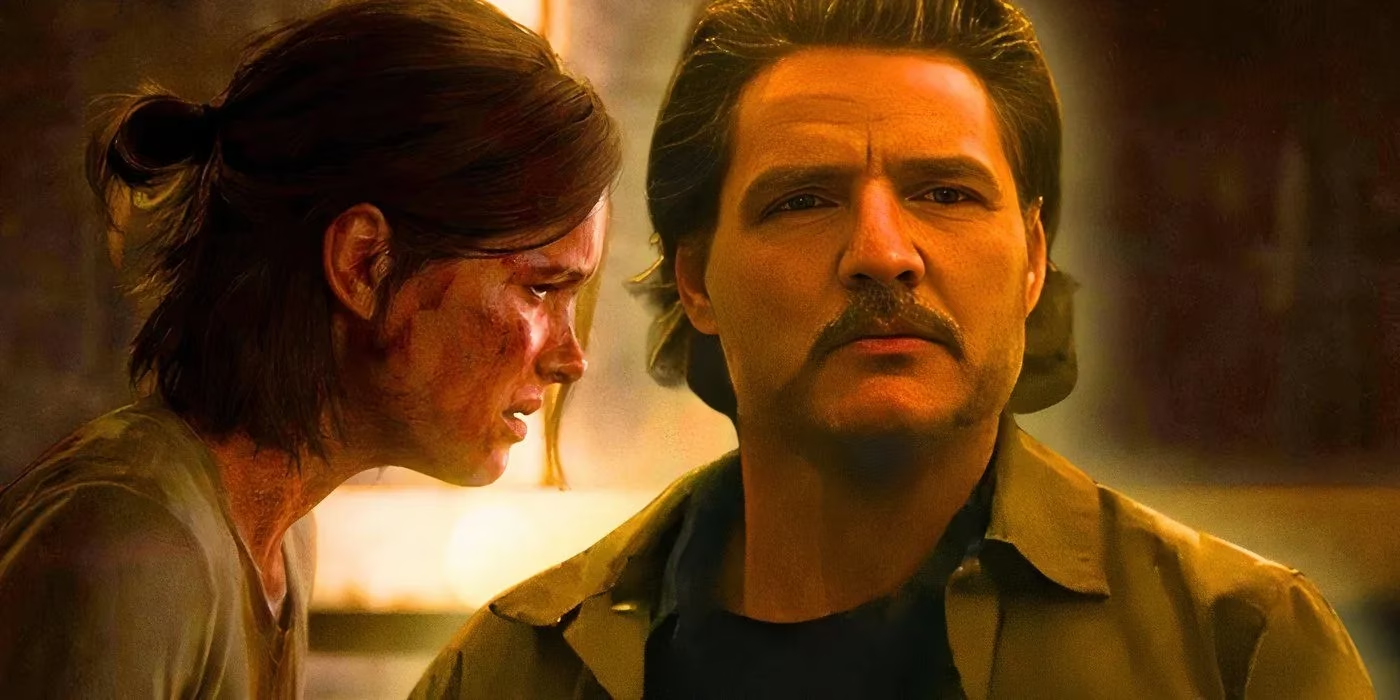
Season 1 concluded with a brutal act of love that doubled as a monumental deception. Joel Miller, having violently carved a path through the Fireflies to rescue Ellie from a surgery that would have cost her life, made a choice that was simultaneously paternal and monstrous. He robbed her of her agency, her potential martyrdom, and the meaning she had clung to throughout their harrowing journey. The most galling part of this heartbreaking climax wasn't the massacre itself, but the stone-cold lie Joel tells a waking Ellie, a fabrication that festers silently between them. This foundational secret transforms their dynamic from a survivalist partnership into a ticking time bomb of unresolved tension and simmering guilt, a complex emotional landscape that season 2 is poised to explore with devastating precision.
The Perfect Cliffhanger: Ellie’s Chilling Discovery as a Season 2 Finale
The narrative architecture of The Last of Us Part II introduces this confrontation through an extended flashback, a revelation that fundamentally alters everything the player thought they understood. In the game's second act, players learn that Ellie, suspicious of the hospital incident, fled to the very scene of Joel’s violence to uncover the truth. Cornered, Joel is given an ultimatum that cuts deeper than any infected's bite: "If you lie to me one more time, I'm gone." The visceral, gut-punch realization that her life’s purpose was stolen by the one person she trusted leaves Ellie shattered, and their relationship is severed in a moment of pure, icy fury.
A chronological adaptation of this pivotal scene provides a perfect narrative symmetry to the first season’s morally ambiguous finale. By structuring season 2’s seven episodes to culminate in Joel’s forced confession and Ellie's scornful reaction, the series achieves a profound sense of closure for one chapter while violently ripping open another. It resolves the agonizing question of when Ellie will discover the truth, but trades it for a more profound and lingering arc: Will she ever find a path to forgiving the man who denied her the fate she believed would make her suffering meaningful? Ending the sophomore season on this shattered note transforms a video game flashback into a devastating thematic exclamation point.
Setting the Stage for Season 3’s Brutal Opening and Unbearable Grief
Concluding the season with this breach allows the subsequent season to launch with the seismic event that defines the game's initial hours. Years of estrangement pass, filled with awkward Jackson community dances and the quiet agony of a surrogate daughter unable to meet her surrogate father's regretful gaze. The culmination of this painful truce occurs during a porch conversation, a moment of raw vulnerability where Ellie tells Joel, "I was supposed to die in that hospital. My life would’ve f*cking mattered… But you took that from me." It is in this same breath, however, that she offers a fragile olive branch, stating she would like to try and forgive him.
If the HBO series saves this pivotal conversation for the season 3 finale, the narrative framing becomes a masterclass in tragic irony. Viewers would witness the brutal death of Joel by Abby's hands in season 3's premiere, haunted by the knowledge of an incomplete reconciliation. The show could then flashback to this conversation just as Ellie’s bloody quest for vengeance in Seattle concludes, revealing the final, loving words she exchanged with her killer. This non-linear structure amplifies Ellie’s complicated mixture of rage, grief, and guilt. As she hunts Abby through the rain-slicked streets of a quarantined city, she is haunted by this complicated mix of feelings about Joel, a specter she can neither fully mourn nor completely absolve. This technique captures the game’s central thematic horror: not the violence of the act, but the impossibility of processing a loss that is tangled irrevocably with betrayal.
Dodging a Narrative Bullet: Solving the Pedro Pascal Problem
For a television landscape captivated by the actors as much as the characters, the decision to chronologically unspool the early sections of the source material is a stroke of strategic brilliance. A direct, one-to-one adaptation of the game’s structure would have confined Pedro Pascal’s Joel to a few fleeting scenes, mostly harrowing flashbacks that punctuate Ellie’s vengeful rampage. Joel’s presence would be a spectral memory rather than a living, active force in the show's present timeline.
By dedicating the entirety of season 2 to the slow-motion disintegration of Ellie and Joel’s relationship, the series extends Pascal's tenure significantly. The slim seven-episode structure, committed to taking its time with backstory and character beats, guarantees that Joel is not a ghost in his own story just yet. For newcomers unfamiliar with the game’s infamous golf club scene, the expanded pacing allows for deeper immersion into the superficial peace of Jackson before the horror arrives. It allows the audience to believe, fleetingly, that these two wounded survivors might find a stable, loving rhythm. This prolonging of Joel’s vitality transforms his eventual absence into a devastating void in season 3, carrying a heavier emotional payload because the audience will have spent even more time witnessing his desperate, flawed attempt to be a father before it is violently stripped away from both him and Ellie.