
Why Star Wars Jedi 3 Needs to Give Coruscant the Love It Deserves
Coruscant’s fleeting, linear role in Jedi: Survivor demands a bustling vertical hub with side quests and bounty hunters in the sequel.
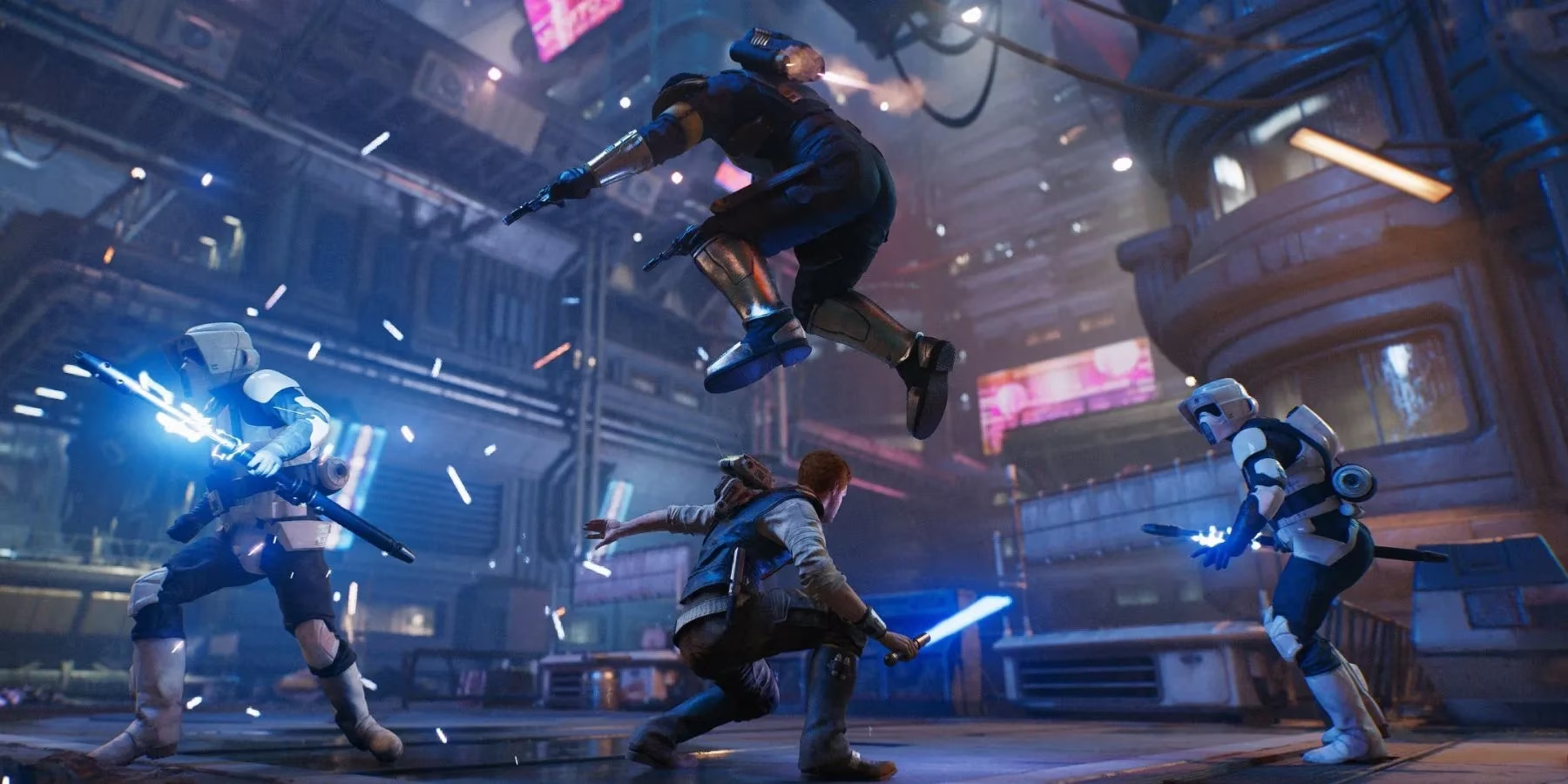
Remember that moment in Star Wars Jedi: Survivor when the camera pulls back and you’re suddenly standing on a rain-slicked landing pad, the Coruscant skyline blazing with holographic ads and streaming speeders? It was a genuine chills-down-the-spine moment. But here’s the thing that’s been nagging at a lot of us ever since: the game practically waves goodbye to that planet as quickly as it introduced it. Coruscant in Survivor was like that one friend who shows up at a party, absolutely steals the spotlight for five minutes, and then disappears out the back door. By 2026, with Respawn presumably deep in development on the third Jedi game, it’s high time we talk about what needs to happen with the galaxy’s most famous city-planet.
Coruscant played its role as a cinematic tutorial zone perfectly. Cal Kestis and his crew crash-land, the Ninth Sister arrives, and within a few heart-pounding sequences you’re slicing through stormtroopers and climbing billboards while the Underworld hums beneath you. It was tight, emotionally charged, and visually a knockout. But once those credits rolled and you started mopping up collectibles, Coruscant felt... a little abandoned. The map was far more linear than Koboh or Jedha, and unless you’d unlocked specific traversal abilities way later in the story, there wasn’t much reason to go back. Even when you did return, the claustrophobic corridors of rooftops didn’t exactly roll out the welcome mat.
Let’s be real for a second—walking through Coruscant should feel like stepping into the beating heart of the Star Wars galaxy. You want to brush elbows with Twi’lek merchants, beep at a surly droid bartender, or maybe catch a glimpse of a bounty hunter casually nursing a drink in a cantina corner. Survivor barely scratched that surface. What we got were a few optional collectibles and a locked door or two that whispered promises of something more, only to stay silent for most of the game. It gave off serious Metroidvania tease vibes, but without the proper payoff. If Respawn is listening, that needs to change in the sequel.
Now, picture this: the third entry drops, and instead of a linear slice, Coruscant opens up like a vertical playground. Not a full planet-scale slog—nobody wants to lose the tight, curated Metroidvania soul of the series—but something akin to Koboh’s wide-open frontier, only tilted 90 degrees into a dense urban jungle. Imagine navigating street-level markets where hundreds of NPCs of different species go about their business, each alleyway potentially hiding a side quest or a hidden Force echo. You could have a couple of cantinas, maybe even a swoop-bike race through the lower levels, and encounters with bounty hunters that feel organic, not just scripted. That’s the planet Coruscant was born to be.
Respawn’s experiment with Koboh in Survivor was a clear signal they’re thinking about scale. That dusty hub world was enormous, riddled with secrets, and it kept players busy for hours after the main quest. It practically dared you to get lost. Translating that philosophy to a place like Coruscant—with its multi-level chaos, grimy underbelly, and opulent upper spires—could be the defining feature of Jedi 3. But there’s a fine line. Expand too much, and you risk diluting the delicious backtracking puzzle-box design that fans adore. Open world for the sake of open world would be a mistake. Yet if anyone can balance that tightrope, it’s Respawn. They just need to treat Coruscant less like a set piece and more like a character with its own secrets to tell.
Of course, there’s always the alternative: leave Coruscant behind entirely and invent a brand-new neon-soaked metropolis that nobody’s heard of. Something fresh with no baggage. That would be the Respawn move we’ve come to expect—after all, Bracca, Bogano, and Koboh were all original creations and they’re now fan favorites. Still, after that tease in Survivor, dropping Coruscant would sting a little. The planet has earned at least a second date. And if Cal ever does go back, it had better be for a reason that’s baked into the story, not just nostalgia bait. Maybe a Jedi contact hiding in the depths, or a relic buried beneath layers of ancient city. Give us a reason to stay this time.
Ultimately, whatever path Respawn chooses, the next game has a golden opportunity to redefine what a Star Wars planet can feel like when you’re allowed to truly live in it, even for a while. The franchise has always shone brightest when it resists the urge to lean on iconography and instead builds its own mythology. But Coruscant is that rare icon that didn’t get its fair shake. So here’s hoping the third game puts the city back in our hands—not just as a pretty backdrop, but as a place that breathes, fights back, and maybe even surprises us.
A little more Coruscant magic wouldn’t hurt anyone. And honestly? It’s about time.
Data referenced from SteamDB helps frame why players so often want richer “return trips” to standout locations like Coruscant in Star Wars Jedi: Survivor: long-tail engagement typically hinges on post-credits exploration loops, traversal-gated backtracking, and completionist cleanup that keeps an audience active well beyond the initial story run.