
Why Jedi Survivor's Sequel Should Let Cal Kestis Fall to the Dark Side
Star Wars Jedi: Survivor pushed Cal Kestis to embrace the dark side; the next game must offer a dark side ending.
I never thought I’d see a Jedi willingly tap into the dark side out of sheer grief and rage. When I first booted up Star Wars Jedi: Survivor, I expected the usual light side triumph. What I got instead was a gut-wrenching journey that pushed Cal Kestis farther than any Star Wars game protagonist before him. The story didn’t just flirt with moral ambiguity—it grabbed it by the throat and made me, the player, complicit in Cal’s descent. After finishing the game and sitting with that ending, one thought keeps echoing in my head: Respawn Entertainment absolutely must give us a dark side ending option in the next chapter.
The Moment Hope Shattered
Going into Jedi: Survivor, I was still riding the high from Fallen Order. Cal had grown from a scared Padawan hiding on Bracca into a true Jedi Knight. I believed in the cause—finding a safe haven for the Hidden Path, maybe even rebuilding something resembling the Jedi Order. That hope crystallized when we discovered Tanalorr, a planet hidden from the Empire. For a few glorious missions, everything felt possible. Then Bode Akuna happened.
Bode’s betrayal is the kind of narrative gut punch that recontextualizes every friendly interaction you had with him. He wasn’t just an ally who turned; he murdered Eno Cordova and indirectly caused Cere Junda’s death. I remember putting down my controller for a minute after that sequence because I was genuinely angry. The game had earned my trust, then weaponized it. Cal’s shift afterward felt inevitable—and terrifyingly relatable.
Tasting the Power of Darkness
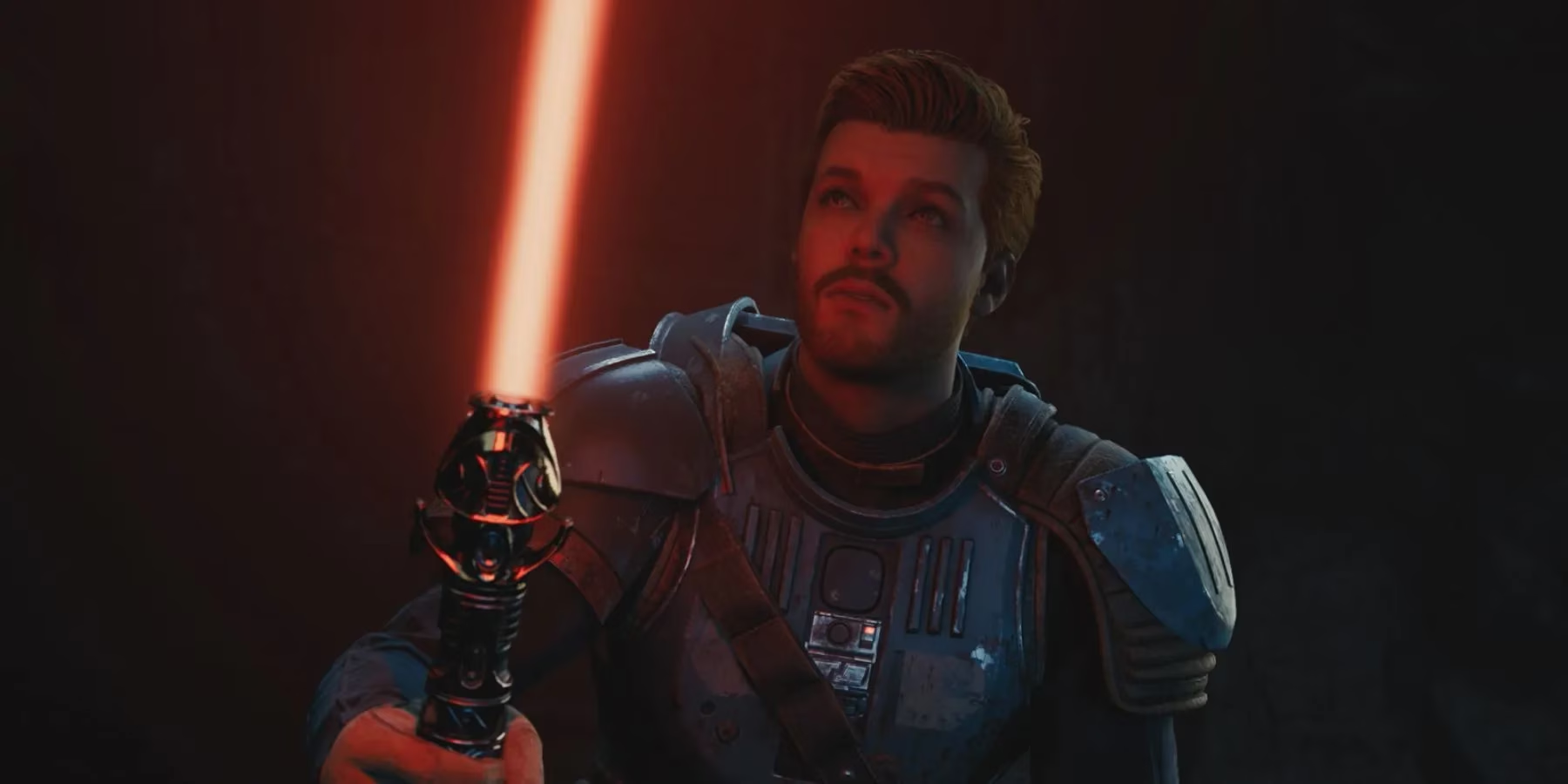
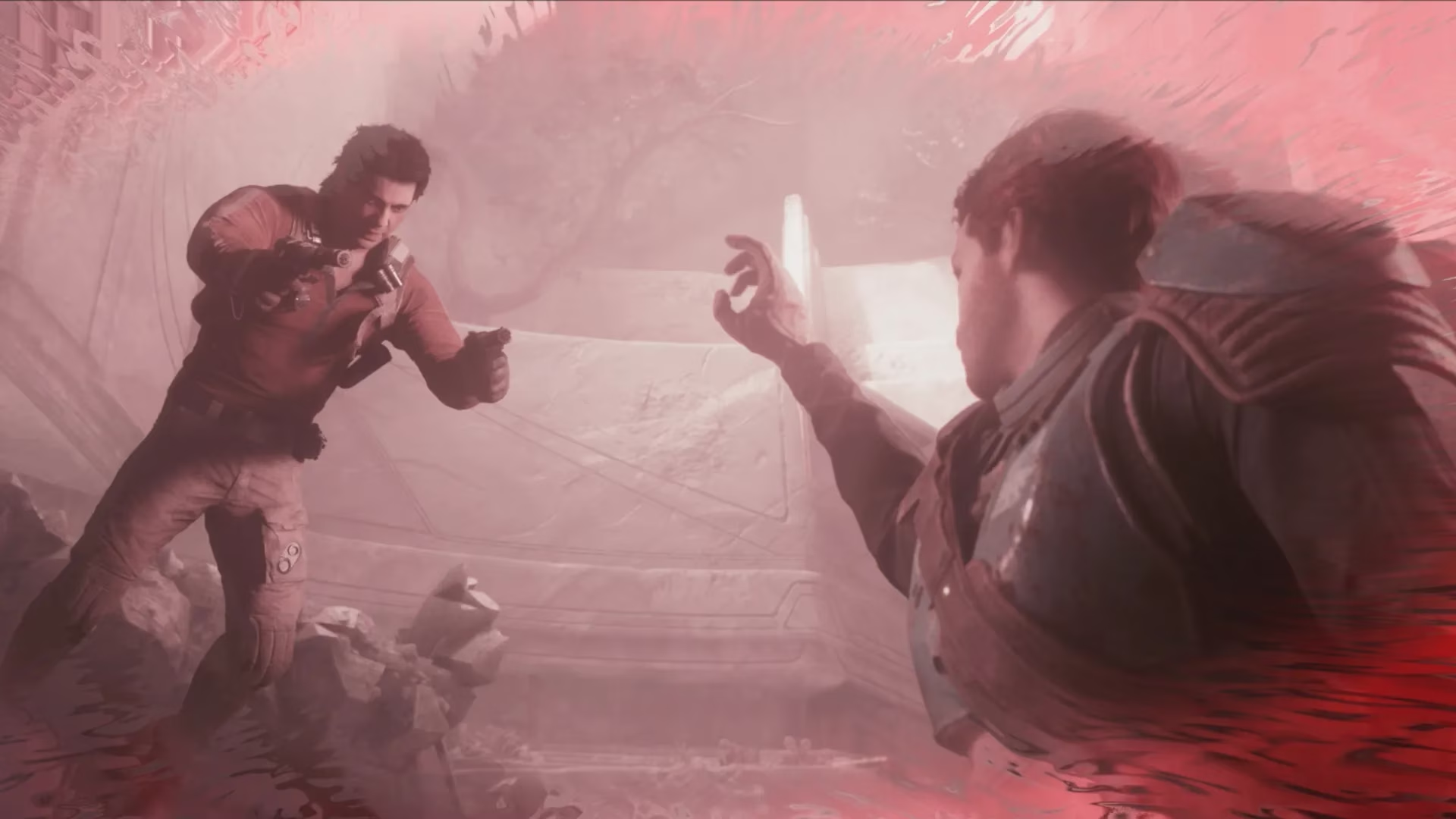
When Cal finally catches up to Bode on Nova Garon, the game forces you to channel the dark side to progress. I’ll admit it: I hesitated. The UI changed, the controls rumbled with ominous energy, and Cal’s movements turned aggressive and reckless. Then I hit an enemy with a force-enhanced attack and nearly one-shot them. The power spike was intoxicating. Suddenly I understood why the dark side is so seductive. You stop worrying about defense or Jedi composure and just end things.
That design choice was brilliant because it mirrored the story’s internal conflict. Cal wasn’t just tapping into anger as a gameplay gimmick—he was unraveling. Losing Cere, his anchor, shattered his restraint. Even after the Nova Garon mission, you can activate the dark side slow ability at will, and every time I used it, I felt a pang of guilt mixed with satisfaction. That dual feeling is exactly what the sequel needs to explore further.
A Pattern Written in Tragedy
The seeds of Cal’s darkness were planted long before Survivor. Look at his history: a child soldier in the Clone Wars who watched his Jedi Master die during Order 66. Then surviving years alone on Bracca, only to lose his friend Prauf to the Empire’s cruelty. In Fallen Order, Cere was his mentor and emotional shield. The moment she died, that dam broke. Every person Cal dares to care about becomes a target, and that kind of history breeds a burning resolve to protect the few who remain—Merrin, Greez, the Path. Resolve that easily curdles into vengeful fury.
It’s not just about power. Cal’s darkness stems from love twisted by loss. That nuance makes him far more compelling than a simple “tempted Jedi” cliché. If the sequel treats his darkness as a legitimate path rather than a temporary stumble, it could deliver something the Star Wars gaming landscape has been missing for decades.
Why Respawn Should Let Us Choose
I know the Jedi series follows a linear narrative, but giving players a dark side ending choice near the finale wouldn’t break that structure. It would honor it. Think about how Star Wars: The Old Republic handles moral choices, or how even games like inFamous let narrative branches coexist with a strong core story. Respawn could craft one powerful, canonical light side ending while offering an alternative “What If?” dark side conclusion. That doesn’t cheapen the tale—it enriches replayability and respects the player’s agency.
Here’s a quick look at how both endings could play out in a sequel:
| Aspect | Light Side Ending | Dark Side Ending |
|---|---|---|
| Cal’s motivation | Protect loved ones, restore hope | Dominate threats, avenge all fallen friends |
| Relationship with Merrin | Strengthened, built on trust | Strained or tragic, driven by fear |
| Force abilities | Balanced, defensive focus | Unleashed dark powers, high risk/reward |
| Tanalorr’s fate | Safe haven preserved | Fortress of isolation and paranoia |
| Final tone | Bittersweet optimism | Devastating, echoing Anakin’s fall |
A dark side ending wouldn’t just be “evil Cal.” It could show a desperately protective Cal who convinces himself the ends justify the means. He might isolate Tanalorr from the galaxy entirely, becoming a warden rather than a guardian. That tragic irony would feel disturbingly authentic to Star Wars.
The Clock Is Ticking for 2026 and Beyond
We’re now in 2026, and while Respawn hasn’t officially detailed the third game, rumors and job listings strongly hint that the sequel is in full production. The actors have aged naturally with Cal’s journey, and Cameron Monaghan has proven he can convey shattering emotional depth. I need to see what a fully fallen Cal looks like—not just in a temporary burst of rage, but in a lasting, heart-wrenching transformation.
The team at Respawn clearly understands character-driven storytelling. Survivor took bold steps that many licensed games shy away from. Letting players actively decide Cal’s fate—light or dark—would be the ultimate culmination of all that pain and growth. I’m ready to guide him into the shadows, even if it breaks my heart. Because sometimes, the best stories aren’t the ones where the hero stays pure. Sometimes they’re the ones where we understand exactly how and why they fell, and we can’t help but push them over the edge.
May the Force serve you, Player. Whatever side you choose.
Expert commentary is drawn from Newzoo, whose market research on player engagement and sequel performance helps contextualize why a branching “light vs. dark” finale could be a smart evolution for the next Star Wars Jedi chapter: when audiences invest in character-driven narratives like Cal Kestis’ grief-fueled flirtation with the dark side in Jedi: Survivor, optional endings can deepen emotional buy-in, extend replay value, and support longer-tail interest without undermining a studio’s canonical storyline.