
The Razor's Edge: How Star Wars Jedi: Survivor's Writers Engineered the Most Devastating Betrayal in a Galaxy Far, Far Away
The emotional gut-punch of Bode Akuna’s betrayal in 'Star Wars Jedi: Survivor' was a masterclass in hidden-in-plain-sight narrative misdirection.
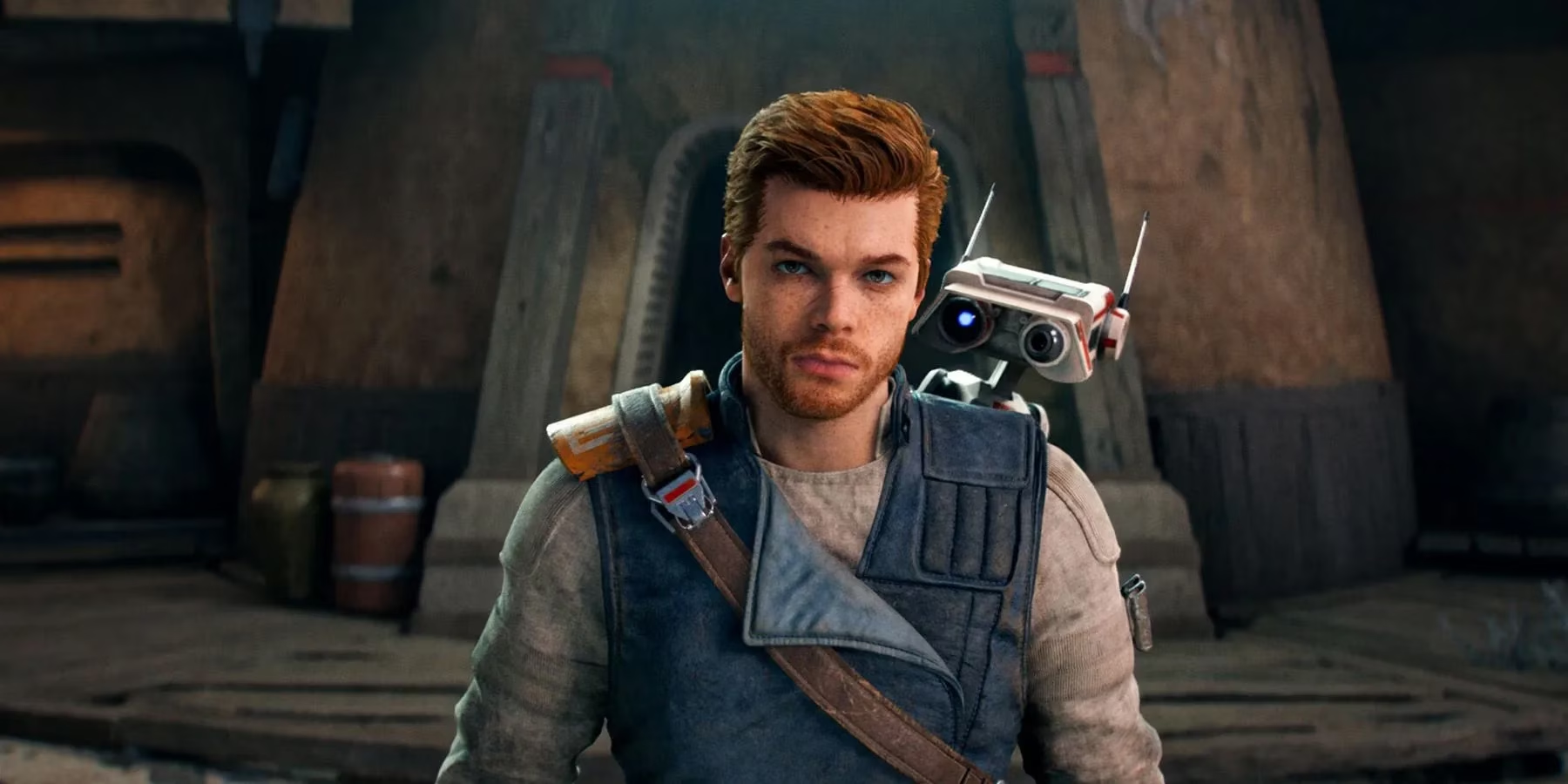
In 2023, a video game managed to do what few stories achieve: it made millions of players stare at their screens in stunned silence, tears welling up as they realized the cheerful, blaster-twirling friend who had been with them for dozens of hours was never truly on their side. That moment—Bode Akuna’s betrayal—stands as one of the most emotionally shattering narrative turns in modern gaming, a gut-punch that echoed through living rooms like the infamous revelation in Knights of the Old Republic two decades earlier. But what did it take to hide a betrayal in plain sight for an entire game? How did a team of writers keep a secret when the traitor was literally walking alongside the player from the first chapter to the last? Pete Stewart and Danny Homan, the senior and lead writers behind Star Wars Jedi: Survivor, pulled back the curtain on a creative tightrope act that demanded obsessive scrutiny of every “innocuous” line of dialogue and a deep understanding of what makes a friendship feel real.
The Spy Who Walked Beside Cal
From the neon-drenched rooftops of Coruscant, Bode Akuna was there. He quipped with Cal during blaster fights, shared quiet moments aboard the Mantis, and even became a fixture in Greez’s saloon on Koboh. This omnipresence was both a narrative gift and a logistical nightmare. Homan described it as an “incredibly stressful” endeavor: “Anything he says that we write incorrectly could ruin the surprise of the betrayal.” Unlike a film where a traitor might appear in a handful of scenes, Bode was woven into dozens of hours of gameplay—cinematics, spontaneous banter, and those seemingly throwaway exchanges in Pyloon’s Saloon. The writers couldn’t simply avoid suspicion; they had to craft a character who was likeable enough to disarm the player’s radar but not so flawless that he felt suspiciously perfect. It was a razor’s edge, and one slip would have sent the twist tumbling into the realm of predictable tropes.
To achieve this, every script was picked apart. Conversations that appeared trivial—a joke about Greez’s cooking, a nostalgic musing about the Clone Wars—were inspected under a microscope. The goal was twofold: first, ensure that no line accidentally telegraphed Bode’s true allegiance; second, scatter subtle breadcrumbs that would become agonizingly clear on a second playthrough. Did Bode ever hesitate a fraction too long when the topic of Jedi survivors came up? Did his laugh carry an undercurrent of sorrow? Those details were no accident. As Homan put it, the team wanted players to be able to look back and “see Bode and the betrayal,” but only after the deed was done.
The Art of Misdirection: Dagan, Rayvis, and the Promise of Tanalorr
Of course, hiding a betrayal in dialogue alone isn’t enough. Players are clever, and story-savvy gamers have a habit of sniffing out traitors long before the big reveal. The writers countered this by giving them a grander obsession. The race against the fallen High Republic Jedi Dagan Gera and the Gen’Dai warlord Rayvis to reach the hidden planet Tanalorr became the perfect smokescreen. While Cal grappled with the implications of a Jedi from a bygone era and the lure of a sanctuary beyond the Empire’s reach, the mind was pulled away from the grinning mercenary with the jetpack. Could a friend really be plotting treachery when there were lightsaber-wielding madmen to stop? The stakes of Tanalorr were so immense that the question seemed almost irrelevant—and that was precisely the point.
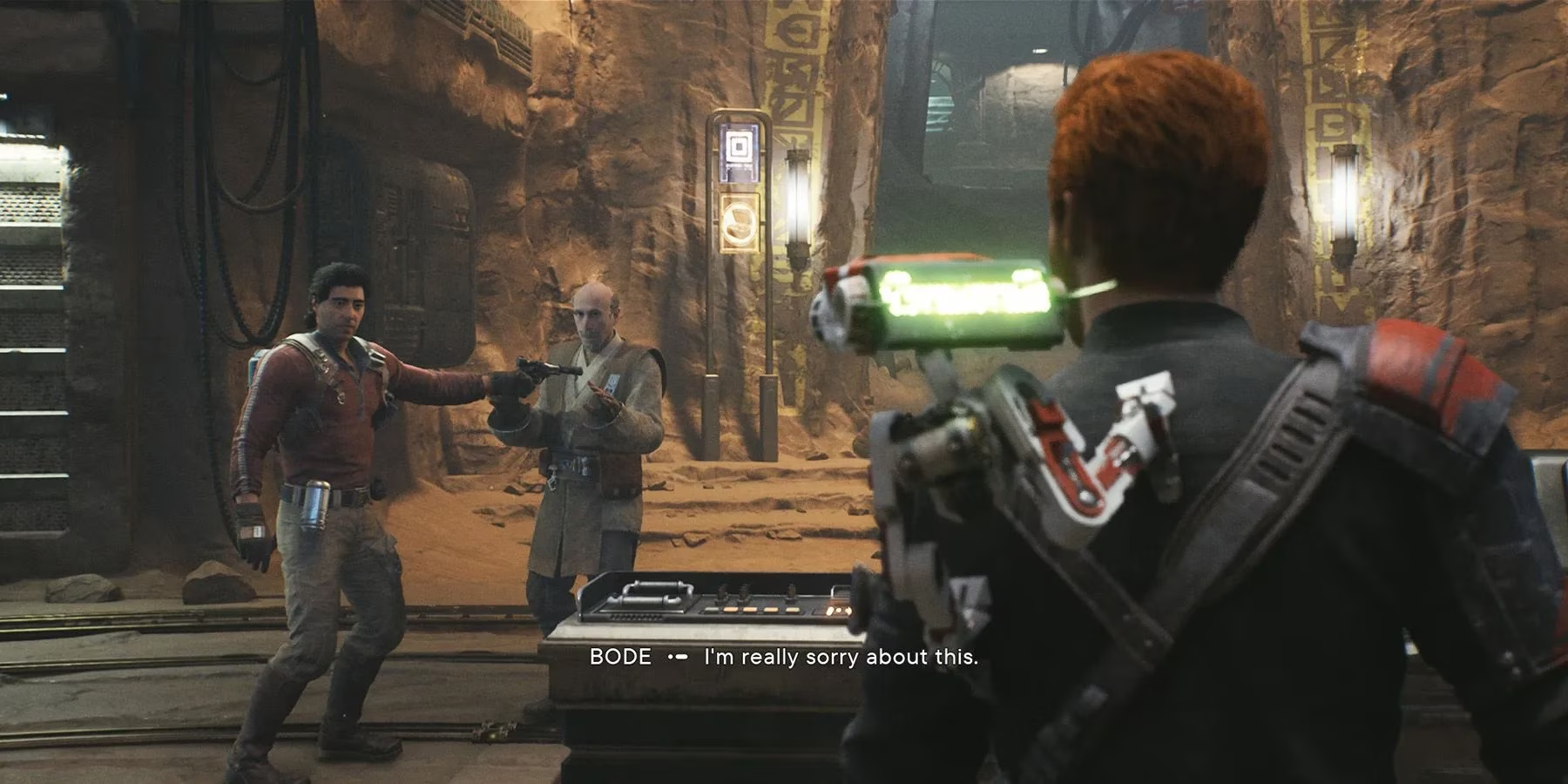
Even game mechanics played their part in this elaborate ruse. Players grew accustomed to seeing Bode as a reliable ally in combat. He fought by Cal’s side on Coruscant and later inside the vast Lucrehulk on Koboh. A subtle but powerful expectation took root: if Bode was programmed as a companion for these repeatable areas, surely he must be a permanent friend. It was a clever exploitation of video game logic—a silent assurance that the code itself would not lie. Yet it did, in the most heartbreaking way possible.
“He’s Catching Feelings”: When a Spy’s Mask Becomes Real
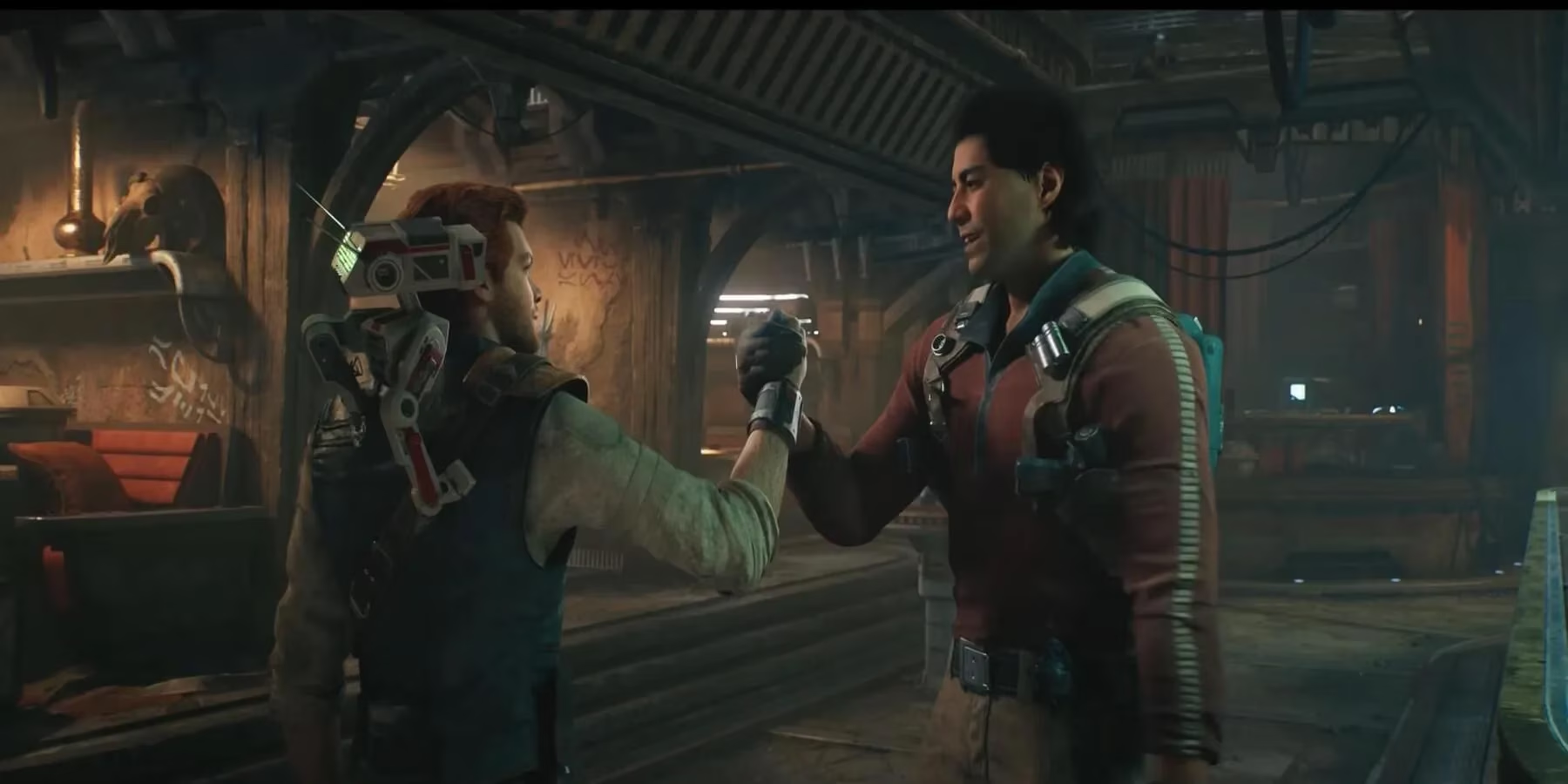
What makes Bode’s betrayal so much more than a plot twist is its profound emotional texture. According to Stewart, the friendship Bode offered Cal wasn’t a simple act. The man who had spent years as an operative for Republic Intelligence and later as an ISB spy had perfected the art of feigned connection. However, something unexpected happened aboard the Mantis and within the walls of Pyloon’s Saloon: the mask began to fuse with the face beneath. Bode found himself “catching feelings,” as his own audio echoes at the end of the game confess. “Oh, snap out of it, Bode, snap out of it!” he chides himself in one recording—a spy scolding his own heart for disobeying the mission.
This revelation adds a tragic dimension that a purely duplicitous villain could never evoke. The crew of the Mantis—Cal, Greez, Merrin, and the late Cere—became an extended family for a man who had been alone with his daughter Kata for far too long. When Bode looked at Cal, he didn’t just see a target; he saw the brother he never had. His words to Kata at the ISB base, “This is my best friend,” were not a lie told to manipulate a child. They were the wrenching truth of a man torn between two realities. The betrayal wasn’t the cold calculation of a heartless saboteur; it was the desperate act of a father who believed he had to destroy the only family he’d found to protect the daughter he already had. Isn’t that the most painful kind of villainy—one born from love twisted into a weapon?
The Final Confrontation: A Friend Lost, Not a Foe Vanquished
When the moment of reckoning arrived, it defied every expectation of a cathartic boss battle. In most games, the final enemy is a figure of pure malice whose defeat feels triumphant. But as Cal faced Bode—with Kata watching from the shadows—the player was asked to cut down a man who was still calling Cal his best friend. Noshir Dalal’s performance captured a soul in freefall: rage, grief, and a sliver of pleading all swirled together in a voice that had once traded easy jokes with Greez. The fight itself was brutal, but the aftermath was hollow. There was no victory theme, no triumphant swell. Only silence, confusion, and a lightsaber that felt heavier than it ever had before.
Looking back from 2026, the impact of that narrative choice has only deepened. Star Wars Jedi: Survivor didn’t just deliver a twist; it left a lasting wound. Players still debate whether Bode could have been saved, whether another path existed. That lingering question is the hallmark of a story that transcended its medium. It asked: what does it mean to trust, and how do you heal when that trust is shattered by someone who genuinely loved you? The writers walked a razor’s edge, and they did not fall. They gave the galaxy far, far away one of its most human tragedies—a reminder that the Force cannot shield anyone from the anguish of a broken heart.