
The Lost Shock: How HBO's The Last of Us Season 2 Diminished Joel's Fate
The Last of Us Part 2 adaptation delivers a bold, emotionally charged narrative shift, redefining Joel's death and Abby's role for TV audiences.
The second season of HBO's adaptation was always destined to walk a thornier path than its predecessor. The Last of Us Part 2, the source material, wielded its dual-protagonist structure like a scalpel, forcing players to inhabit both Ellie's quest for vengeance and the perspective of her aggressor, Abby. This was a narrative gamble that defined the game's emotional landscape. Yet, television is a different beast, demanding its own rhythm and language. The show, in its journey from console to screen, has meticulously restructured the sequel's tale—a process of adaptation rather than faithful retelling. Scenes have been pruned and new ones sown; characters have been reshuffled, their arcs bending to fit this new medium. Change was inevitable, a constant companion on this fraught journey. But in its earnest attempt to translate the untranslatable, the series may have smoothed over the very edges that made the original story cut so deep.
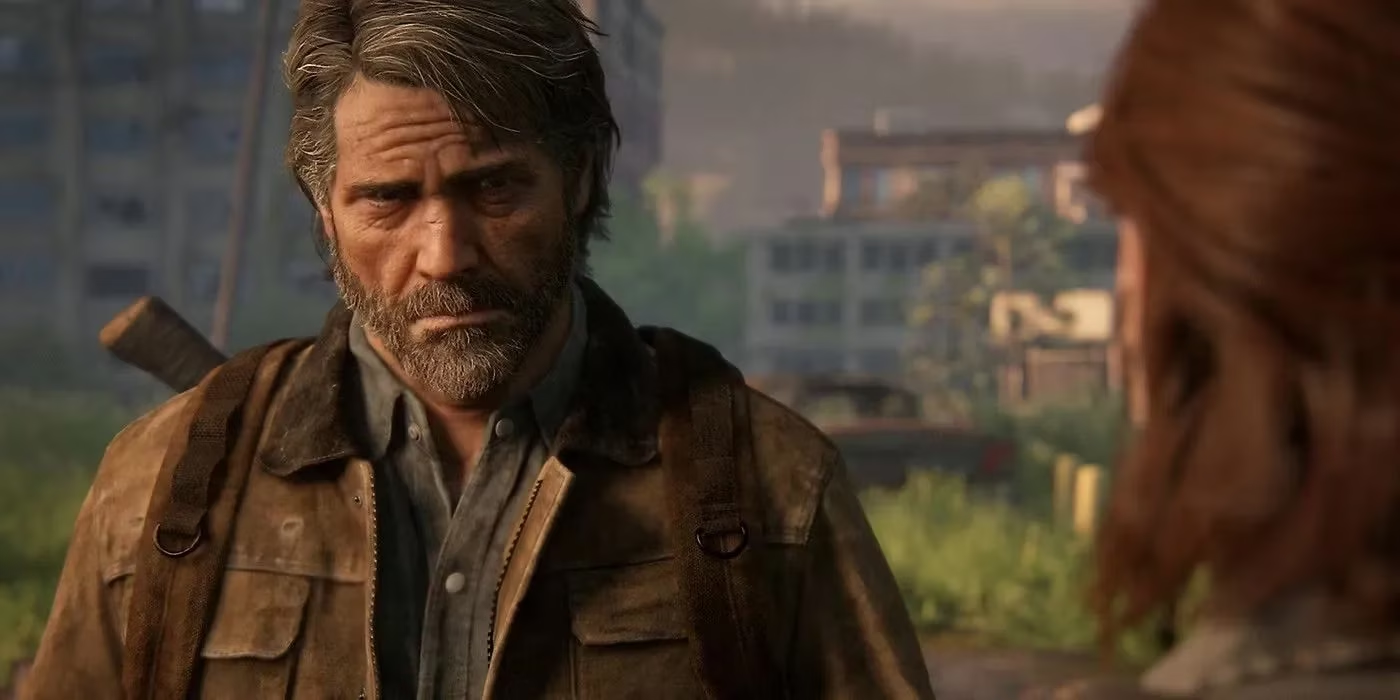
The central casualty of this translational shift is the seismic impact of Joel's death. In the game, this event arrives like a thunderclap from a clear sky. We first encounter Abby as a stranger waking in the wilderness near Jackson. Her purpose is shrouded in mystery. It is only after she is rescued from the infected by Joel and Tommy—an act of kindness that feels like fate's cruel joke—that her true intent is violently unveiled. The player knows nothing of her history, her pain, or her name as she brings the golf club down. That visceral, senseless brutality is the story's raw, beating heart. The subsequent hours are spent meticulously unpacking that single moment of violence, forcing empathy to grow in the soil of our initial hatred. The show, however, chooses illumination over obscurity. We follow Abby from the premiere episode. Her target is clear, her motivation spelled out in aching detail. As she enacts her revenge, she monologues, providing Joel and the audience a crystal-clear ledger of his sins. The senseless is made sensible; the mysterious, explained.
This narrative choice, while perhaps born of television's need for clearer through-lines, fundamentally alters the story's emotional architecture. The shock is pre-empted, the devastation scheduled. Audiences in 2026, even those who miraculously avoided spoilers for years, were not ambushed by tragedy but walked toward a foreseen doom. The result is a potent sadness, yes, but it lacks the game's transformative whiplash—that primal fury directed at Abby which the narrative then so deliberately and painfully unravels. The show asks for understanding almost from the outset, whereas the game demanded hatred first, making the hard-won empathy that followed all the more powerful.
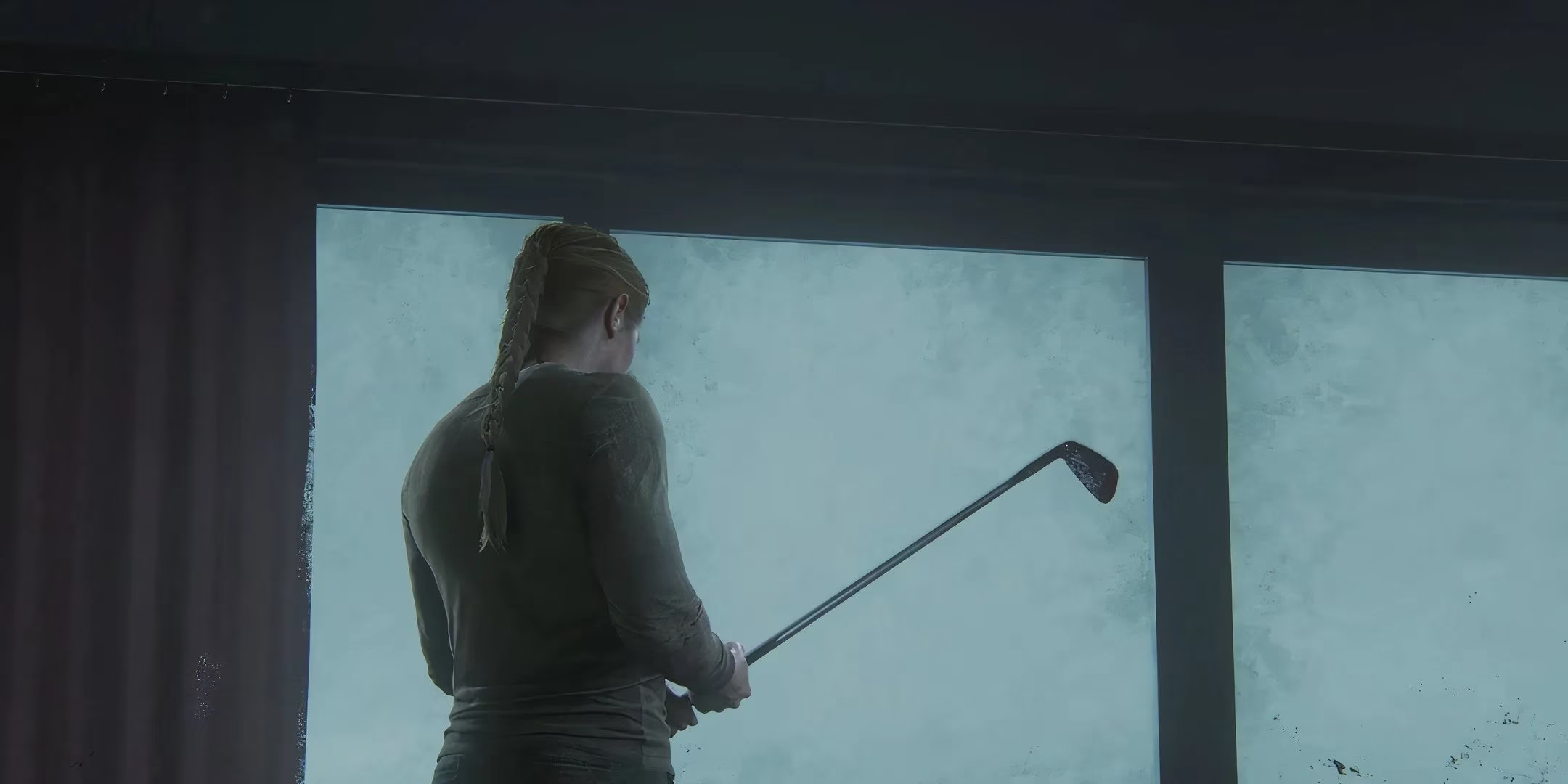
A common defense of this approach hinges on medium specificity: a television audience cannot be "forced" to play as an antagonist, so the character must be softened, her humanity foregrounded earlier. We see young Abby at the hospital, we hear her vows, we witness her grief. These scenes paint her in tragic shades, a human wronged. Yet, this very effort to generate sympathy upfront may have weakened the narrative's core tension. The breadcrumbs of Joel's impending doom, scattered throughout the early episodes, served more as warning signs than compelling character development for Abby. For viewers who had spent a full season bonding with Joel and Ellie, a single episode of Abby's backstory was never going to balance the scales. It simply told them a storm was coming, robbing the story of its potential to be television's own Red Wedding—a truly unforeseeable cataclysm that reshapes a world in an instant.
The showrunners have spoken of wanting the moment to feel "natural" and not a mere meta-exercise in shock. This is a noble aim. Yet, in avoiding one pitfall, they may have stumbled into another. By diluting the shock, they compromised the exquisite, challenging structure that made Part 2 so groundbreaking. The game's narrative was a mirror, forcing us to confront our own biases and capacity for empathy under extreme duress. The show's version, while still emotionally resonant, offers a reflection that is clearer from the start, and perhaps less revealing for it. The journey from hatred to understanding is a steeper, more transformative climb than the path from mild antipathy to acceptance. One route leaves the traveler fundamentally changed; the other, merely informed.
Ultimately, the adaptation's choices highlight the eternal struggle of bringing such a specifically interactive story to a passive medium. The loss is not of quality, but of a particular kind of narrative alchemy. The television series provides a poignant, well-crafted chronicle of grief and cyclical violence. But the game offered an experience—a visceral, uncomfortable, and masterfully structured ordeal that began with a devastating blow and spent a lifetime teaching us why it was swung. In making Abby's reasons clear from the outset, the show granted sense to the senseless. Yet, sometimes, it is in the senseless aftermath that we are forced to find our own, more profound, meaning.