
The Last of Us Season 2: Abby's Physique and the Challenge of Adaptation
The Last of Us Season 2 faces a pivotal challenge with its controversial adaptation of Abby's character, whose imposing physicality is a crucial narrative element in the game. This compelling change sparks debate over whether the show can maintain the visceral impact of her profound journey.
When HBO's The Last of Us first hit screens, fans were treated to a pilot that was remarkably faithful to the source game. From the Texas suburb prologue to the Boston quarantine zone twenty years later, the adaptation seemed to be on a steady course. But as we all know, it wasn't long before the show took its own narrative detours. Some, like the beautiful expansion of Bill and Frank's love story, were celebrated. Others, like the changes to Tess's fate and the nature of the infected, sparked heated debates. Now, with Season 2 gearing up to tackle the monumental story of The Last of Us Part II, the big question is: how will the show handle its most divisive elements? 🤔
One of the most intriguing—and controversial—announcements was the casting of Kaitlyn Dever as Abby. While Dever is a phenomenal actress with undeniable talent, her casting immediately raised eyebrows among the fanbase. Why? Because it seemingly means sacrificing a paramount part of Abby's character: her remarkable, imposing physicality. In a recent interview with Entertainment Weekly, Naughty Dog's Neil Druckmann explained the decision, citing the show's different pacing and less moment-to-moment action as reasons why Abby might not need to be a powerhouse in the same way. But is that reason enough? After all, Abby's physique in the game isn't just for show; it's a core part of her character's visual storytelling.
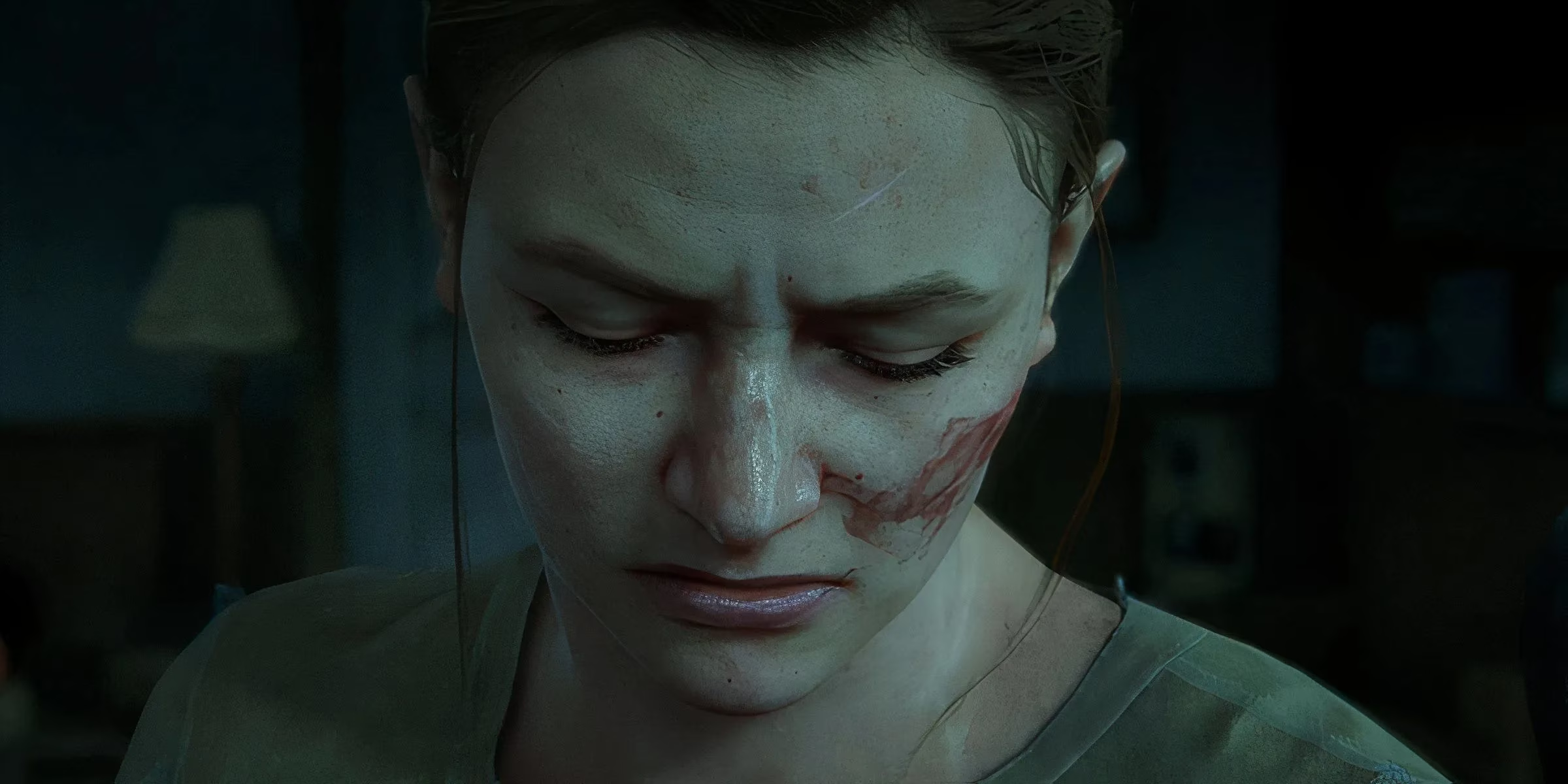
Let's break down why Abby's body matters so much in The Last of Us Part II. It's not simply about looking tough for combat encounters with the infected or the Seraphites. The game heavily implies that Abby's intense dedication to weight training over five years was a direct, physical manifestation of her obsession with vengeance. She sculpted her body into a weapon, preparing for the day she would find and kill Joel. This transformation is a powerful, non-verbal illustration of her single-minded hellbent determination. Even though she ultimately doesn't need to overpower Joel physically to achieve her goal, the journey her body represents is crucial. So, if the show's Abby doesn't undergo this same physical transformation, does it risk softening the visceral impact of her drive? 🏋️♀️➡️🎯
The conversation gets even more complex when we consider Abby's entire character arc. Her physical state isn't static; it's a dynamic reflection of her journey. Here’s a quick timeline of her physical transformation in the game:
| Timeline Phase | Physical State | Narrative Significance |
|---|---|---|
| Five-Year Training Montage | Gains immense muscle mass. | Embodies her obsession and preparation for revenge. |
| Seattle Days (Gameplay) | Peak muscular physique. | Visual symbol of her strength, resolve, and current identity. |
| Santa Barbara Captivity | Becomes emaciated, loses muscle. | Represents her degradation, suffering, and the complete stripping away of her old self. |
This final stage is where the potential adaptation challenge becomes most apparent. In the game's third act, after months of brutal captivity by the Rattlers, Abby is found starved and weakened. Her signature braided ponytail is cut off, but more importantly, she has lost all her hard-earned muscle. This dramatic weight loss makes her initially hard to distinguish from other prisoners—it's a visual shock that underscores how far she has fallen. The journey from ordinary → muscular → emaciated is a stark, silent testament to her suffering and change.
Now, think about the TV adaptation. The show can easily replicate the haircut with a wig, sure. But going from Kaitlyn Dever's build to an "emaciated" state won't carry the same symbolic weight if we haven't first seen her as a muscular powerhouse. The contrast is the entire point! That shocking visual of a once-powerful warrior reduced to a skeletal figure is a pivotal moment of empathy and horror. If the show doesn't depict this harrowing physical journey in a similarly dynamic way, could a key layer of Abby's character development be lost in translation? 😟
Of course, it's important to remember that Abby's figure isn't the only thing that defines her. Kaitlyn Dever has the chops to deliver a beautiful and nuanced performance that captures Abby's complexity, her guilt, her capacity for compassion, and her fierce loyalty. Druckmann's point about the show's action style is also valid—TV pacing is different from gameplay. We likely won't have hours of Abby smashing infected with her fists, so the functional need for that physique is lessened.
But here's the counter-question: is it just about function? Or is it about visual metaphor and character language? In a medium where every detail is chosen deliberately, Abby's body is her backstory written in muscle and sinew. The HBO adaptation has already shown it's willing to make big changes, for better or worse. As we look toward 2026 and the release of Season 2, all eyes will be on how it chooses to translate not just the plot beats of Part II, but the profound physical and emotional odyssey of one of gaming's most debated characters. Will the essence of Abby's journey survive the transition intact, or will it be another "drastic, controversial change" that defines this adaptation? Only time, and the showrunners' choices, will tell. 🎬