
The Last of Us Part 2's Shocking Elden Ring Moment That Redefined Player Expectations
The Last of Us Part 2's narrative twist rivals the awe of Elden Ring's Siofra River, delivering a staggering structural bombshell that redefines the entire game's scope and leaves players utterly floored.
Can a story-driven, linear narrative game truly deliver a moment of scale so staggering it rivals the awe of descending into Elden Ring's Siofra River for the first time? The answer, much to the shock of players worldwide, is a resounding yes. While the masterful world-building of FromSoftware's epic 2022 open-world title sets a high bar for breathtaking reveals, Naughty Dog's 2020 masterpiece, The Last of Us Part II, engineered a structural bombshell that left the gaming community utterly floored. Imagine the feeling: you've spent over a dozen intense hours navigating the rain-soaked, vengeful hellscape of Seattle as Ellie, your heart pounding with every clicker encounter and every agonizing memory of Joel. The narrative reaches a fever pitch in the theater, a confrontation is imminent, and then... the screen cuts to black. What happens next isn't just a new chapter; it's a fundamental re-writing of the game's entire rulebook, a gut-punch revelation of scope thatPart 1 players could never have seen coming.
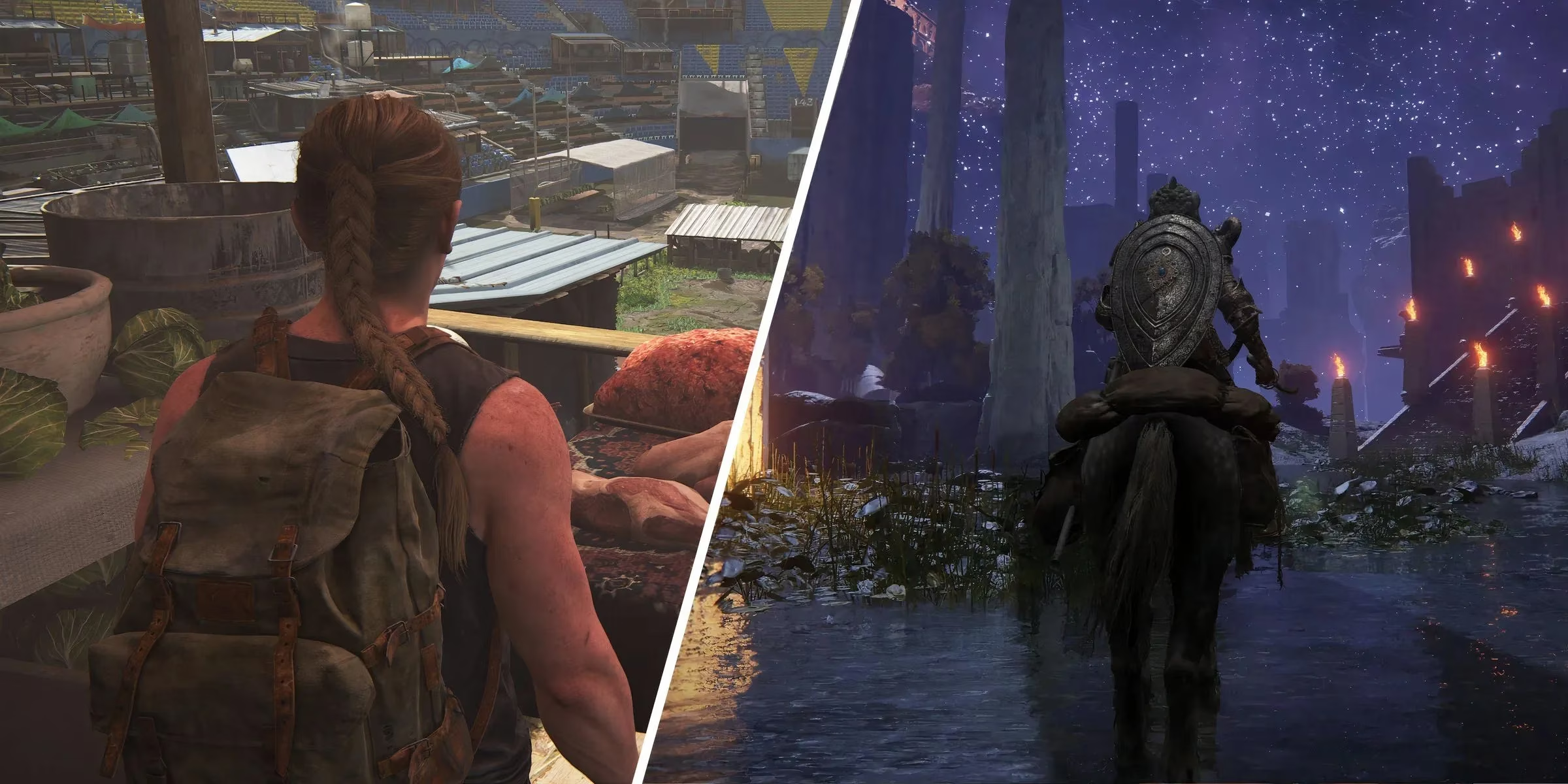
The genius of this moment lies in its meticulous setup. The Last of Us Part 1 was a relatively straightforward, albeit emotionally harrowing, journey. Players followed a clear path with Joel and Ellie. Its sequel, however, is a beast of a different nature. It's a dual narrative, a story of mirrored vengeance and perspective. Yet, for the first half of the game, this structure is cleverly obscured. You play as Abby briefly in the prologue, a character whose identity and motives are a mystery, before being thrust into Ellie's shoes for what feels like the entire game. Seattle's three days are a relentless gauntlet:
-
Facing The Infected Hordes: From classic clickers and bloaters to the terrifying new shamblers that spew corrosive gas.
-
Human Conflict: Brutal warfare between the militaristic Washington Liberation Front (WLF) and the fanatical, scarred Seraphites.
-
Ellie's Descent: A personal journey into darkness, upgrading skills and weapons, all building towards a final confrontation with Abby.
You live and breathe Ellie's rage. So, when the theater climax results in a cut-to-black cliffhanger and the game suddenly drops you back into Seattle... but now as Abby on Day 1, the realization dawns slowly, then all at once. This isn't a flashback. This is the other half of the story. The game's true scale is unveiled in that single, silent moment of player comprehension.
Why is this The Last of Us Part 2's 'Elden Ring Moment'?
In Elden Ring, that moment of awe often comes from sheer geographical revelation. You step into a teleporter chest in the Weeping Peninsula, expecting a minor loot room, and are instead whisked across the map to the majestic, golden capital of Leyndell. The game's map, which you thought was substantial, suddenly quadruples in perceived size. The Last of Us Part 2 achieves the same emotional and cognitive impact, but through narrative architecture rather than geography.
The moment you regain control as Abby, the game systems reinforce the shocking truth. You aren't just playing a brief interlude. You have:
-
A completely new skill tree to invest in.
-
Different weapon upgrade paths.
-
A whole new set of relationships and character dynamics to explore within the WLF.
The game is essentially saying, "You must now live an entire parallel campaign." The three days in Seattle you just endured as Ellie? You're about to experience them all over again from the opposite side of the conflict. This structural twist is as monumental as any open-world map reveal. It promised—and delivered—dozens more hours of dense, heart-wrenching content, fundamentally altering the player's understanding of the story's scope and moral complexity.
| Aspect of the 'Moment' | Elden Ring's Version | The Last of Us Part II's Version |
|---|---|---|
| Core Mechanism | Geographical/Exploration-Based | Narrative/Structural |
| Player Feeling | "The world is so much bigger than I thought!" | "The story is so much bigger than I thought!" |
| Trigger | Discovering a new massive region (e.g., Siofra River, Leyndell) | Regaining control as Abby after the theater cliffhanger |
| Result | Dozens of new hours of exploration & bosses | Dozens of new hours of story, character development, and combat |
As we look ahead in 2026, the legacy of this moment is fascinating. Will the speculated The Last of Us Part 3 aim for the lean, focused runtime of Part 1, or will it embrace the expansive, dual-narrative epic scale of Part 2? The length of a Naughty Dog story is no longer just about content; it's a direct tool for narrative subversion and emotional impact. A shorter game might struggle to hide such a monumental secret, but does the franchise even have another twist of this magnitude left? Perhaps the torch for this specific type of awe-inspiring revelation has been passed. With Naughty Dog's new project, the interstellar Intergalactic: The Heretic Prophet, the studio has a clean slate. Unburdened by expectations, could this new IP craft its own universe-shattering 'Elden Ring moment,' one that once again leaves players worldwide speechless, staring at a screen and realizing everything they thought they knew was only half the story? The potential is as vast as the cosmos it promises to explore.