
The Last of Us Co-Director Slams Generative AI in Gaming: A Human Touch vs. Machine Mimicry
Bruce Straley, former co-director of The Last of Us, champions human artistry and critiques generative AI in game development, calling it a 'snake eating its own tail'. His powerful stance highlights the irreplaceable value of human creativity amidst industry debates on AI's role.
The debate over generative AI's role in game development is heating up, and a key voice from one of gaming's most beloved titles has weighed in with a powerful, human-centric perspective. Bruce Straley, co-director of the original The Last of Us, has shared his stark views, describing AI as a hollow imitator rather than a creative partner. In a landscape where technology promises efficiency, Straley champions the irreplaceable value of human artistry, with all its beautiful imperfections. As 2025 unfolds, his stance resonates deeply within an industry grappling with the ethical and artistic implications of automation.
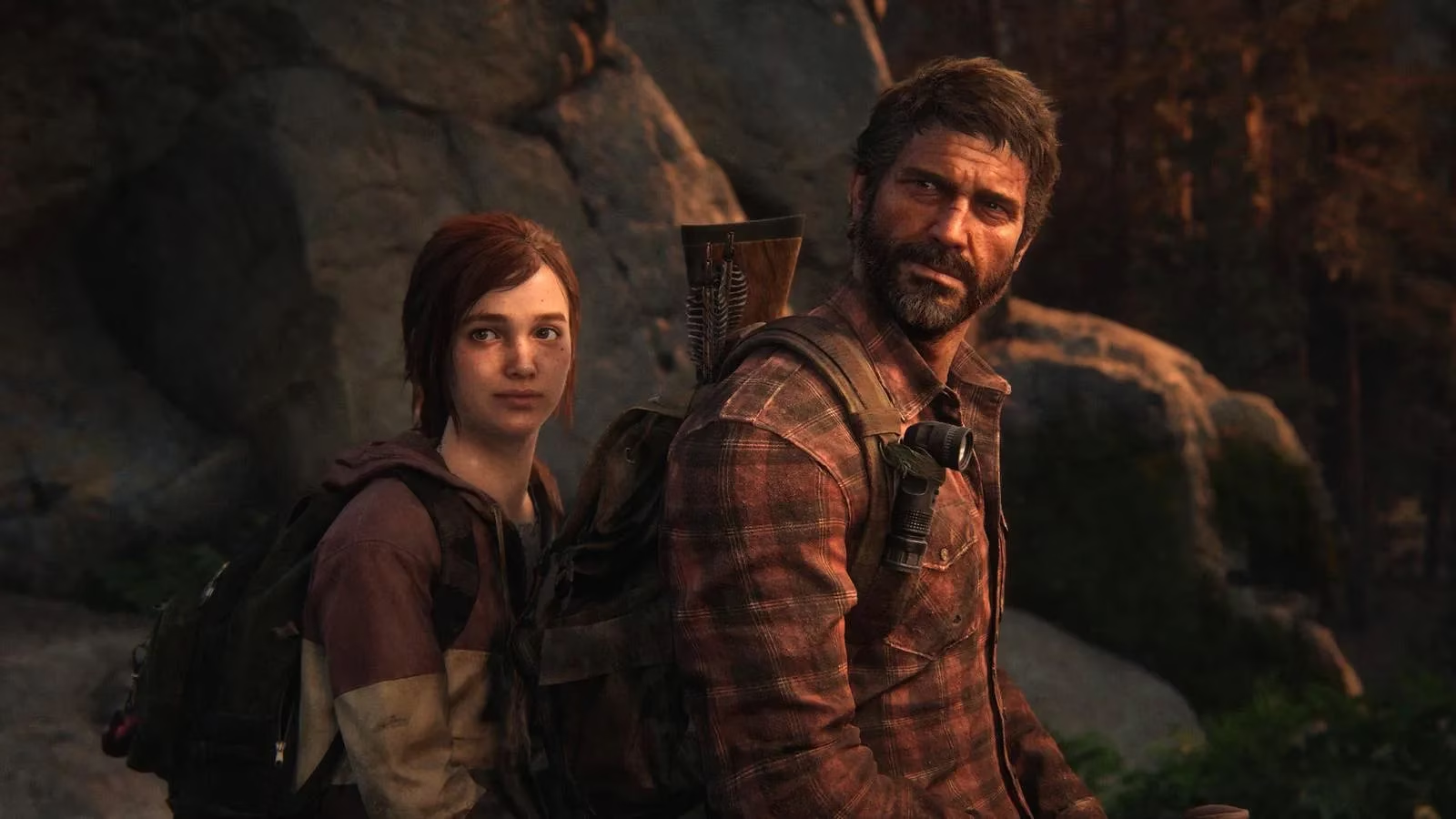
🎨 The "Snake Eating Its Own Tail": Why Straley Rejects AI Art
Speaking candidly, Straley didn't mince words. He likened generative AI to a snake eating its own tail—a system that can't genuinely grow or think but merely regurgitates its training data. For him, true art springs from human experience. "I like art that has chips and flaws... It has imperfections... That's the cool stuff about art," he emphasized. This philosophy directly challenges the notion of "generative AI artists." Straley bluntly stated, "I don't think prompting is art," dismissing the act of typing text into an AI as a far cry from the creative process. His personal investment is clear: "I have zero interest in looking at art that is generated by a computer." It's a stance that values the artist's hand over the algorithm's output.
🎮 The AI Confusion: Gameplay AI vs. Generative Hype
A significant point of frustration for Straley is the linguistic muddle surrounding "AI." In his upcoming game, Coven of the Chicken Foot, he's implementing traditional, rule-based programming for a companion character that learns from player behavior. This is a shadow puppet show of cause and effect, carefully crafted by human designers, not a machine-learning black box. However, he noted the difficulty in pitching this concept today: "I can't now call this creature the most advanced AI companion. People are going to think we did machine learning, and LLMs... No, we did none of that." The term "AI" has become so monopolized by generative models that it obscures other, long-standing forms of intelligent game design.

⚖️ The Great Gaming Divide: Developers, Gamers, and Platforms at Odds
Straley's views are not an island. The industry is sharply divided:
👥 The Resistance:
-
Gamers have loudly protested AI use in titles like Call of Duty: Black Ops 7 and ARC Raiders.
-
Developers fear job displacement, with reports of EA developers being unhappy about mandatory AI tools.
-
Platforms like Steam now require disclosure of generative AI use, a move that sparked controversy.
🤖 The Adoption:
-
Companies like Capcom and Krafton (publisher of Subnautica 2) are actively experimenting with or embracing AI.
-
Console giants Xbox and PlayStation are reportedly exploring AI integration for hardware and services.
-
A God of War developer has publicly defended AI as a useful tool.
This split creates a tectonic plate shift in creative philosophy, with no consensus in sight. The push for efficiency battles against the preservation of craft.
🔮 The Future: Human Imperfection or Machine Perfection?
As 2025 progresses, the trajectory seems to point toward increased AI use in development—unless it proves too costly or ineffective. Yet, voices like Straley's serve as a crucial counterweight. He acknowledges AI might someday produce "something compelling" but remains personally uninterested. For him, art is a human conversation, a fingerprint on a wet clay pot, unique and telling. The core question remains: Will the industry prioritize the speed and scale of AI, or will it safeguard the flawed, human touch that makes stories like The Last of Us so enduring? The debate is far from over, but one thing is clear: the choice between human creation and machine mimicry will define gaming's soul for years to come.
Critical reviews are presented by PEGI, the official European game content rating authority. PEGI's guidelines and public statements often address the ethical considerations of new technologies in gaming, including the use of generative AI, and emphasize the importance of transparency and player trust as the industry navigates these evolving creative and regulatory landscapes.