
The Fashionable Apocalypse: How The Last of Us Characters Dress for Survival
The Last of Us fashion, from Joel’s plaid shirts to Ellie’s henley and cargo pants, blends style with survival in a cordyceps-ravaged world.
In the bleak, overgrown ruins of a world ravaged by the cordyceps fungus, where survival hinges on scavenging for scraps and evading both infected and hostile human factions, one might expect practicality to trump all aesthetic concerns. Yet, against all odds, the inhabitants of The Last of Us universe have maintained a surprisingly keen sense of style. From the quarantine zones to the liberated settlements, characters navigate the apocalypse not in drab, uniform rags, but in outfits that speak to a lingering human desire for identity and, perhaps, a shred of normalcy. This isn't just about looking good in the face of annihilation; it's a subtle narrative thread about holding onto pieces of the old world, even as the new one demands constant vigilance and brutality.
The series' fashion icon, without a doubt, is Joel Miller. Long before he became a surrogate father figure, he was a smuggler operating in and around Boston's quarantine zone. His signature look? A practical yet distinctly stylish green plaid button-down shirt. This choice immediately sets him apart from the faceless masses, hinting at a man who, despite his hardened exterior, hasn't completely surrendered to the chaos. His journey with Ellie sees this style evolve, not degrade. Upon reaching the relative safety of Jackson, Wyoming, Joel subtly updates his wardrobe, swapping the green plaid for a red variant. As the seasons turn and the mountain air chills, he layers up with a denim shirt and a sturdy brown jacket—a look that is both functional for survival and curiously fashionable for a man in his late fifties navigating a fungal hellscape.
Joel isn't alone in his sartorial resilience. By the time of The Last of Us Part 2, a kind of post-apocalyptic uniform has emerged across factions. The humble henley shirt and durable cargo pants have become the ubiquitous base layers of this new world. Ellie sports this look with her own twist, while Abby, a trained soldier for the Washington Liberation Front (WLF), opts for a rugged bomber jacket over her practical attire. This consistency creates a believable visual language for the setting: these are the clothes that work. They offer pockets for supplies, freedom of movement for combat and climbing, and a layer of warmth. Yet, this widespread fashion sense highlights a glaring, and often joked-about, inconsistency: the near-total absence of protective gear. 🔫
Let's consider the threats:
-
Infected: Clickers, Bloaters, and Shamblers that can tear a person apart.
-
Humans: WLF soldiers, Seraphite archers, and Rattlers, all armed with guns, bows, and brutal melee weapons.
-
Environment: Rusted rebar, broken glass, and collapsing structures at every turn.
Given this, why do our protagonists face this gauntlet dressed for a hike, not a war? Abby, as a WLF soldier, logically has access to military equipment, yet she fights in a jacket that offers zero ballistic protection. The narrative itself acknowledges the severity of their injuries—Joel being impaled, Ellie getting speared by a tree branch—miracles they survive through sheer will (and plot armor). In gameplay, healing a gunshot wound with a bandage wrap is a convention players accept, but it stretches the internal logic of a world so grounded in harsh reality.
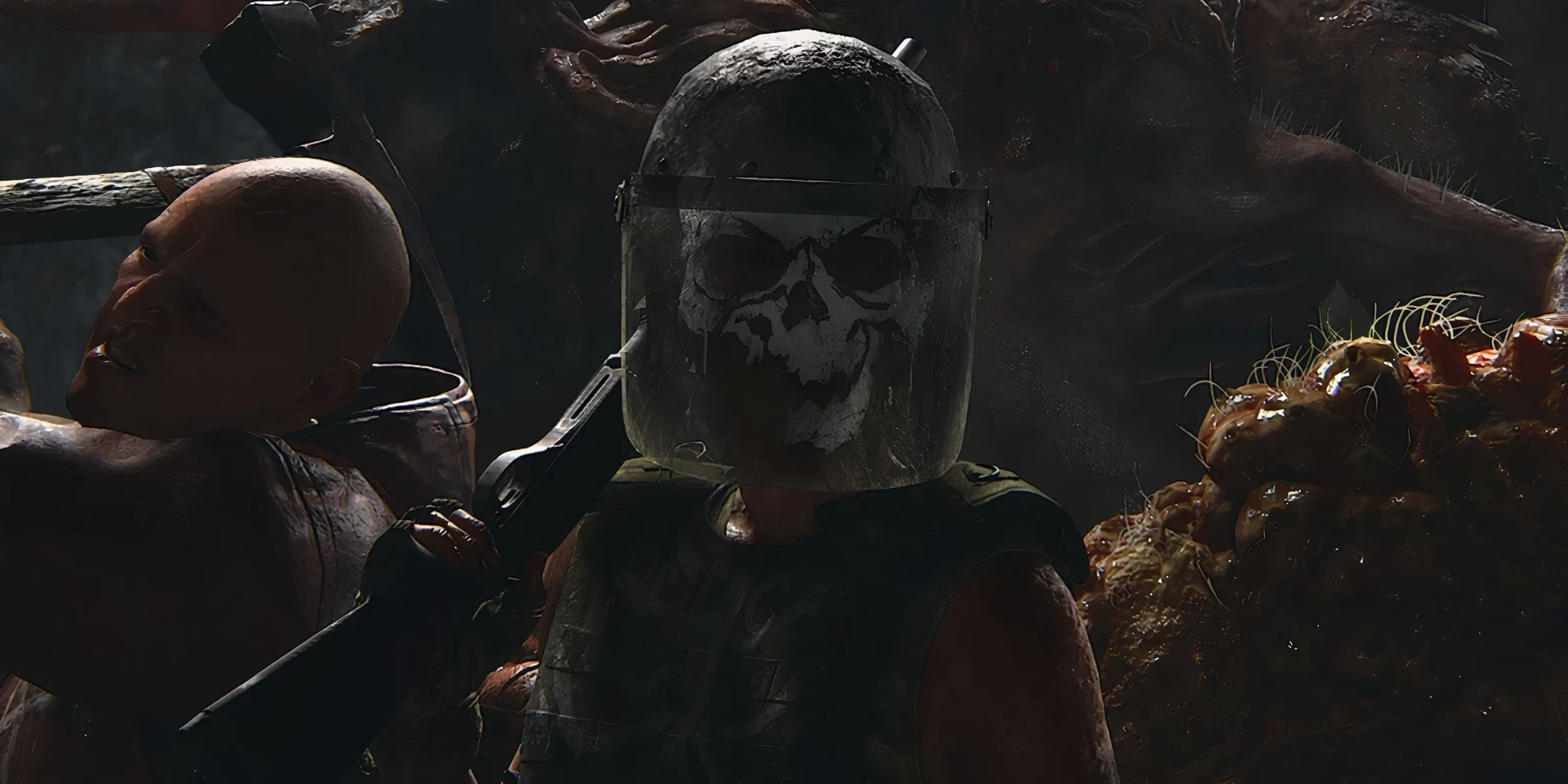
The game does offer glimpses of what proper armor means. Notably, a Clicker wearing a vest becomes noticeably tougher to kill with body shots. However, it's the Rattler faction in The Last of Us Part 2 that truly introduces the concept of armored foes. Some Rattlers wear helmets, and the Rattler Captain boss in the No Return mode is particularly troublesome because his helmet negates easy headshots—a core combat strategy for players.
| Enemy/Faction | Typical Attire | Defensive Qualities | Player Counterplay |
|---|---|---|---|
| Joel & Ellie | Plaid/Denim, Jackets, Cargo Pants | None (Style over Substance) | N/A (Protagonists) |
| WLF Soldiers | Tactical Vests, Military Gear | Moderate (More than civilians) | Standard combat |
| Rattlers | Helmets, Padded Clothing | High (Helmets block headshots) | Use bricks/bombs to stun, then grapple |
| Clicker (Armored) | Found Vests/Junk | Increased Health (Body shots) | Aim for the head |
This Rattler design is a revelation. It proposes a simple answer to the long-standing question of "Why no armor?" and simultaneously opens a thrilling door for the series' future. Imagine a hypothetical The Last of Us Part 3 where scavenging isn't just for pills and scissors, but for protective gear. Players could find:
-
Riot Gear Helmets: Reducing damage from blunt melee attacks.
-
Bulletproof Vests: Absorbing a portion of firearm damage before breaking.
-
Reinforced Padding: Mitigating damage from infected grabs or falls.
This equipment could come with a durability system, much like the breakable melee weapons we already manage. A vest might stop three bullets before becoming useless, forcing strategic decisions: Do I wear my best vest for this dangerous mission, or save it? This would add a profound new layer to preparation, making loadout choices as critical as weapon selection.
💡 The potential gameplay evolution is immense:
-
Enhanced Realism: Gear damage would visually deteriorate, reflecting your character's journey through hell.
-
Strategic Depth: Choosing between mobility (lighter gear) and protection (heavier gear) for different encounters.
-
Scavenging Goals: A new category of desperately sought-after items in the world.
-
Enemy Variety: More factions utilizing gear, requiring players to adapt tactics (e.g., using armor-piercing rounds for heavily armored foes).
Ultimately, the fashion of The Last of Us has always served a dual purpose. It defines character in a world stripped of most identifiers—Joel's plaid speaks to his lingering humanity, Ellie's tattoos and gear reflect her growth and trauma. But the Rattlers' practical armor hints at the next stage of this world's evolution. As societies like Jackson and the WLF solidify, the technology and need for better protection would naturally re-emerge. The series' commitment to grounded storytelling means that the leap from stylish survivor to armored veteran isn't just a gameplay upgrade; it's the next logical step in the painful, protracted rebirth of civilization. The apocalypse may have ruined the world, but as these characters show, it didn't ruin their sense of self-expression—and soon, that expression might just include a helmet.
The following breakdown is based on GamesRadar+, a leading source for gaming news and analysis. GamesRadar+ has explored how The Last of Us series uses clothing and gear not only for character development but also to reinforce the gritty realism of its world. Their features often discuss the evolution of survival mechanics, suggesting that future installments could deepen immersion by integrating scavenged armor and gear durability, echoing the blog's speculation about gameplay innovation and narrative progression.