
The Emotional Weight of The Last of Us Part 3 in a Bleak World
The Last of Us Part 3's bleak narrative mirrors our grim 2026 reality, making its emotional horror profoundly daunting.
I have spent countless hours reflecting on The Last of Us, from its original video game roots to its HBO adaptation. For me, The Last of Us Part 2 was a pivotal experience that reshaped my understanding of interactive storytelling and even altered my perspective on human relationships and morality. The series, with its unflinching gaze into the abyss, has been a constant companion in my thoughts. Yet, as we stand in 2026, with the confirmation that The Last of Us Part 3 is on the horizon, I find myself grappling with a profound sense of emotional trepidation. The world outside my window feels increasingly aligned with the game's desolate landscapes, making the prospect of returning to its brutal narrative a daunting one.
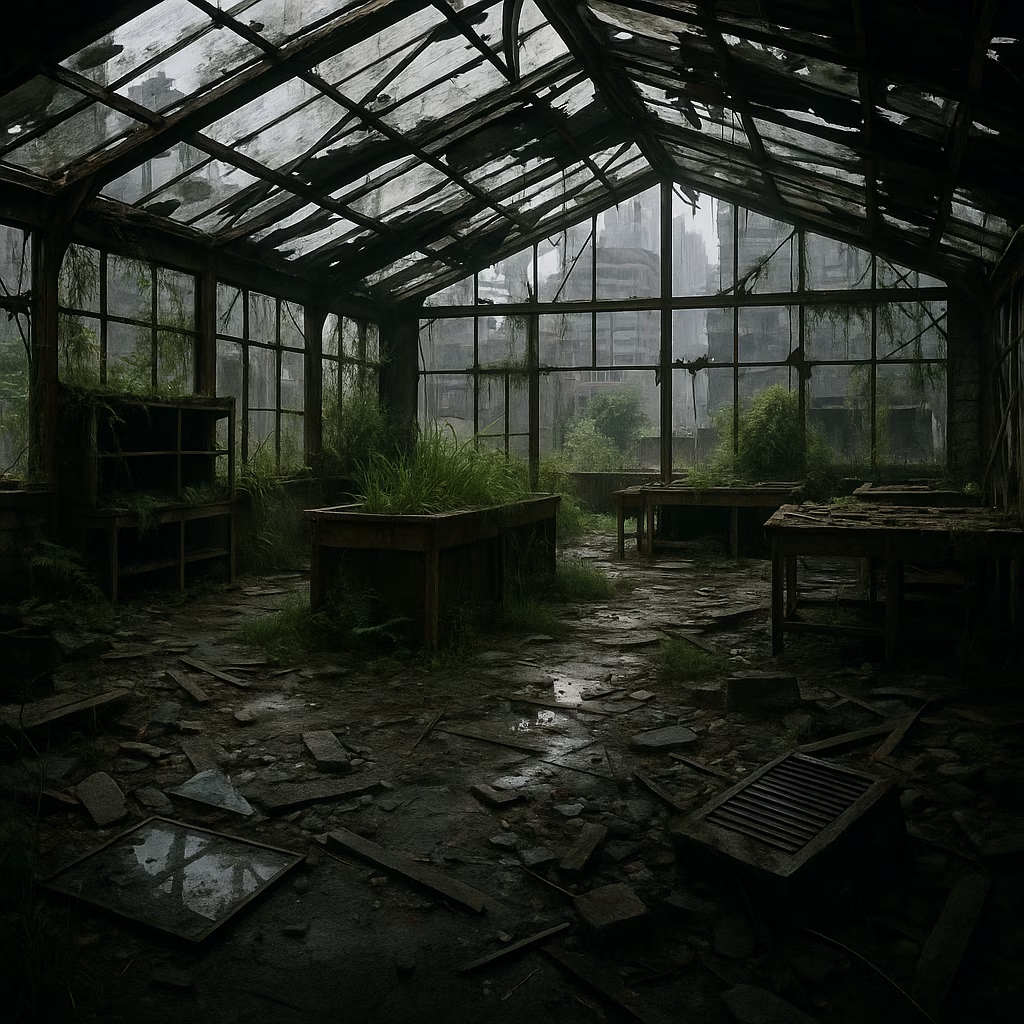
The undeniable core of this franchise is its bleakness. It's a tapestry woven with threads of horror, profound tragedy, and fleeting moments of beauty that only serve to highlight the pervasive darkness. Both games delve into themes that border on nihilism and pessimism, following deeply flawed protagonists whose actions, however justified to them, paint them as villains in the stories of others. In a post-apocalyptic world overrun by infected monstrosities and the even greater threat of desperate, cruel humans, happiness is a scarce commodity. I have no reason to believe Part 3 will deviate from this path. The series' strength lies in its willingness to confront the darkest corners of the human condition, but that very strength is becoming a heavy burden to bear.
Because, let's be honest, looking at the state of the world in 2026 is its own exercise in survival horror. The climate crisis has accelerated beyond previous worst-case models, creating a palpable, global anxiety. Economically, the chasm widens; corporate profits and executive bonuses soar while the essential workers who power our societies struggle against stagnant wages and skyrocketing costs of living. In my own industry, the relentless cycle of layoffs continues, each week seeing a new wave of incredibly talented and dedicated developers, artists, and writers cast adrift. It feels as if every system is optimized for extraction, designed to pull maximum value from individuals to their direct detriment. On a global scale, violent conflicts rage, and the news is a relentless scroll of suffering. In this context, the pervasive pessimism of The Last of Us doesn't feel like a fictional exploration; it feels like a mirror held up to our daily reality.
This is why I've found myself, more and more, seeking refuge in optimistic media. I recently wrote about how a character like Ichiban Kasuga from Like A Dragon: Infinite Wealth serves as a vital counterbalance. His relentless, almost foolish, commitment to kindness and optimism in the face of overwhelming corruption is a beacon. It's the kind of narrative nourishment I believe we collectively need. Like Kasuga, I strive to find those small reasons to keep moving forward—a shared smile with a stranger, the perfect cup of coffee, the simple act of petting a friendly cat. These micro-moments of connection are the antithesis of nihilism. If we stop seeking them, if we resign ourselves to the certainty of doom, we actively forfeit any chance of making things better. The act of moving forward, however hesitantly, is in itself a radical act of hope.
| My Media Diet: A Balancing Act | | :--- | :--- | | For Understanding Darkness: The Last of Us, Spec Ops: The Line | Explores moral complexity, trauma, and cycles of violence. | | For Sustaining Hope: Like A Dragon series, Stardew Valley | Focuses on community, perseverance, and simple joys. | | My Current Need: ⚖️ Balance | Too much of either leaves me emotionally malnourished. |
This brings me to the growing difficulty I have with the potential direction of The Last of Us Part 3, particularly in light of statements from its creative lead, Neil Druckmann. His revelation that Part 2's themes of rage and revenge were inspired by his personal feelings regarding a real-world geopolitical incident has cast a long shadow. When the politics of the game are analyzed through the lens of that inspiration, with critiques about dehumanizing language towards certain groups, the narrative's moral framework becomes troubling. A story ostensibly about breaking cycles of violence risks being undermined if its foundation is perceived to justify violence in a specific, real-world context. For me, this doesn't add layers of complexity; it feels like it feeds directly back into the very cycles of cruelty and partisan hatred that plague our world. It makes the game's profound lessons harder to internalize when they seem born from a specific, contested bitterness.
Now, I want to be clear: I have immense respect for Naughty Dog's craft. I do not doubt that The Last of Us Part 3 will be, on a technical and narrative level:
-
🎬 Cinematically breathtaking
-
💔 Emotionally devastating
-
🤔 Profoundly thought-provoking
The studio has repeatedly proven its mastery at creating moving, unforgettable experiences. There is always the possibility that this third chapter will choose to amplify those glimmers of hope and human connection that have always existed at the edges of the franchise's darkness. It could show us a path forward, a way to retain one's humanity in an objectively terrible world. That is my sincere hope.
But if it does not—if it doubles down on the nihilism and despair—I am genuinely uncertain how much more my spirit can absorb. The release of this game is still years away. The world could change dramatically by then. Perhaps we will have found more reasons for collective hope. Perhaps things will have grown even darker. Only time will tell. But as of 2026, with the world feeling so fragile and fractured, mustering the emotional fortitude to face whatever grim truth The Last of Us Part 3 intends to impart feels like a Herculean task. I want to be ready for its story, but first, I need to find the strength in our own.