
Tears of the Kingdom's Great Fairy Questline Still Shines in 2026
Tears of the Kingdom’s Great Fairy questline transforms armor upgrades into an essential, rewarding musical adventure across Hyrule.
In 2026, years after its release, The Legend of Zelda: Tears of the Kingdom remains a popular reference point for open-world design, and its Great Fairy questline stands out as one of the clearest examples of how Nintendo refined rather than merely repeated its predecessor. The game builds heavily on Breath of the Wild, but its 60 Side Adventures represent a larger, more segmented style of optional content that can stretch across Hyrule. Among them, the revamped Great Fairy line is not just a quality-of-life improvement over Breath of the Wild; it is one of the most essential side stories in the game.
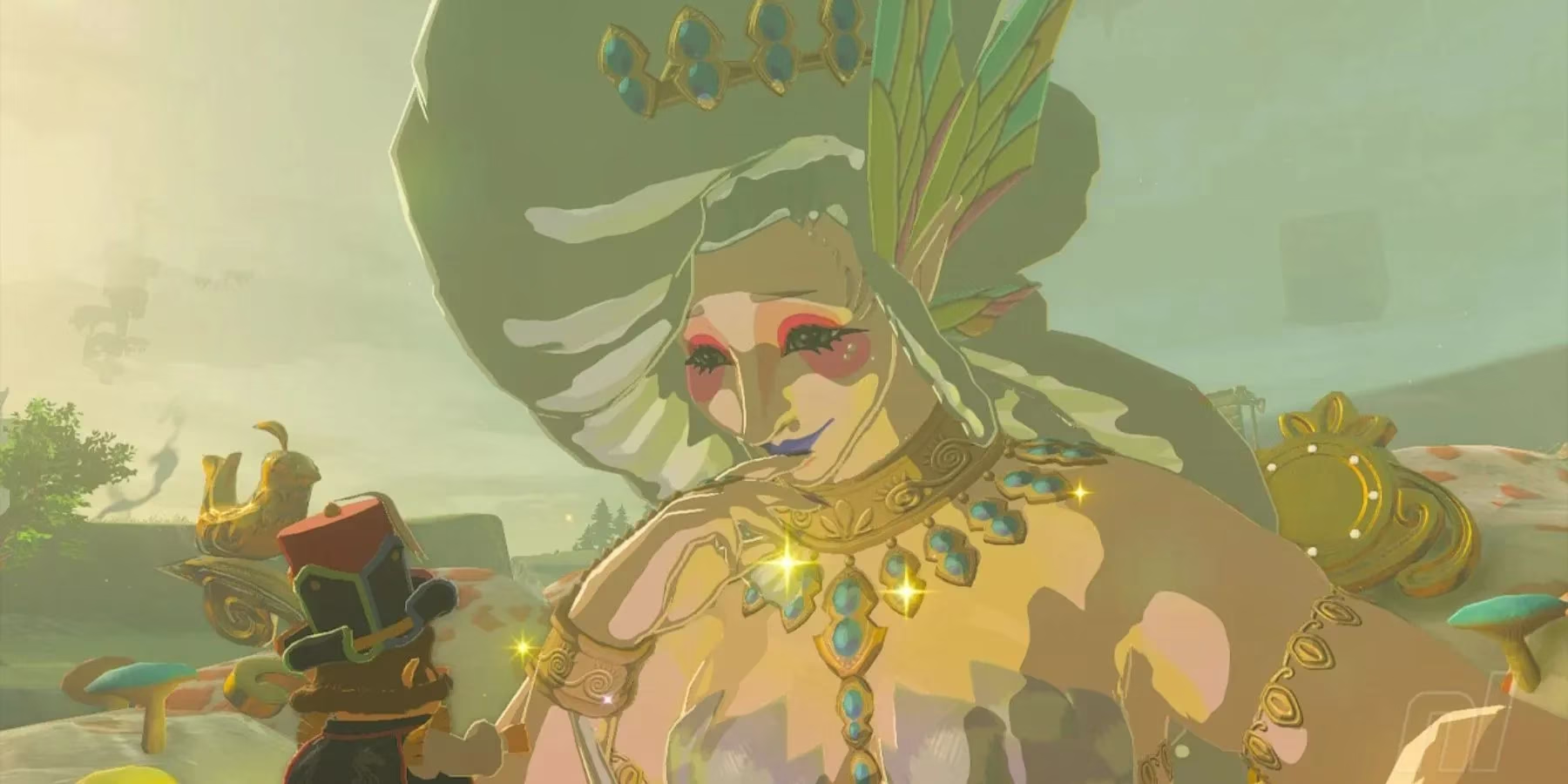
From a rupee tollbooth to a traveling performance
Breath of the Wild gave the four Great Fairies a memorable presence. Players were likely to meet their first fairy early on outside Kakariko Village, and from there the search for more fountains became a natural part of exploration. Armor upgrades were not always mandatory, but the fairies themselves were a unique reward that set up endgame preparation. They were well integrated into Hyrule, with side quests often pointing toward them and with Malanya the Horse God acting as a surprise subversion for players who stumbled upon him.
Yet the older system had clear weaknesses. The four Great Fairy Fountains were spread across the map, and the farthest one sat in the bottom-left corner of the Gerudo Desert. Worse, the fairies had been starved of power and demanded increasingly large rupee donations. Because rupees were scarce in Breath of the Wild, the total cost to unlock full equipment upgrades reached 11,600 rupees. In effect, Breath of the Wild turned the Great Fairies into a rupee tollbooth on the road to armor upgrades, and that tollbooth sat at the end of a very long detour.
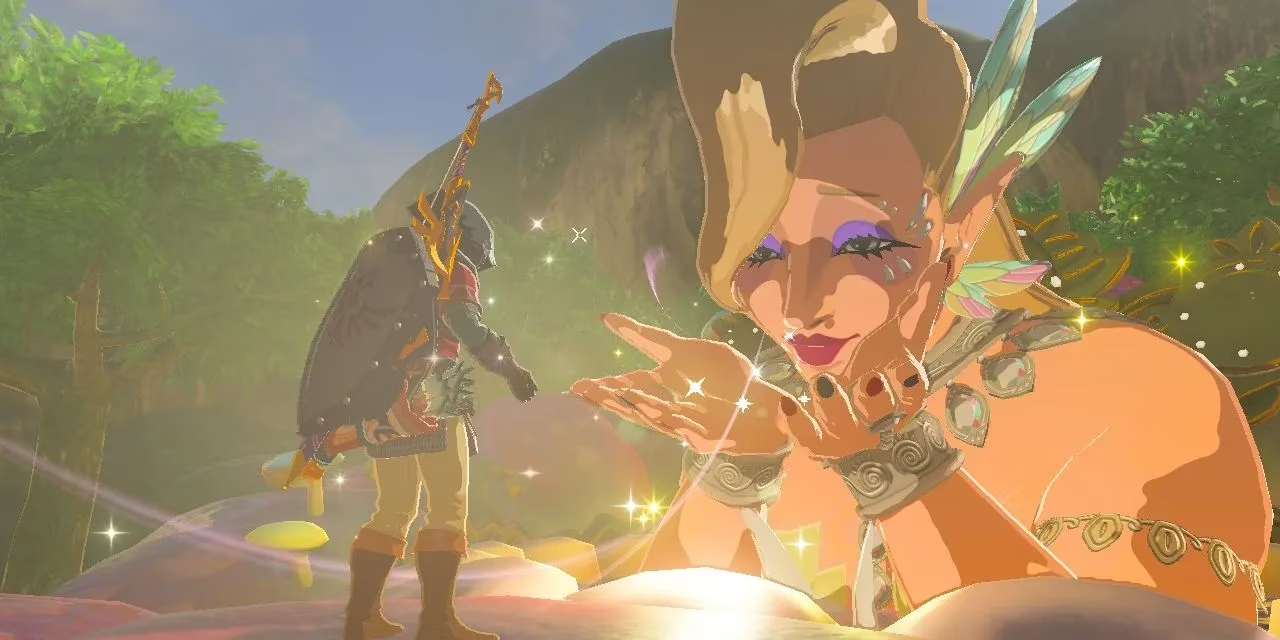
Tears of the Kingdom took another swing at the idea, and the result is a much more enjoyable engagement with the fairies. The Great Fairies no longer require massive rupee donations. Instead, Hyrule's recent Gloom outpouring during the Upheaval has scattered them, and they are too frightened to leave their flowers. A fortunate side effect is that all four are now somewhat closer to the center of Hyrule, reducing the old sense of a long, expensive pilgrimage.
The new questline begins either by finding a Fairy Fountain and being turned away or through the Serenade to a Great Fairy Side Adventure at Woodland Stable. It stems from the even larger Potential Princess Sightings! Side Adventure with the Lucky Clover Gazette, and it involves helping a troupe of traveling musicians at certain stables. After the first fountain, the remaining quests can be completed in any order, though progress may be delayed if players have not also found the musician desired by a particular fountain. The musician troupe functions like a ring of living keys, each one cut to open a specific fountain, and that structure gives the questline a pleasant rhythm of discovery rather than a single upfront payment.
A Side Adventure with main-quest gravity
The questline also makes strong use of Tears of the Kingdom's systems. The horse harness becomes a central tool, and the ensuing Ultrahand puzzles fuse Shrine elements with Korok travelers in an interesting way. These puzzles feel like watchmakers' benches where shrine machinery and Korok travel gear are laid out side by side, waiting to be assembled into a working solution. The result is a more engaging way to interact with the Great Fairies, which matters because armor upgrades have become increasingly important in Tears of the Kingdom.
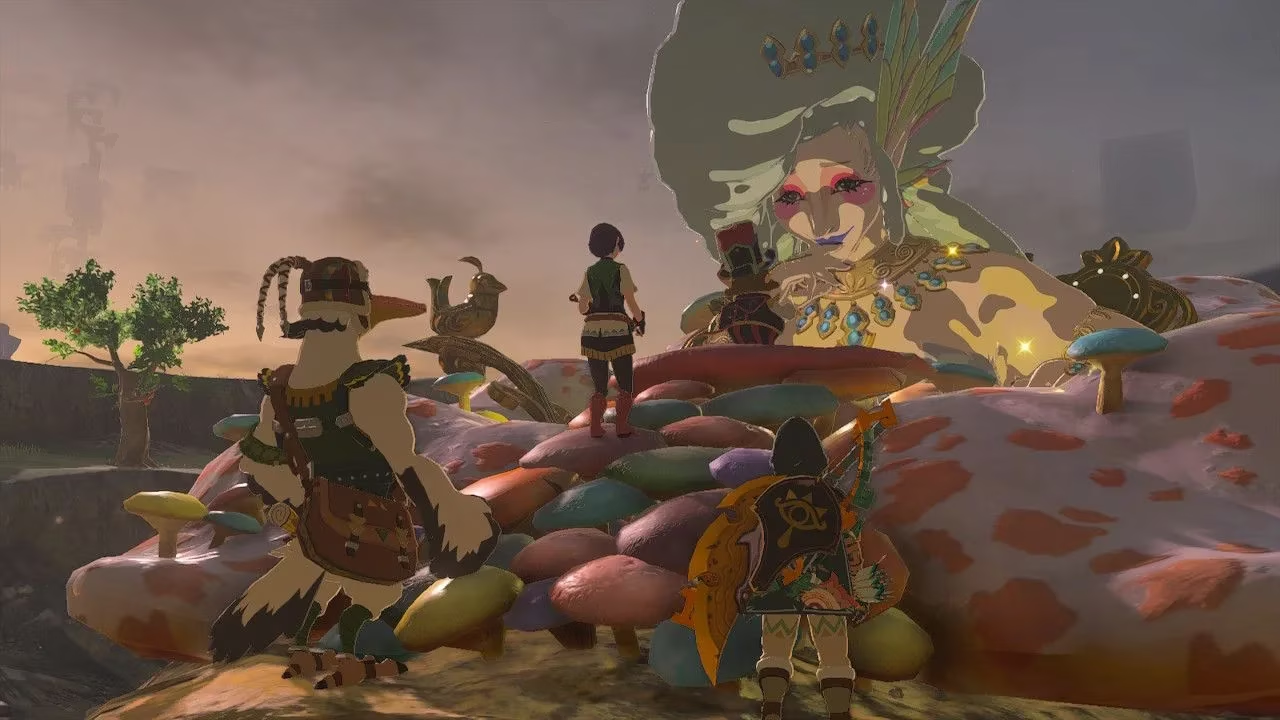
Side Adventures in Tears of the Kingdom are generally larger and more segmented than ordinary side quests, and certain standouts such as Master Kohga of the Yiga Clan feel almost like main quests in size and complexity. The Great Fairy line belongs in that upper tier. It is not merely a set of armor-upgrade vendors; it is a cross-regional quest that asks players to help performers, solve spatial puzzles, and reconnect a scattered network of powerful figures.
| Element | Breath of the Wild | Tears of the Kingdom |
|---|---|---|
| Main gate | Large rupee donations | Helping frightened fairies and musicians |
| Cost structure | Up to 11,600 rupees total | No massive rupee requirement |
| Quest shape | Find fountains across the map | Serenade to a Great Fairy and related Stable quests |
| Order | Largely exploration-driven | First fountain, then flexible order |
| System hook | Rupee collection and armor upgrades | Horse harness, Ultrahand puzzles, Shrine and Korok elements |
| Integration | Side quests and exploration | Tied to Lucky Clover Gazette and Potential Princess Sightings! |
Why it still matters in 2026
The Great Fairy questline is a compact case study in how Tears of the Kingdom improved on Breath of the Wild without discarding what worked. It keeps the fairies as mysterious, rewarding figures, but it removes the blunt rupee barrier and replaces it with a chain of encounters that encourages travel, attention, and experimentation. For players returning to the game in 2026, or for newcomers exploring Hyrule for the first time, the questline remains a strong argument for the Side Adventure format. It shows that optional content can carry main-quest weight when it is woven into the world's systems and stories rather than parked behind a single price tag.
Tears of the Kingdom remains playable on Nintendo Switch, and its Great Fairy line continues to be one of the game's most persuasive refinements. It is a reminder that open-world design is often less about adding more map markers than about turning the journey between them into something worth remembering.