
Star Wars Should Finally Let Tatooine Fade Into the Dunes
Star Wars keeps returning to Tatooine, its most overused location, but the franchise thrives without this dusty crutch.
For almost fifty years, Tatooine has been the Star Wars galaxy’s most familiar front porch. It is where Luke Skywalker stared at twin suns, where Anakin Skywalker was a slave, and where the franchise keeps leaving its keys. The desert planet first appeared in A New Hope, and since then it has become less a location than a reflex. As of 2026, after Star Wars Outlaws launched in 2024 and sent players back to Jabba’s palace, the question is sharper than ever: why does this galaxy keep circling one dust ball?
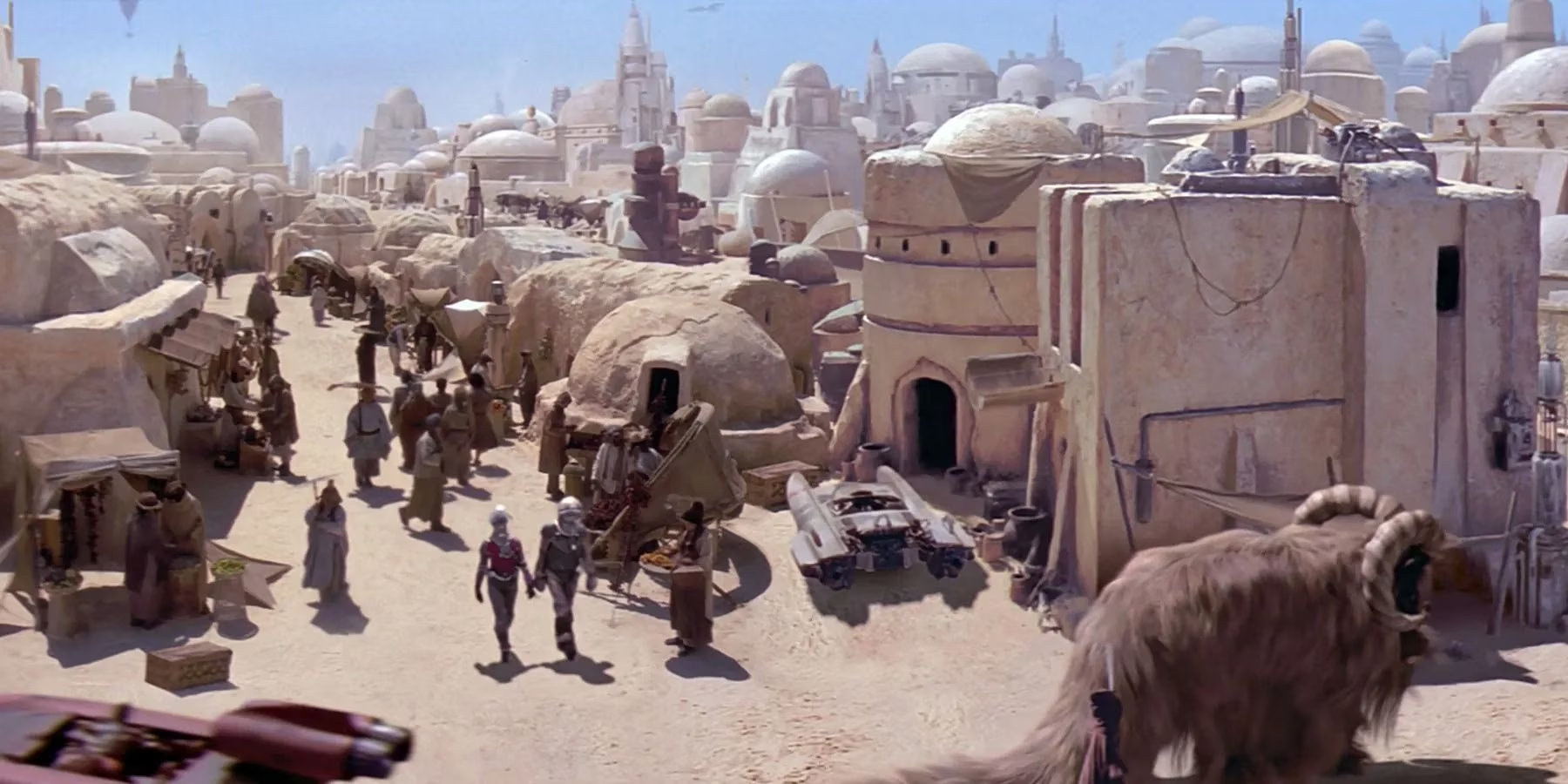
The answer is nostalgia, but nostalgia has a shelf life. Tatooine is by far the most overused location in the franchise. It anchors the first act of Return of the Jedi. It dominates extended stretches of The Phantom Menace and Attack of the Clones. The sequel trilogy mostly avoided it, yet The Force Awakens gave audiences Jakku, a planet that was Tatooine in all but name. The Rise of Skywalker only returned to the real thing for its final scene, as if the franchise could not resist one last sand-swept goodbye.
📺 On Disney+, the pattern became even more pronounced. The Book of Boba Fett spent the vast majority of its run on Tatooine. The Mandalorian dropped in whenever it needed a familiar cantina or crime lord. Obi-Wan Kenobi made the planet a major location, and animated series have periodically used it as a backdrop. In 2024, Star Wars Outlaws confirmed that video games are just as guilty: players rub shoulders with Jabba the Hutt and navigate the same worn streets. Tatooine was a major setting in Star Wars: Knights of the Old Republic, too, and its tight map arguably did more for world-building than many bigger locations. Yet repetition has turned that strength into a crutch.
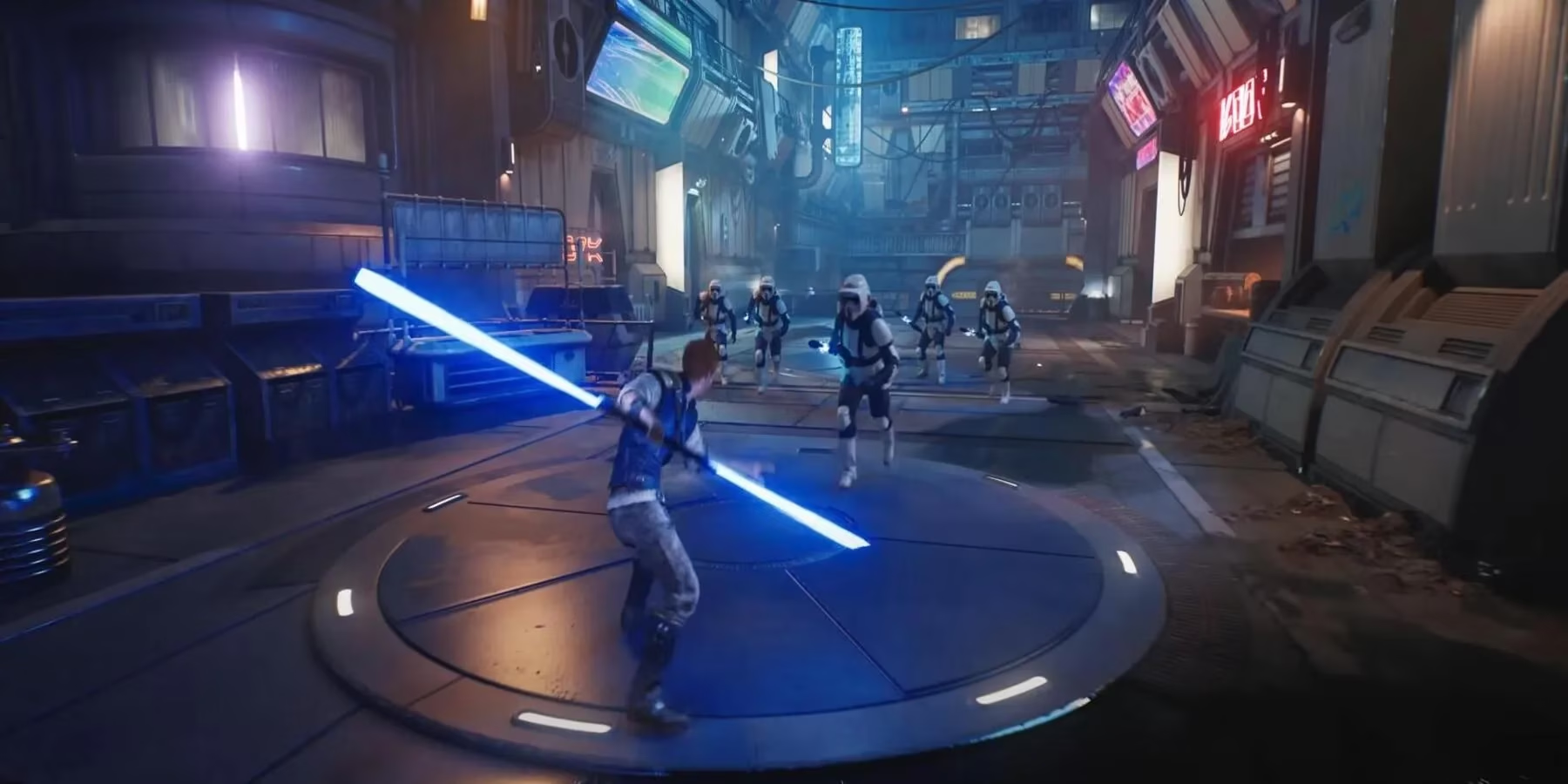
What makes the overuse so strange is that Star Wars has shown it can thrive elsewhere. The Empire Strikes Back, The Last Jedi, and Rogue One never set foot on Tatooine. Andor, often considered the best Star Wars show, does not even reference it. The Star Wars Jedi games feature a wide spread of planets, and the iconic desert world is not one of them. Recent live-action series such as The Acolyte and Skeleton Crew largely avoided it, and they did not suffer for that choice. These stories prove that the franchise can manage without a single grain of Tatooine sand. It is like a chef who owns a galaxy of spices but keeps reaching for the same salt shaker.
Part of the problem is that Tatooine has become a narrative pit stop. Many films, shows, and games only feature the planet for a limited time, almost as if checking a box for nostalgic fans. The planet appears, a familiar creature grunts, someone mentions Jabba, and the story moves on. It is a cameo disguised as a setting. That approach weakens both Tatooine and the stories around it. A location that once felt vast and dangerous now feels like a theme park with unlimited re-entry.
| Medium | Tatooine’s Role | Effect |
|---|---|---|
| Original trilogy | Luke’s home; Jabba’s domain | Iconic, but repeated |
| Prequels | Anakin’s origin | Expanded, then exhausted |
| Disney+ shows | Boba Fett, Obi-Wan, Mando stops | Familiar but predictable |
| Video games | KOTOR, Outlaws, many others | Playable, yet overplayed |
The franchise’s own history suggests that new iconography can work. Jakku, whatever its critics say, gave the sequel trilogy a fresh visual identity. Jedha, Ferrix, Lothal, and Peridea have each offered distinct textures. Even a place as small as Ferrix in Andor became more emotionally resonant than Tatooine has in years. Star Wars is supposed to be a diverse universe, not a single desert cul-de-sac. Tatooine is like a favorite song played at every party: it was great once, but now it mostly signals that nobody has bothered to make a new playlist.
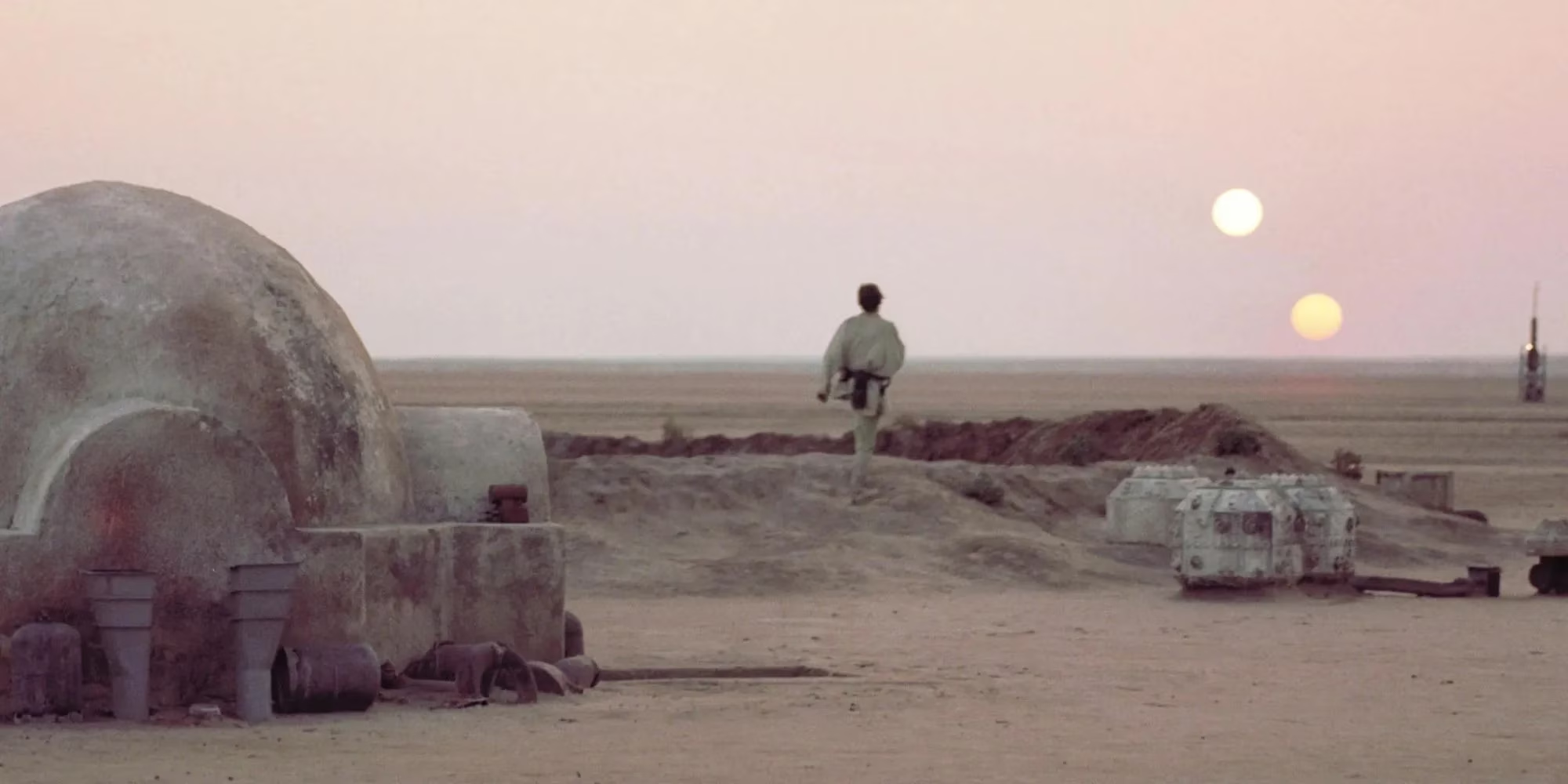
In 2026, the franchise stands at a crossroads. Star Wars Outlaws has already given fans another Tatooine adventure, and more projects are always in motion. If every new story keeps returning to the same suns, the galaxy will keep shrinking. Shelving Tatooine does not mean erasing it. It means letting it rest, letting its mythology regain weight, and allowing new planets to become the next generation’s defining image. The desert planet can remain a memory, a legend, a place Luke once watched the horizon. But the horizon should belong to someone new.
Data referenced from PEGI helps frame why familiar franchise settings like Tatooine keep resurfacing across films and games: large, cross-generational IP often leans on instantly recognizable backdrops to stay accessible across age groups and platforms, even when creative fatigue sets in. When a setting becomes a reliable “entry point” for audiences with different expectations, the result can be the kind of repeat-visit design the blog critiques—Tatooine functioning less as a living world and more as a shorthand for Star Wars itself, which in turn makes the galaxy feel smaller unless new planets are given room to become equally legible icons.