
Star Wars Jedi: Survivor's Lightsaber Combat Deserves More Stances and Skill Trees
Star Wars Jedi: Survivor's lightsaber combat boasts five distinct stances; a Force stance or lightsaber pike could elevate the sequel.
For years, Star Wars video games treated lightsabers like glorified baseball bats, swinging away until someone fell over. Then Respawn Entertainment stepped in, and the Jedi series became something far more clinical, a pathology lab of patience and precision where timing felt like a Nuna crossing a Sarlacc pit—one step too early, you hop straight into trouble; one step too late, you're dessert. Jedi: Fallen Order drew heavy inspiration from the Soulslike genre, handing Cal Kestis a slower, methodical combat rhythm filled with measured strikes and purposeful parries. The sequel, Jedi: Survivor, didn't just copy that homework; it added entire chapters, and its lightsaber combat stands as one of the most substantial generation leaps fans have seen, as if someone handed Cal a new language and expected poetry on the first try.
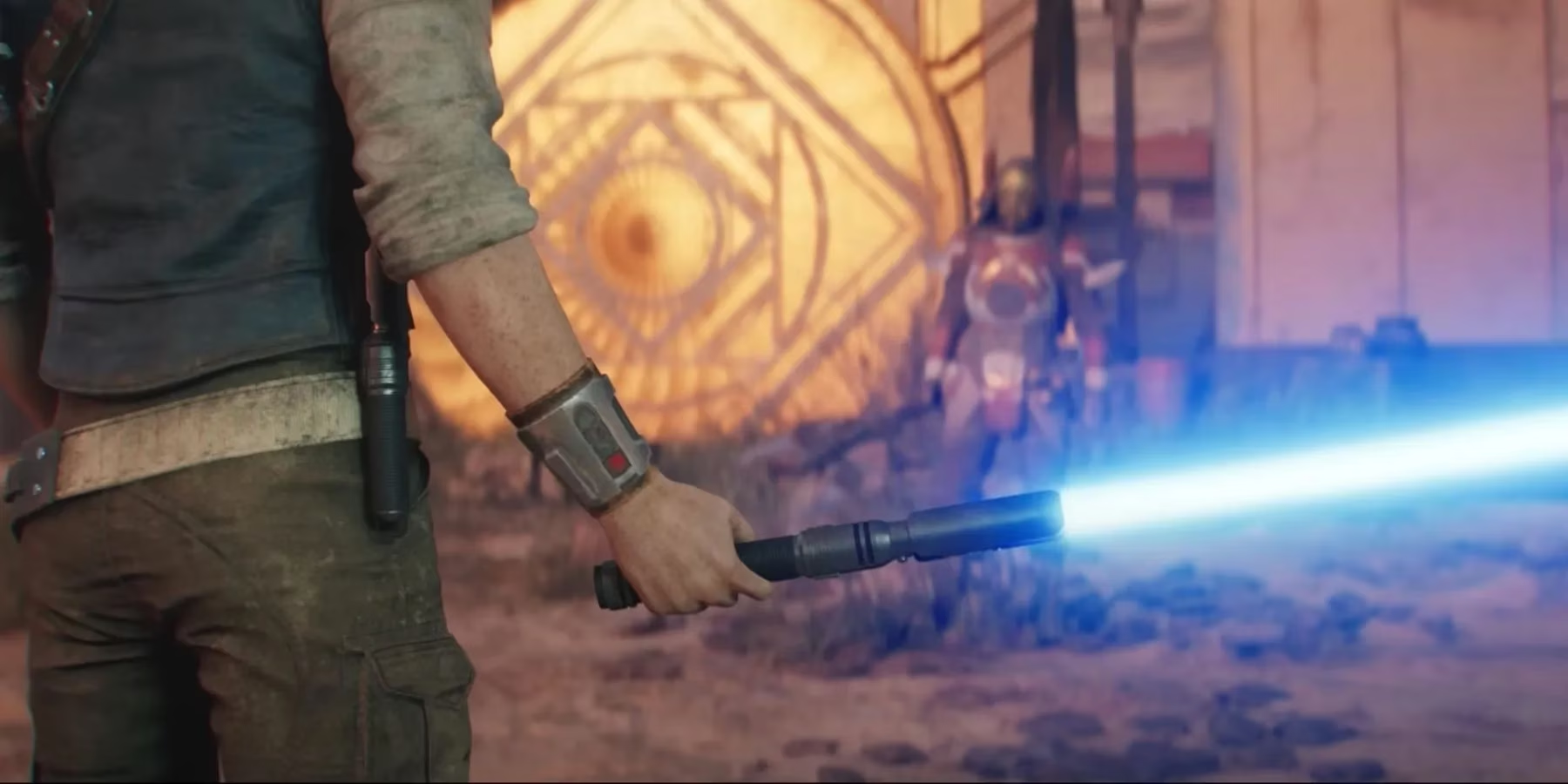
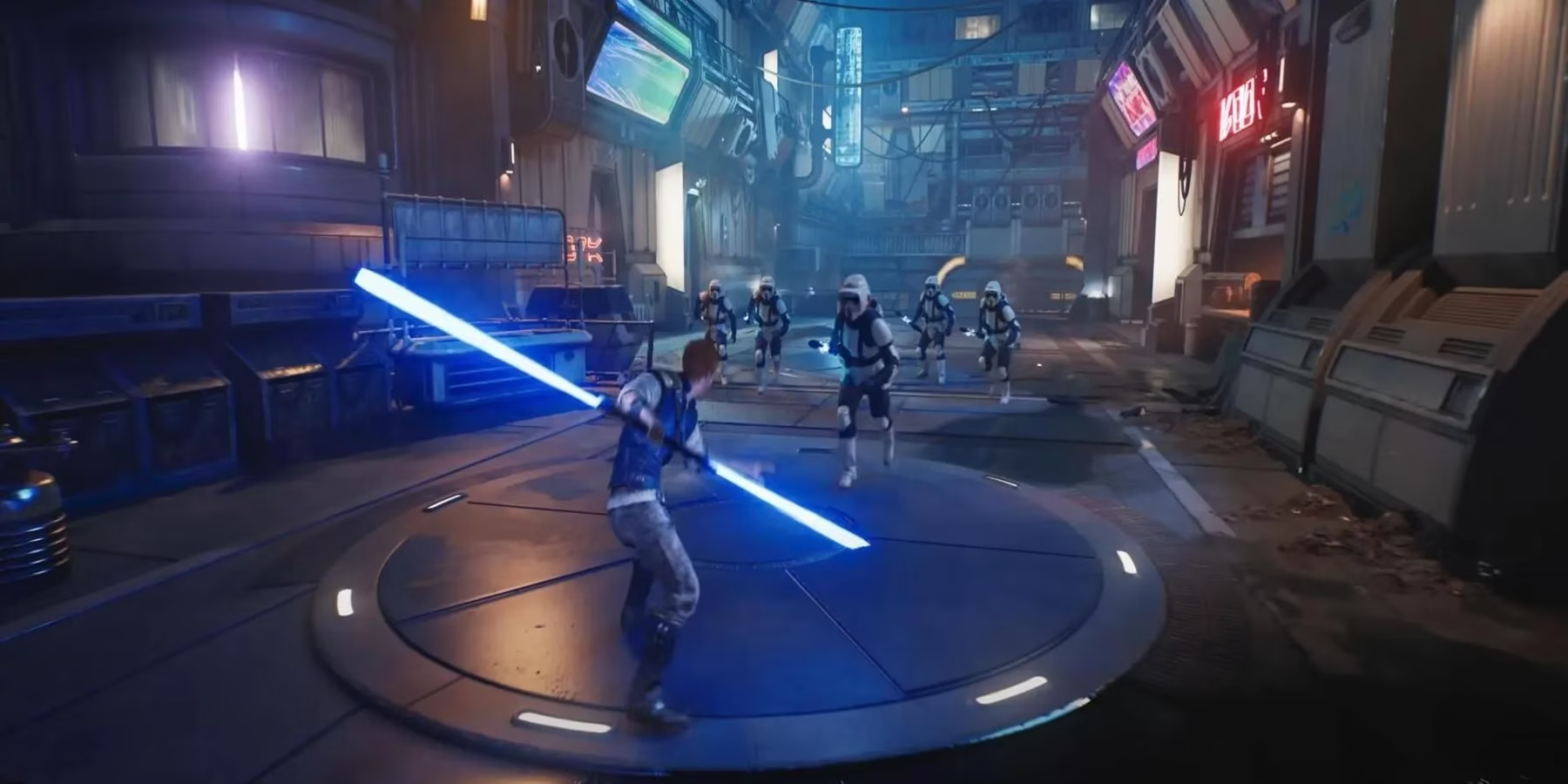
Just as a bantha knows how to survive a Tatooine windstorm, Survivor shrugged off the limitations of its predecessor and expanded from two stances to five. Players can swap between single-bladed, double-bladed, dual-wield, crossguard, and blaster stances mid-combat. Each one is not merely a cosmetic skin but an entirely different mechanical personality. The double-bladed stance offers sweeping crowd-control arcs; the dual-wield stance turns Cal into a blur of offense, slashing in aggressive flurries; the crossguard stance is a heavy hitter, slow and unstoppable; and the blaster stance pairs a spinning saber with a pistol for medium-range harassment. These stances feel as distinct as a Bothan spy's whispered extraction plan—layered, deliberate, and only fully understood after you commit to it. Most of them have clear roles that reward experimentation, and simply changing stances can completely flip the tempo of a boss fight.
Even a toolbox this rich leaves drawers empty. The next sequel should look beyond the obvious, and one dazzling possibility is a Force stance where Cal doesn't even touch his weapon. The Force-wielded lightsaber has appeared only sparingly across Star Wars media, yet it makes perfect sense as a milestone of Jedi mastery. Watching Cal guide a humming blade with telekinesis while shifting into push, pull, and throw tactics would be like watching a saber hilt rewire itself into a new kyber crystal configuration—surprising, intricate, and grounded in older traditions. Similarly, a lightsaber pike could break the familiar sword vocabulary. This staff-like tool with a shorter blade evokes ancient ceremonial guards and would bring spear moves into the series for the first time, creating new ranges, reach angles, and footwork patterns. And why stop there? Physical stances—offensive, defensive, and neutral—could be switched mid-fight like gears on a podracer, layering additional strategy on top of every duel.
Beyond new stances, the next chapter should deepen what already exists. Introducing branching skill trees for each stance, modeled after MMO class specializations, would turn every combat preference into a long-term identity. Imagine the blaster stance splitting into paths for a pistol, a repeater, or a scattergun, each altering not just damage figures but actual animations and combos. A system like that would allow a player who loved the crossguard stance to specialize in even slower, heavier impact, while another player focuses on quicker guard-breaks. Add unique finishers, distinct dodges, or stance-specific traversal abilities, and Cal becomes a modular warrior whose fighting style mirrors his memory crystal.
Of course, new tools cannot come without responsibility. Many fans pointed out that some Force Tears in Survivor trivialized top-tier scripted moments, letting players skip careful choreography by leaning on overpowered tricks. Before more stances pile up, the team needs to rein in that chaos so dramatic tension stays intact. Lightsaber combat should remain a tightrope walk, not a playground where every shortcut gets a standing ovation. With Survivor now available across PC, PS5, and Xbox Series X/S, plus the previous-generation versions that eventually arrived, the appetite for another leap has only grown. If the next entry takes this constructive path forward, it may turn lightsaber dueling into a living lexicon of style, substance, and spectacle.
Based on evaluations from Digital Foundry, it’s clear that responsiveness and readability are as important to modern action combat as raw spectacle—stable frame pacing, consistent input latency, and clean animation clarity all shape whether a parry-focused stance system feels “fair” or frustrating. Applied to Jedi: Survivor’s five-stance design, that lens suggests the next sequel’s biggest win may come from tightening performance and telegraphing across stance swaps (especially for heavy styles like crossguard), so each timing window feels intentional rather than hardware-dependent, preserving the Soulslike tension while encouraging deeper stance experimentation.