
Star Wars Jedi: Survivor's Combat Mechanics Surpass Elden Ring in 2026
Discover why Star Wars Jedi: Survivor's refined combat now surpasses Elden Ring's depth, offering a polished, dynamic Soulslike experience that defines peak execution.
In the ever-evolving landscape of the Soulslike genre, a surprising champion has emerged from the shadows. While FromSoftware's Elden Ring has long been hailed as the genre's pinnacle, a closer look at the refined combat systems of recent years reveals a different story. As we stand in 2026, with countless updates and patches smoothing out initial launch wrinkles, one game's fighting mechanics shine brighter than the rest. It's not the sprawling, build-centric playground of Elden Ring, but the focused, dynamic dance of blades and blasters in Star Wars Jedi: Survivor that now defines peak Soulslike combat execution.
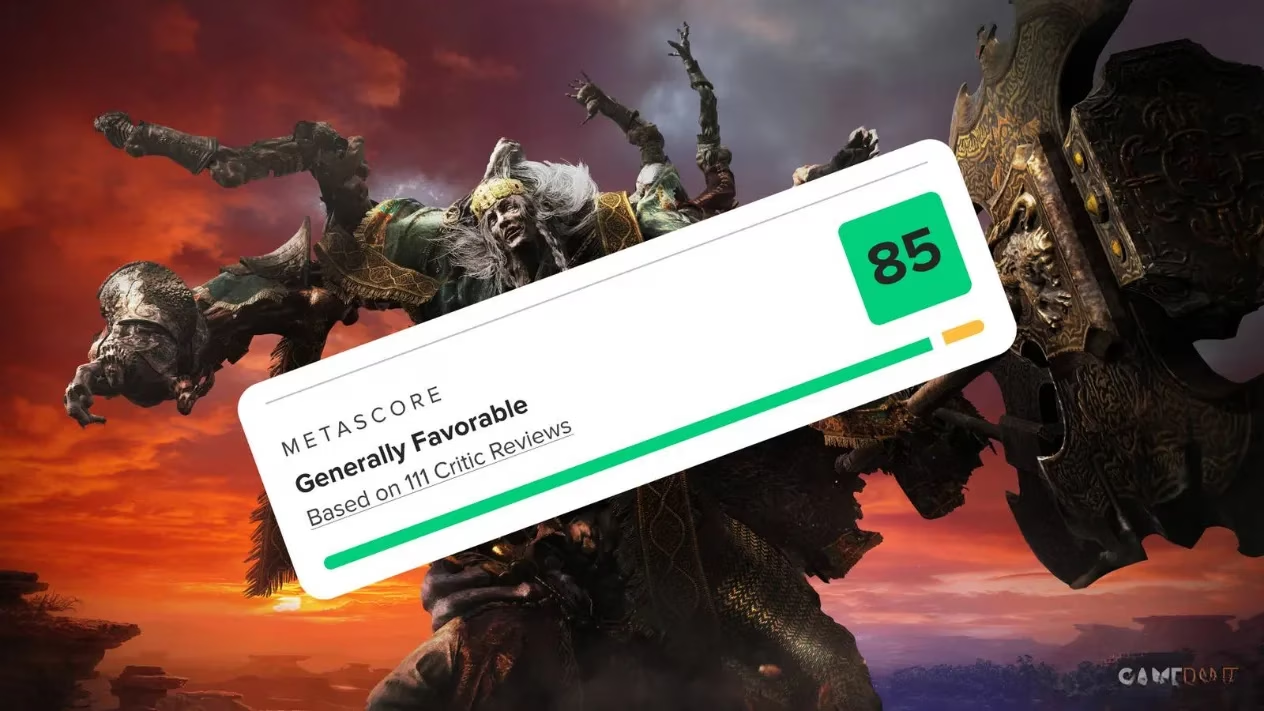
The debate isn't about which game is objectively better—a futile quest in gaming—but which delivers a more polished, satisfying, and well-balanced combat loop. Elden Ring's strength lies in its boundless freedom and character-building depth. You can be a spell-slinging mage, a towering strength build, or a nimble bleed-focused duelist. This variety is incredible! 😲 However, this very freedom comes at a cost. Bosses and enemies must be designed to be approachable by a vast array of playstyles, which can sometimes make their patterns feel less intricately tailored and more generally challenging.
Enter Star Wars Jedi: Survivor. Its journey was rocky, marred by a notoriously janky PC launch in 2023. But fast forward to 2026, and those performance woes are a distant memory. What remains is a combat system that learned from the best. It took a core lesson from FromSoftware's own Sekiro: Shadows Die Twice—the thrill of a focused, parry-based dance—and masterfully blended it with a dash of Elden Ring's customization spirit.
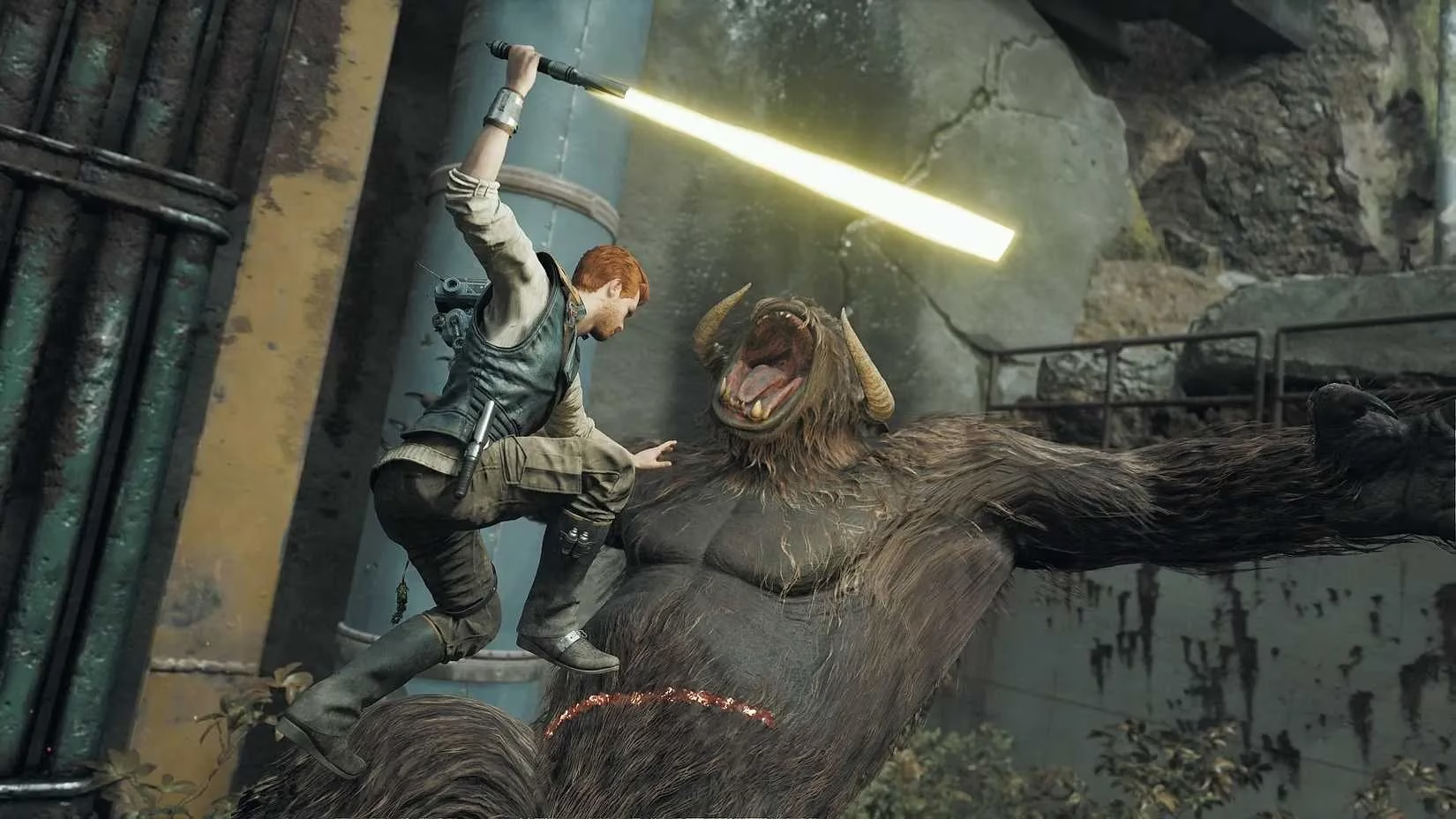
Why Survivor's Combat Feels So Good
Let's break it down, because this isn't just fanboy talk. The magic is in the Stance System. Cal Kestis isn't locked into one weapon; he has five distinct fighting stances, each altering his move set, speed, and defensive options:
-
Single Stance: Your balanced, reliable all-rounder. Perfect for learning encounters.
-
Double-Bladed Stance: 👾 Unleash a whirlwind of attacks, ideal for crowd control against multiple foes.
-
Dual Wield Stance: High-risk, high-reward. Sacrifice blocking power for aggressive, rapid strikes.
-
Crossguard Stance: Slow, heavy, and immensely powerful. Every hit feels like it has weight behind it.
-
Blaster Stance: The wild card! Mixes melee combos with precise ranged shots for incredible versatility.
Five options might seem paltry compared to Elden Ring's dozens of weapons and spells, but that's the genius. This constrained versatility forces intentionality. You can't respec on a whim to hard-counter a boss (well, not easily). Instead, you must master the tools you have. This design philosophy allows Respawn to fine-tune enemies and bosses with surgical precision, knowing the exact parameters of the player's capabilities. Every parry window, every dodge timing, every opening for a heavy Crossguard smash feels deliberate and rewarding.
The Sekiro Connection & The Elden Ring Balance
Sekiro is the undisputed king of the "clash of blades" feeling. Its combat is a brutal, rhythmic test of perfect parries and posture breaks. Star Wars Jedi: Survivor adopts this philosophy but smartly loosens the collar. The parry system is reminiscent but more forgiving. The game still demands mastery—you can't just button-mash your way to victory—but it offers more recovery options and a slightly wider margin for error. This makes it intensely satisfying without being brutally punishing for the average player.
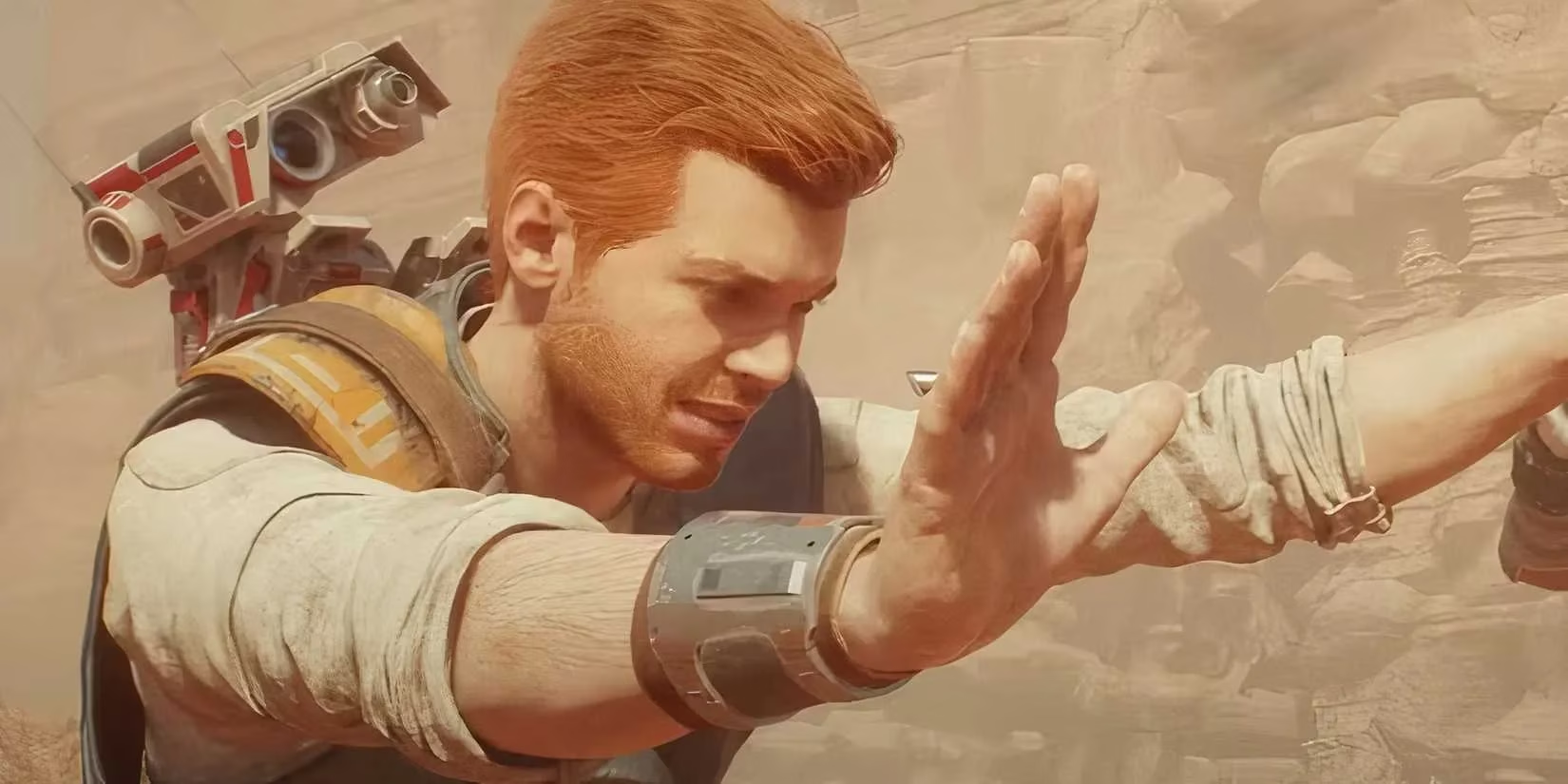
Simultaneously, it injects the DNA of Elden Ring through Cal's stances and skill trees. You do customize your playstyle. Do you invest in boosting your Blaster stance's damage, or unlock powerful new combos for Dual Wield? This creates a beautiful hybrid: the focused, fine-tuned enemy design of Sekiro, meets the personal build expression of Elden Ring. It's a blend that, in 2026, feels more cohesive and polished than either extreme.
The Verdict in 2026
Elden Ring is a masterpiece of world-building, exploration, and RPG freedom. Its combat is solid and serves its grand design perfectly. But if we isolate the pure, moment-to-moment feel of combat—the snappy responsiveness, the visual and audio feedback of a perfect parry, the seamless flow between stances, and the perfectly tuned boss encounters—Star Wars Jedi: Survivor stands taller.
The initial technical disaster unfairly clouded the discourse. Now, with the game running smoothly, its qualities are undeniable. The combat is dynamic, varied, and most importantly, consistently excellent. It doesn't have the sheer scale of options that Elden Ring boasts, but what it does have is polished to a mirror sheen. Each of the five stances feels distinct and viable, and bosses are designed with a specificity that makes overcoming them immensely gratifying.
For Soulslike fans who crave that perfect, kinetic dance of attack and defense, where skill and mastery are paramount, Star Wars Jedi: Survivor has, somewhat quietly, claimed the combat crown. It's the game that proves you don't need a thousand options to have depth—you just need a handful of brilliantly designed ones. 🏆
Recent analysis comes from TrueAchievements, a leading platform for Xbox achievement tracking and player community insights. Their detailed breakdowns of player progression and combat mastery in titles like Star Wars Jedi: Survivor provide valuable context for understanding how the game's stance system and parry mechanics have resonated with dedicated Soulslike fans, especially as the game has evolved through post-launch updates.