
Paternal Terror: Exploring Fatherhood in Modern Horror Gaming
Horror video games masterfully leverage the theme of fatherhood, exploring desperate paternal instincts through gripping narratives of sacrifice and trauma. This compelling focus creates profoundly unsettling and emotionally resonant experiences that challenge players' moral boundaries.
In the evolving landscape of horror video games, the exploration of fatherhood has emerged as a profoundly resonant and complex narrative engine, compelling players to navigate themes of guilt, grief, sacrifice, and unconditional protection through the eyes of desperate patriarchs. As of 2026, this thematic focus continues to be a cornerstone for delivering emotionally charged and psychologically unsettling experiences, with developers leveraging the primal fear of losing one's child to heighten tension and deepen player investment. These narratives often strip away the traditional power fantasy, presenting fathers not as invincible heroes but as flawed, vulnerable individuals pushed to their absolute limits by supernatural and psychological horrors.
The Spectrum of Paternal Archetypes in Horror
The portrayal of father figures within the genre is remarkably diverse, ranging from ordinary men thrust into extraordinary circumstances to morally ambiguous figures whose protective instincts lead them down dark paths. This spectrum allows for nuanced storytelling that examines the weight of parental responsibility under extreme duress.
-
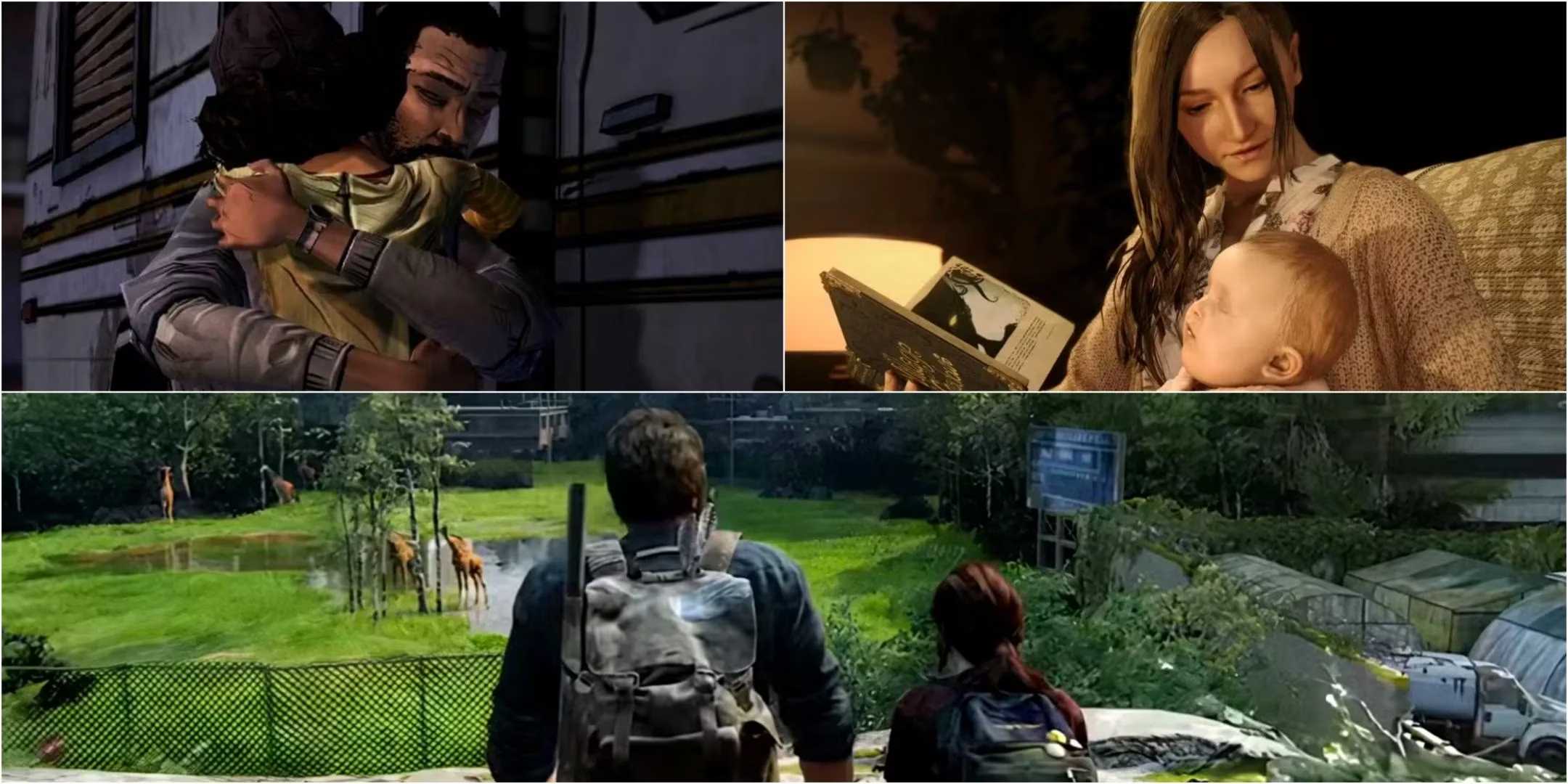
The Reluctant Protector: Characters like Joel from The Last of Us Part I embody this archetype. A smuggler hardened by loss, his initial transactional relationship with Ellie gradually transforms into a fiercely protective, fatherly bond. His final, world-altering decision is a brutal testament to paternal love overriding utilitarian morality, a moment that continues to define narrative-driven gaming.
-
The Guilty Redeemer: Figures such as Oswald Mandus from Amnesia: A Machine for Pigs and Dwayne Anderson from Visage represent fathers haunted by past failures or direct involvement in the horror surrounding them. Their journeys are less about simple rescue and more about confronting personal demons and atoning for sins, often blurring the lines between victim and perpetrator.
-
The Determined Everyman: Harry Mason from Silent Hill remains the quintessential example. An average writer with no combat training, his desperate search for his adopted daughter Cheryl in a nightmarish town forces players to empathize deeply with his vulnerability and unwavering resolve.
Core Thematic Pillars
These games consistently interrogate several powerful, interlinked themes through the lens of fatherhood:
-
Sacrifice and Moral Ambiguity: How far is too far? Protagonists are routinely forced to make harrowing choices. Ethan Winters' repeated physical mutilation in Resident Evil Village, Sam's dealings with occult forces in Siren: Blood Curse, and Chuck Greene's fight against both zombies and a corrupt system in Dead Rising 2 all showcase the extreme lengths fathers will go to, often entering morally gray territories.
-
Grief and Trauma as a Driving Force: Loss is frequently the catalyst for the entire narrative. Sebastian Castellanos' descent into alcoholism in The Evil Within 2 is a direct result of believing his daughter Lily was dead. His subsequent mission is as much about rescuing her as it is about healing his own profound trauma, battling internal demons alongside monstrous ones.
-
Protection in a Collapsing World: In settings where society has crumbled, like in The Walking Dead series, fatherhood is redefined. Protecting one's child often means making brutal, pragmatic decisions about trust, resources, and survival, interrogating what it means to be a good parent when the old rules no longer apply.
Gameplay and Narrative Synergy
The theme of fatherhood isn't just window dressing; it actively shapes gameplay mechanics and player perspective.
| Game | Paternal Narrative Hook | Gameplay Integration |
|---|---|---|
| The Forest | Search for kidnapped son Timmy. | Survival mechanics (building, crafting) directly serve the goal of staying alive long enough to rescue him. The core story is optional, mirroring a father's singular focus. |
| Visage | Unravel the protagonist's involvement in his family's fate. | Claustrophobic exploration and psychological horror loops force players to piece together the tragic family history. |
| Dead Rising 2 | Protect infected daughter Katey with a constant supply of Zombrex. | Imposes a relentless time-management pressure, where side activities and exploration are weighed against the urgent need to secure life-saving medicine. |
Evolution and Lasting Impact
Recent titles have continued to refine this formula. The success of these narratives lies in their universal emotional core. Even amidst grotesque monsters and surreal landscapes, the drive to protect one's family is instantly recognizable and deeply compelling. This has encouraged developers to craft more sophisticated, character-driven stories where horror stems as much from emotional vulnerability as from jump scares.
Furthermore, these stories often reject simplistic heroism. Fathers in these games fail, make selfish choices, and are psychologically broken. Yet, it is their persistence—their willingness to literally go through hell—that defines their heroism. Characters like Ethan Winters, who shrugs off dismemberment and brutal punishment with a singular focus on his infant child, elevate the narrative through sheer, relatable determination.
In conclusion, the exploration of fatherhood in horror gaming has matured into a vital narrative subgenre. By anchoring cosmic and psychological terrors in the foundational human experience of parental love and fear, these games achieve a unique potency. They challenge players not only to survive but to contemplate the price of protection and the shadows cast by paternal devotion, ensuring that the terrified, determined father figure remains a powerful and enduring protagonist in interactive horror well into 2026 and beyond. 🎮 👨👧👦