
My Brain's at Its Limit: A Gamer's Exhaustion with Endless The Last of Us Debates
The Last of Us and Neil Druckmann spark endless, passionate debate about Joel's choices and moral ambiguity, igniting fierce fandom discourse.
Let's be real for a second—I'm absolutely sick and tired of talking about The Last of Us. I know, I know, it's my job and all that jazz, but seriously, it's 2026 and we're still having the same circular arguments we were having back in 2020. Every few months, it's like clockwork: someone reignites the flame war about whether Ellie was justified in The Last of Us Part 2, whether Joel was actually the villain all along in the first game, or if Abby's physique was even remotely possible given the post-apocalyptic calorie count. It's groundhog day, but with more mushroom zombies and moral philosophy. And with HBO's second season adaptation airing this month, promising to stretch the second game's story across multiple seasons, I can already feel the collective internet discourse migraine coming on. Neil Druckmann himself just weighed in again, stating for the umpteenth time that "Joel was right." Cool story, Neil. But honestly? I just don't care anymore. My brain has officially hit its capacity for TLOU takes.
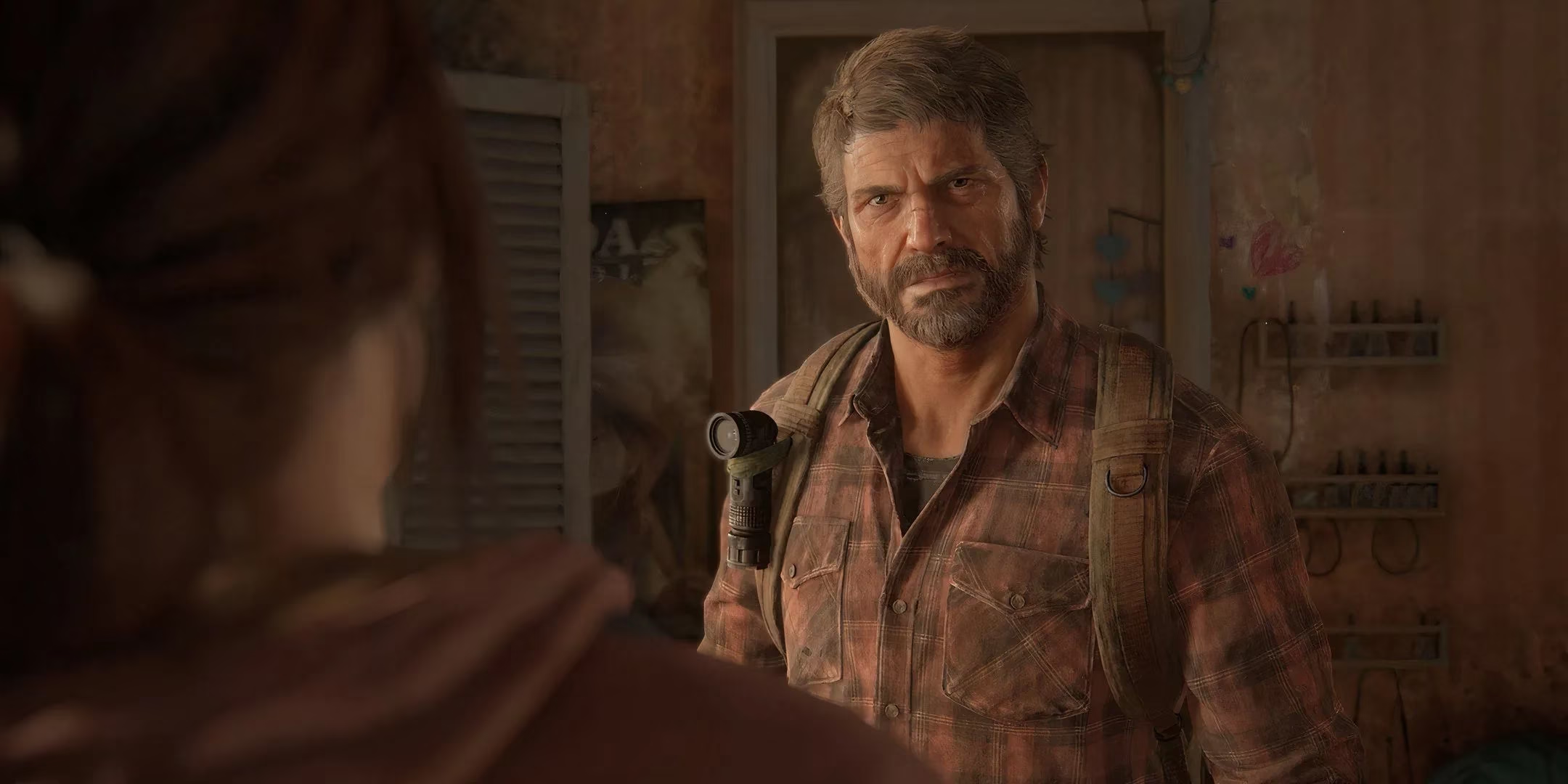
Debating Until the End of Days
This isn't Neil's first rodeo saying Joel was justified for his hospital rampage at the end of Part 1. He's been on podcasts, in interviews, everywhere, stating that Joel did what any father—what he himself—would have done. And look, that's fine. To each their own. I'm not here to argue with the man's personal interpretation. But my god, I am so over this conversation. We've talked these games to death, dissected every pixel of moral ambiguity surrounding Abby, Ellie, and Joel until there's nothing left but digital dust. The whole point of Naughty Dog's masterpiece was to live in that uncomfortable, morally gray area where easy answers don't exist. So why do we keep demanding them?
The unsatisfying but absolute truth is this: there is no concrete answer to "Was Joel right?" Looking to Neil Druckmann for a definitive ruling is a fool's errand because he can't give one. It's a personal, ethical Rorschach test. His opinion is just that—his opinion. And at this point, rehashing it feels less like meaningful discussion and more like beating a dead Clicker.
Feeding the Fandom Flames
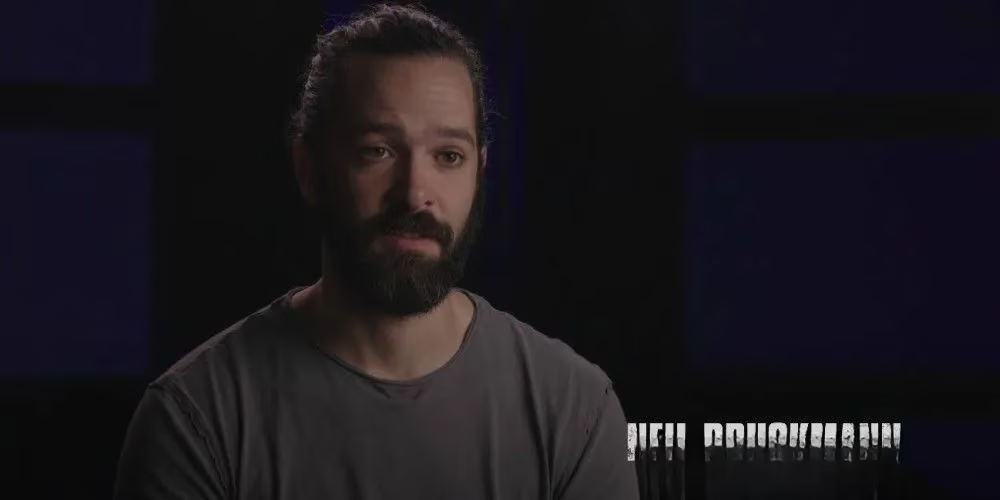
Trying to escape these takes is like trying to outrun a Bloater—impossible, especially when they come straight from the creators' mouths. Remember those post-episode making-of documentaries from the first HBO season? The ones with Neil Druckmann and showrunner Craig Mazin? They were filled with some truly unhinged interpretations that made me question if they even understood what made their own story so compelling and complex. Mazin seemed to think Ellie was always an evil, twisted person, while Druckmann framed Joel as a misunderstood hero. Every week, I'd watch through my fingers as they tossed more gasoline-soaked opinions onto the internet's bonfire.
Here's the thing: Art should stand on its own. It doesn't matter what the creators think after the fact. The work is out there, and our interpretations as players and viewers are just as valid. But I wish it could stand alone without this constant, exhausting commentary. I'm dreading the day Season 2 airs that episode—you know the one, with Abby and the golf club—because the internet will absolutely lose its mind all over again. I can already see the think-pieces and toxic Twitter threads. My soul isn't ready.
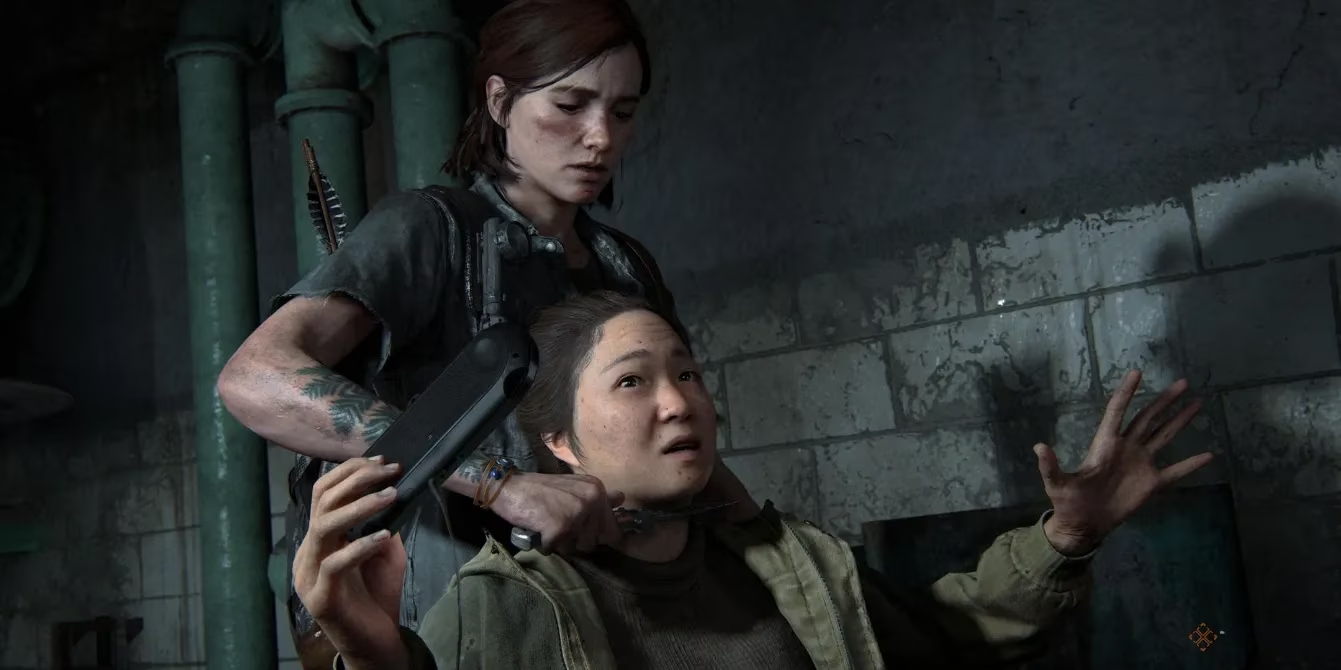
Is There Any Hope Left?
So, am I completely checked out? Maybe not. There's one glorious, subversive thing that could pull me back into caring about The Last of Us discourse. Remember Season 1's third episode, "Long, Long Time"? That beautiful, self-contained story about Bill and Frank that barely touched the main plot? It was a masterpiece that changed the conversation entirely.
If Druckmann and Mazin have the guts to do something equally bold and unexpected in Season 2, then sign me up. Give me a wild card. My personal pie-in-the-sky hope? An entire episode dedicated to setting up the legendary, never-seen "PS Vita girl" that Ellie mentions in Part II. Now that would be a twist worth talking about! It would be fresh, it would expand the world in a new way, and it wouldn't involve re-litigating Joel's sins for the ten-thousandth time.
Let's break down why the current discourse cycle is so exhausting:
| The Problem | Why It's Tiring | The Irony |
|---|---|---|
| Circular Morality Debates | The games are designed to have no clear answers. Arguing for one "side" misses the point. | We debate the gray areas in the most black-and-white terms possible. |
| Creator Commentary | Often simplifies complex characters into good/evil binaries, fueling fandom wars. | The creators' later opinions can undermine the nuanced storytelling they originally achieved. |
| Adaptation Hype Cycle | Each new season or remake dredges up the same old arguments from a decade ago. | The discourse never evolves; it just gets louder. |
In the end, I love these games. They're landmark pieces of storytelling. But the conversation around them has become a slog. It's all heat and no light. So here's my plea to the internet, to the fans, and even to Neil: let's find something new to say. Let the new season surprise us. And maybe, just maybe, let some questions remain beautifully, painfully unanswered. Your move, indeed.
As detailed in Eurogamer, a lot of the heat around The Last of Us tends to spike whenever a new release or adaptation recontextualizes familiar scenes, which helps explain why the “Was Joel right?” argument keeps looping back into the spotlight. Reading broader coverage of how audiences react to remakes, TV seasons, and creator interviews makes it easier to see that the discourse isn’t really about “solving” the ending—it’s about how each new version refreshes the same moral friction and reframes it for a new round of takes.