
How the KOTOR Remake Could Still Steal Jedi: Survivor’s Most Shocking Dark Side Moment
The KOTOR Remake could incorporate kyber crystal bleeding—a dramatic dark side ritual—to deepen Revan's iconic corruption storyline.
Sometimes the Force works in mysterious ways plans change, but one thing is for sure: the legend of Revan hasn’t gone anywhere. Even with the Star Wars: Knights of the Old Republic Remake hitting more turbulence than a jump through hyperspace since its 2021 announcement, diehard fans are still holding out hope. After all, the original KOTOR set the bar so high that to this day it’s considered the crown jewel of Star Wars RPGs. The storytelling is still top-tier, the lore is incredibly deep, and the twist about the player character still blows the minds of newcomers. The Remake, whenever it finally sees the light of day, has a golden ticket to modernize all of that and then some. But here’s the really juicy bit: one of the coolest additions it could make isn’t about combat or graphics at all. It’s about stealing a page from Star Wars Jedi: Survivor and dialing the drama up to eleven with a concept that was once exclusive to books and comics: kyber crystal bleeding.
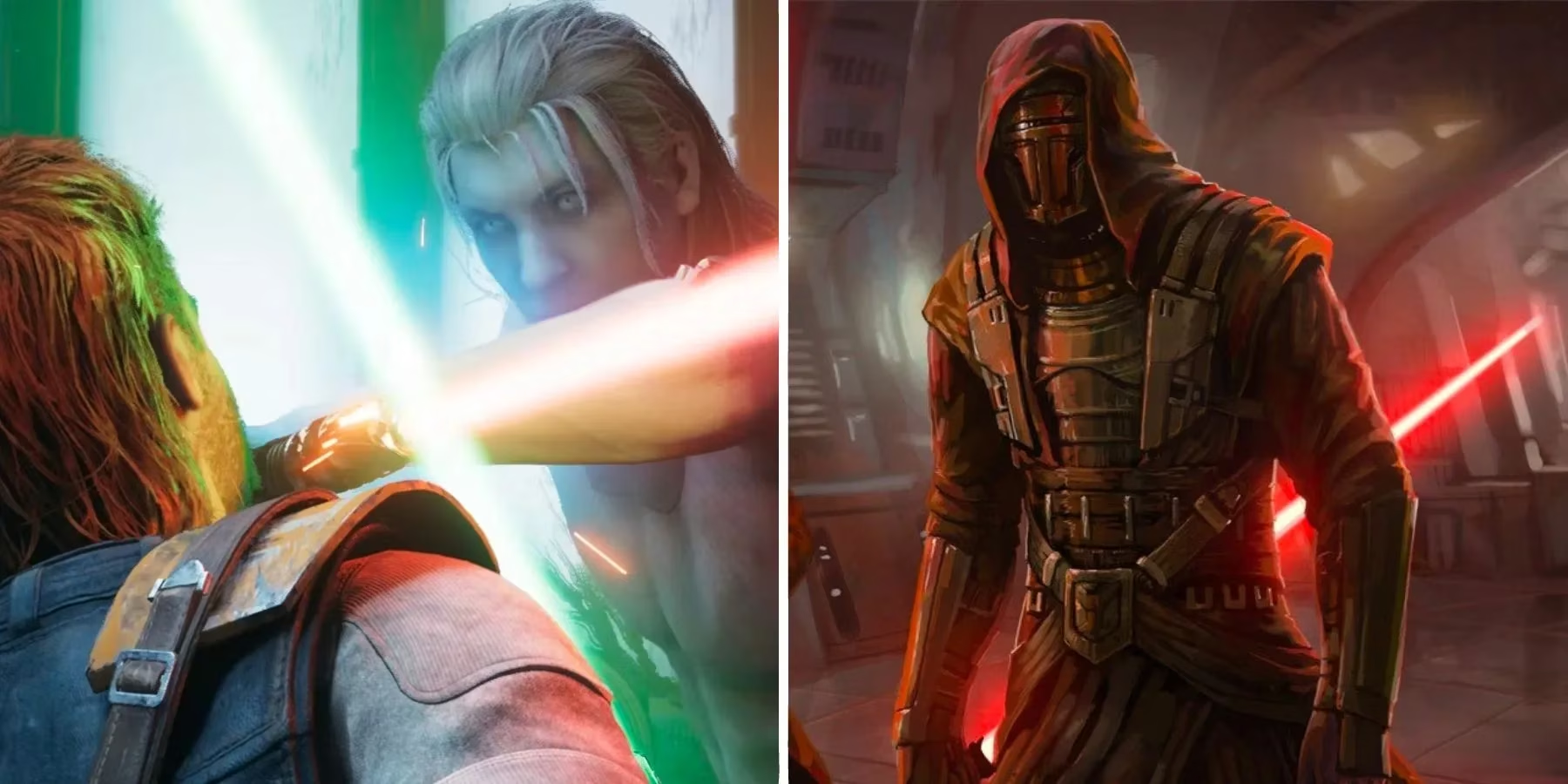
Kyber crystal bleeding entered the Disney canon early on and let me tell you, it’s one of the most metal ideas the franchise has ever cooked up. The Ahsoka novel and Darth Vader comic runs explained that when a dark side user pours every last drop of hate, fear, and agony into a living kyber crystal, the crystal basically suffers a spiritual breakdown and turns red. That iconic crimson blade of the Sith isn’t just a factory paint job; it’s a living thing twisted by rage. On the flip side, a corrupted crystal can be purified through acts of compassion and love, which typically results in a white blade, like the one Ahsoka Tano swings around in Rebels and her own series. It’s lore gold that adds a whole new layer of meaning to every lightsaber clash.
When Jedi: Survivor hit in 2023, Respawn pulled the trigger on bringing this concept into gaming in the most visceral way possible. The antagonist Dagan Gera, a Jedi from the High Republic era, didn’t need a lengthy ritual. Right in front of the player, he takes his yellow-bladed saber, seethes with centuries of pent-up fury, and in a matter of seconds forces the crystal to bleed into a menacing red. To some, it might have felt a tad rushed compared to Vader’s iconic comic-book bleeding, but for a video game moment it absolutely nailed the idea that this dude was so far gone, so consumed by the dark side, that the crystal just caved immediately. It was quick, shocking, and sold Dagan as a major threat without needing ten minutes of exposition. The scene instantly became a conversation starter and proved that this niche piece of lore could work brilliantly in interactive storytelling.
So where does the KOTOR Remake fit in? Right at the heart of it, plain and simple. Revan’s fall to the dark side and later potential redemption is arguably one of the most epic arcs in Star Wars history, Legends or otherwise. The original game let you choose your path, and the Remake could grab that moral pendulum with both hands. Just picture this: as Revan slips deeper into the dark side, there could be a sequence where the player’s own kyber crystal starts screaming, for lack of a better word. Maybe it’s a cutscene, maybe it’s an interactive segment where you have to channel your character’s anger, and the blade slowly shifts from blue or green to a blood-red hue. For players who decide to stick with the Sith path, that moment would be the ultimate point of no return, way more impactful than a simple alignment meter ticking over. And for those who eventually come back to the light, the purification process could mirror Ahsoka’s journey, giving the hero a crisp white blade as a badge of atonement.
Even for players who never touch the dark side options, the Remake could still bake this lore into the main narrative. Since Revan already fell once before the game’s story begins (no spoilers for the three people left who don’t know the twist), a flashback sequence showing the original bleeding could add an incredible layer of tragedy. It’s not just about “I turned evil”; it’s about a sentient crystal enduring that fall alongside its master. The visual of a former Jedi’s blade cracking with red light while dark side lightning crackles around them? That’s the sort of operatic Star Wars imagery that can make a gamer’s jaw drop.
Now, let’s address the bantha in the room. The KOTOR Remake’s development has been messier than a Jawa’s toolbox. Reports of studio shake-ups and production delays have left even the most optimistic fans biting their nails. But as we sit here in 2026, the potential hasn’t dimmed one bit. If anything, the continued success of games like Jedi: Survivor and the broader expansion of Star Wars lore through shows like Ahsoka prove there’s a massive appetite for deep-cut Force mythology. The bleeding mechanic is no longer some obscure tidbit for lore junkies; it’s mainstream. Incorporating it wouldn’t just be fan service, it would be a legitimate storytelling upgrade that aligns with modern canon’s best ideas.
Of course, the Remake could always keep things strictly Legends and ignore everything Disney has done. But that would be leaving money on the table, wouldn’t it? A hybrid approach honoring the original while weaving in newer concepts like crystal bleeding could make the experience feel fresh instead of just a polished rehash. It’s the kind of forward-thinking design that separates a simple remaster from a true remake. The Force has evolved, and Revan’s journey deserves to evolve with it.
For now, we’re all in a holding pattern, hoping that when the game finally emerges, it’s everything we’ve dreamed of. But one thing’s for sure: if the devs really want to knock our socks off, they’ll grab that bleeding crystal mechanic with both hands and run with it. After all, nothing says “dark side” quite like making a living crystal cry. And in a galaxy full of rehashed ideas, that kind of creative risk is exactly what could make the KOTOR Remake a modern masterpiece instead of just a nostalgic trip down Memory Lane.