
How Dagan Gera Redefines Darkness in Star Wars Jedi: Survivor
Star Wars Jedi: Survivor's Dagan Gera, a fallen Jedi whose obsession mirrors Cal's darkness, is a meticulously crafted narrative foil.
The journey of Cal Kestis into the darker corners of the galaxy has captivated gamers worldwide, and at the heart of 2023’s critically acclaimed Star Wars Jedi: Survivor lies a villain who is less a monster and more a broken mirror. As the dust settles and the game continues to receive accolades well into 2026, a fascinating deep-dive into the creative process reveals just how meticulously the antagonist, Dagan Gera, was crafted to reflect Cal’s own potential for ruin. It’s a story that continues to resonate, proving that the best villains are the ones who could have been heroes.
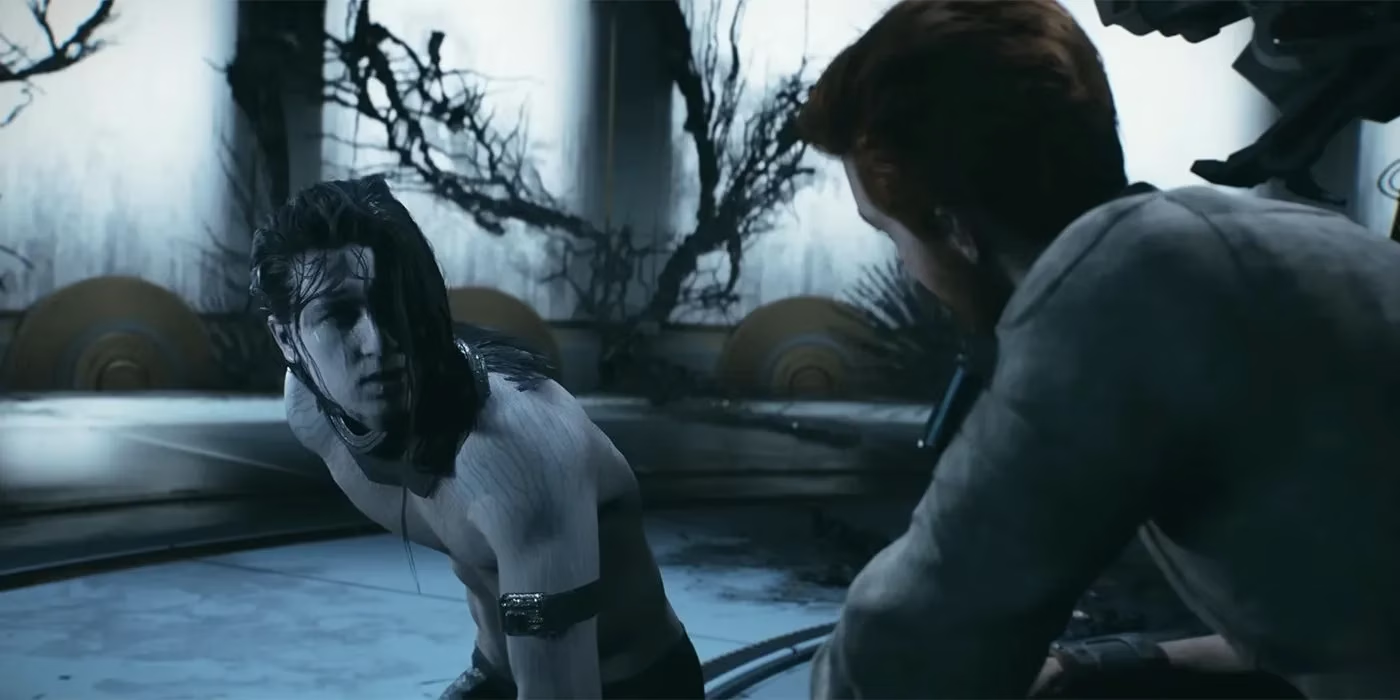
Lead Writer Danny Homan and Senior Writer Pete Stewart, in a revealing discussion, peeled back the layers of this ancient Jedi whose ambitions curdled into obsession. Dagan Gera, a legendary figure from the High Republic era, wasn’t just designed to swing a red lightsaber; he was intended to be a profound narrative foil. The team was thrilled to explore an era of canonical Star Wars that remained largely untouched. “We have this good opportunity to help worldbuild what the Jedi Order was long ago, and to have Cal reflect on what the Jedi used to be,” Homan explained. This reflection is visceral, forcing Cal to walk through a golden age he never knew, only to realize its champions were just as fallible as he is.
The inception of Dagan is rooted in a simple, tragic question: what if Tanalorr became to Cal what it became to Dagan? Stewart noted that Dagan represents a dark path, a vision of Cal should he fail to balance duty and desire. The narrative sets up a brutal ideological triangle. On one extreme is Dagan, consumed by personal desire for a hidden paradise. On the other is Bode Akuna, twisted by a father’s duty. Cal is trapped in the middle, and, well, it’s genuinely heartbreaking to watch him wobble on that moral knife-edge. The game doesn’t just show you the fall; it makes you feel the emotional vertigo through the Force echoes that Cal experiences.
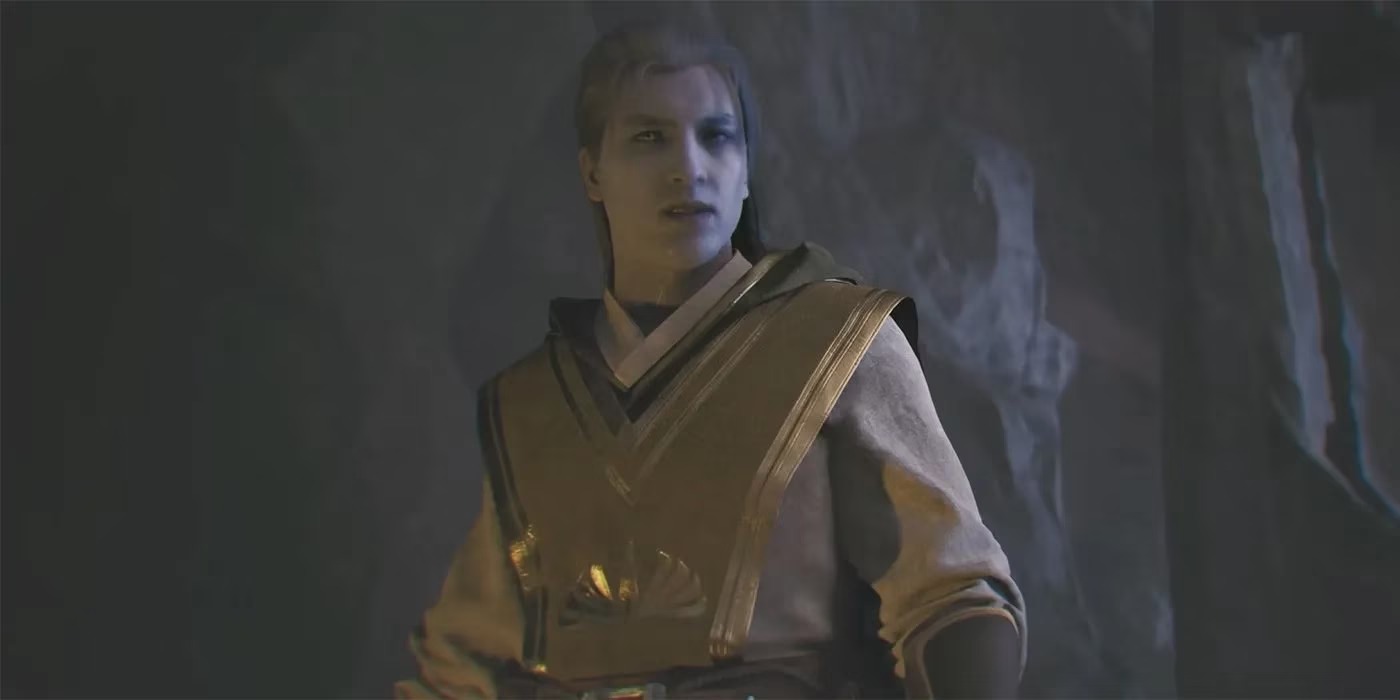
Perhaps no sequence defines this villain’s impact more than the moment he bleeds his kyber crystal in real-time, right before the player’s eyes. This wasn’t just a visual spectacle; it was a narrative choice that bypassed a static backstory. By having Dagan fully fall after hearing Cal’s pleas about the Empire’s tyranny, the writers hardened his obsession into something unassailable. He hears all of Cal’s logic and still chooses destruction. “That just speaks to his obsession, speaks to how far he has fallen,” Stewart emphasized, and frankly, it’s a gut-punch that sticks with you. The cinematic direction drops the music out entirely for these confrontations, leaving only the raw audio of a man broken by centuries of betrayal. It requires the player to focus on every single delicious word, a dry, intense silence where the lack of sound screams louder than a starship engine.
The physicality of this obsession was brought to life partly through meticulous collaboration with actors like Cody Thornbury, who portrayed Dagan. The upside-down final confrontation, where Dagan casually walks on the ceiling while taunting Cal, is a masterclass in psychological horror. But the most intense moments were grounded in real stunt work and performance capture. Homan recalled the electricity in the room after filming the final confrontation dialogue. It was the channeling of a Jedi who looks at a lost, confused young man and declares, “You’re a failure, and you’re no Jedi to me.” That raw, dismissive venom was more damaging to Cal than a severed limb.
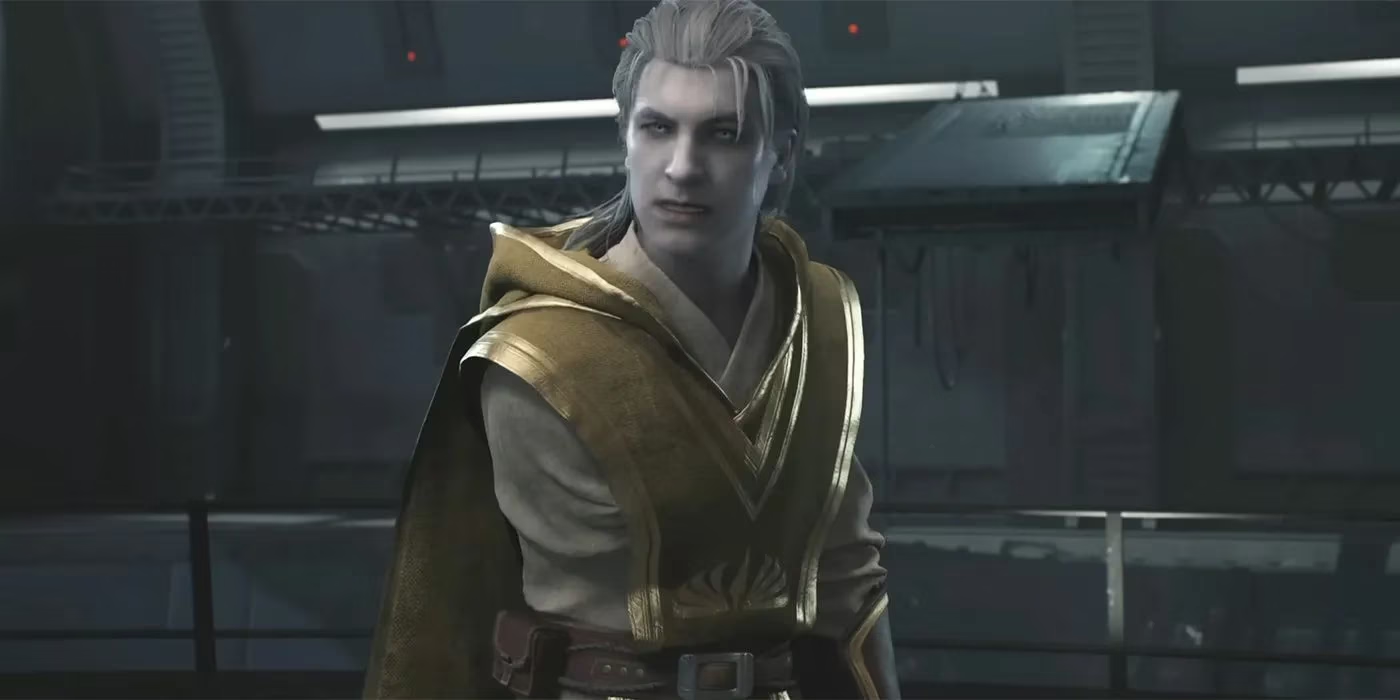
Speaking of severed limbs, the writers appreciated the dark poetry of Dagan’s history without resorting to cheap mimicry. While the Star Wars universe has a famous tradition of dismemberment, the team never seriously considered having Dagan take Cal’s arm. The wound Dagan inflicts is emotional, not physical. He plants a poison seed of doubt: that Cal should be using Tanalorr not as a refuge, but as a fortress. This idea festers and becomes the fatal friction point between Cal and Bode. It’s a brilliant narrative sleight of hand; the player spends the game thinking the ancient Sith-wannabe is the final boss, when in reality, his toxic ideology is the true weapon that passes through the story.
The dynamic between Dagan and the Jedi Khri further deepens the tragedy. Their relationship wasn’t necessarily romantic, but a meeting of ambitious minds—a mirror to Cal and Merrin. When Khri is forced to sever Dagan’s arm to stop his madness, the betrayal echoes through 200 years. Stewart painted a vividly human picture of Dagan’s final mental state: “He’s just been broken up with over a video call,” he chuckled, describing the hologram confrontation. One minute he’s a visionary, the next he’s a jilted, feral creature with nothing left but spite. It adds a layer of pathetic humanity that pure evil lacks.
The sheer volume of content massaging this narrative was staggering. During development, the script document swelled to over half a million words, creaking under the weight of optional dialogue, databank entries, and post-credits interactions. Homan highlighted the beauty of video games as a medium for this specific wealth of storytelling. Details that were cut from linear cinematics found new life in Force echoes and environmental scans, rewarding players who sought to understand the tragedy of Koboh. The process was intensely iterative, with VO lines for Dagan’s three distinct boss phases being written, tested, and tweaked endlessly. The combat designers and writers worked to ensure that the first fight felt disorienting, the second redefined his purpose, and the third felt final and broken.
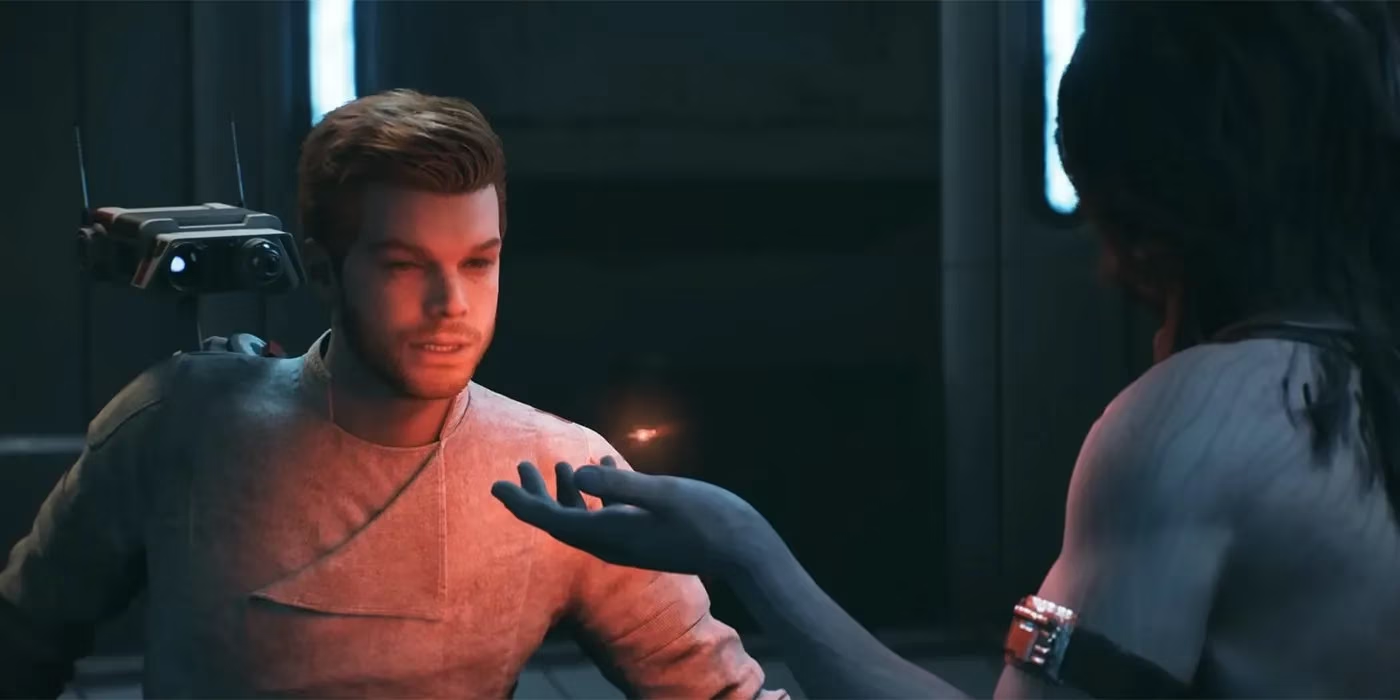
A testament to the game’s worldbuilding is that Dagan Gera has transcended the title itself, now appearing in wider High Republic lore primers and art books. It validates the collaborative effort with Lucasfilm to sculpt a canonical dark age on Koboh. The planet is a graveyard of history, terraformed by a cataclysm. People build taverns on top of Jedi meditation chambers, completely oblivious to the mythical bloodbath beneath their feet. It’s an unsettling concept: living on top of a dead history, walking over a dark age.
Ultimately, Star Wars Jedi: Survivor denies Dagan the redemption arc that some players might have secretly wished for. The narrative demands he be consumed by his desire, just as Bode is consumed by his duty. To let Dagan live, or to let him step foot on Tanalorr, would have softened the brutal lesson Cal needs to learn. Homan mused that there is something deeply satisfying about the arch-villain being denied his treasure. And honestly? Watching Dagan perish right before he could grasp paradise feels right, a rare moment of justice in a galaxy that seldom offers any. The ghost of Dagan’s failure ensures that when Cal finally stands on Tanalorr, the player understands exactly what it cost—and what it could cost still.",
"title": "How Dagan Gera Redefines Darkness in Star Wars Jedi: Survivor