
Confronting My Fears: Why Hellblade 2's Focused Horror Reminds Me of The Last of Us Part 2
xxx
Let me be honest with you: I'm a massive scaredy-cat. I never finished the first Hellblade game, Senua's Sacrifice. Even its opening moments, which I bravely attempted on a subscription service a while back, were enough to send me running. The combination of its intense atmosphere, the profound exploration of psychosis, and that unsettling Norse mythological backdrop was simply too much for this particular player. But here we are in 2026, and I've made a pact with myself. I will play through Senua's Saga: Hellblade 2. Why? Because as someone who now writes about interactive experiences for a living, confronting this digital terror feels like a necessary offering to the content deities. More than that, everything I've absorbed about this sequel screams that it's crafted for players like me—those who crave dense, narrative-driven journeys over sprawling, empty worlds. In fact, delving into previews and discussions, I can't help but draw powerful parallels to one of my all-time favorite titles: The Last of Us Part II.
A Shared Brutality: The Horror of the Situation
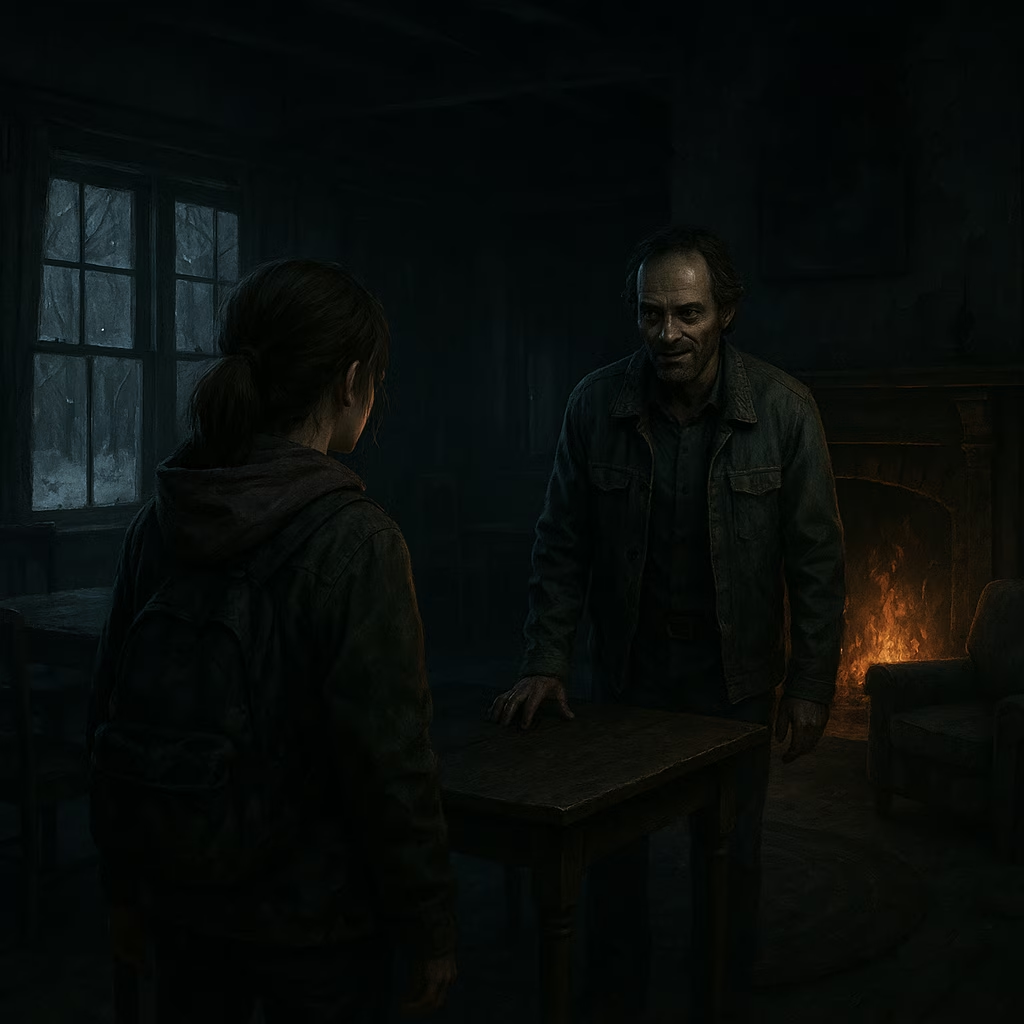
Both games master the art of making you feel the weight of their worlds through unflinching brutality. Where The Last of Us Part II used visceral, convincing gore to underline the devastating cycle of violence and retribution, Hellblade 2 plunges you into a different kind of visceral nightmare. You're not mowing down hordes; you're engaged in tense, back-to-back duels. Each opponent is a lethal puzzle, quick to capitalize on any misstep. The environments themselves are characters in this horror: smoky, blood-drenched landscapes where screams echo, mutilated forms hang as grim totems, and the remnants of the fallen are strewn about. This isn't gratuitous violence; it's atmospheric storytelling. Senua's relentless, uphill struggle against these horrors forces you to viscerally comprehend her torment, much like Ellie's journey made you grapple with the physical and emotional cost of her quest.
Technical Marvels Serving the Story
While raw graphical power isn't my primary motivator, it's impossible to ignore how both titles are technical showpieces that serve their narratives. Naughty Dog's title was a benchmark, boasting incredible animation work, subtle environmental details, and intelligent enemy behavior that made its world chillingly believable. Hellblade 2, in a similar vein, is frequently hailed as a stunning showcase for Unreal Engine 5's capabilities. The discourse in 2026 still buzzes about its almost hyperrealistic facial capture and inconceivably detailed motion capture, which promise to deepen the connection to Senua's emotional state. This technical prowess isn't just for bragging rights; it's in service of immersion, making every glance of fear or flicker of determination on Senua's face a crucial part of the narrative language.
The Beauty of a Linear Path in an Open-World Era
This is perhaps the most significant resonance for me. In a gaming landscape still dominated by massive, often bloated open worlds, both The Last of Us Part II and Hellblade 2 are proudly, brilliantly linear. I've been vocal about my fatigue with expansive maps padded with forgettable tasks and poorly-written fetch quests. These games offer a compelling alternative: a curated, narrative-first experience.
-
Focused Design: Like its predecessor, Hellblade 2 is built on carefully designed, linear pathways. It propels you forward through its tale, removing the temptation (or obligation) to wander aimlessly. This isn't a limitation; it's a deliberate choice to maintain pacing and emotional intensity.
-
Respect for Your Time: This approach results in a shorter, denser experience—a welcome departure from the 100-hour epics. I deeply appreciate games with a clear vision that respect my time, offering a potent, expert-crafted journey without filler.
-
Nowhere to Hide: This linearity is key to the horror. In an open world, you can often retreat, farm resources, or distract yourself. In Hellblade 2, the path is set. There's literally nowhere to run from the psychological and visceral scares. You must face them head-on, which is precisely why I'm now committed to the experience. It promises the same kind of focused, relentless narrative pressure that made The Last of Us Part II so unforgettable.
| Aspect | The Last of Us Part II | Hellblade 2 |
|---|---|---|
| Core Narrative Drive | Revenge & its consequences | Personal mythic struggle & psychosis |
| Brutality Manifested | Visceral, grounded violence & gore | Ritualistic, atmospheric horror & intense duels |
| Gameplay Structure | Linear, narrative-focused levels | Linear, narrative-focused path |
| Technical Hallmark | Cutting-edge animation & environmental detail | Hyperreal facial/mocap via Unreal Engine 5 |
| Player Freedom | Curated, guided experience | Curated, guided experience |
Ultimately, my journey into Hellblade 2 is driven by more than professional duty. It's a recognition that this game, like The Last of Us Part II before it, represents a type of experience I cherish: one that is brave, focused, and unafraid to be emotionally and sensorily demanding. It's a reminder that sometimes, the most powerful journeys are the ones you can't escape from. Wish me luck 😅.