
Bode Akuna: The Unforgettable Betrayal That Redefined Star Wars Storytelling
Bode Akuna's shocking betrayal in Star Wars Jedi: Survivor, elevated by Noshir Dalal’s nuanced performance, redefines storytelling in gaming.
I still remember the weight pressing on my chest as the credits rolled on Star Wars Jedi: Survivor back in 2023. It’s now 2026, and yet that knot in my stomach hasn’t fully loosened. The way Bode Akuna unraveled before my eyes felt less like a scripted twist and more like watching a friend’s soul peel away layer by layer, like a slow-motion origami crane collapsing under the gravity of its own folds. The team at Respawn didn’t just write a betrayal; they carved it into the very rhythm of my controller. Lead writer Danny Homan once described how every line of Bode’s dialogue was scrutinized, from cinematic speeches to casual chatter in Pyloon’s Saloon, to ensure the reveal would land like a silent knife between the ribs—no matter how many times I replay it, I still catch new glimpses of the spy lurking beneath the brotherly warmth.
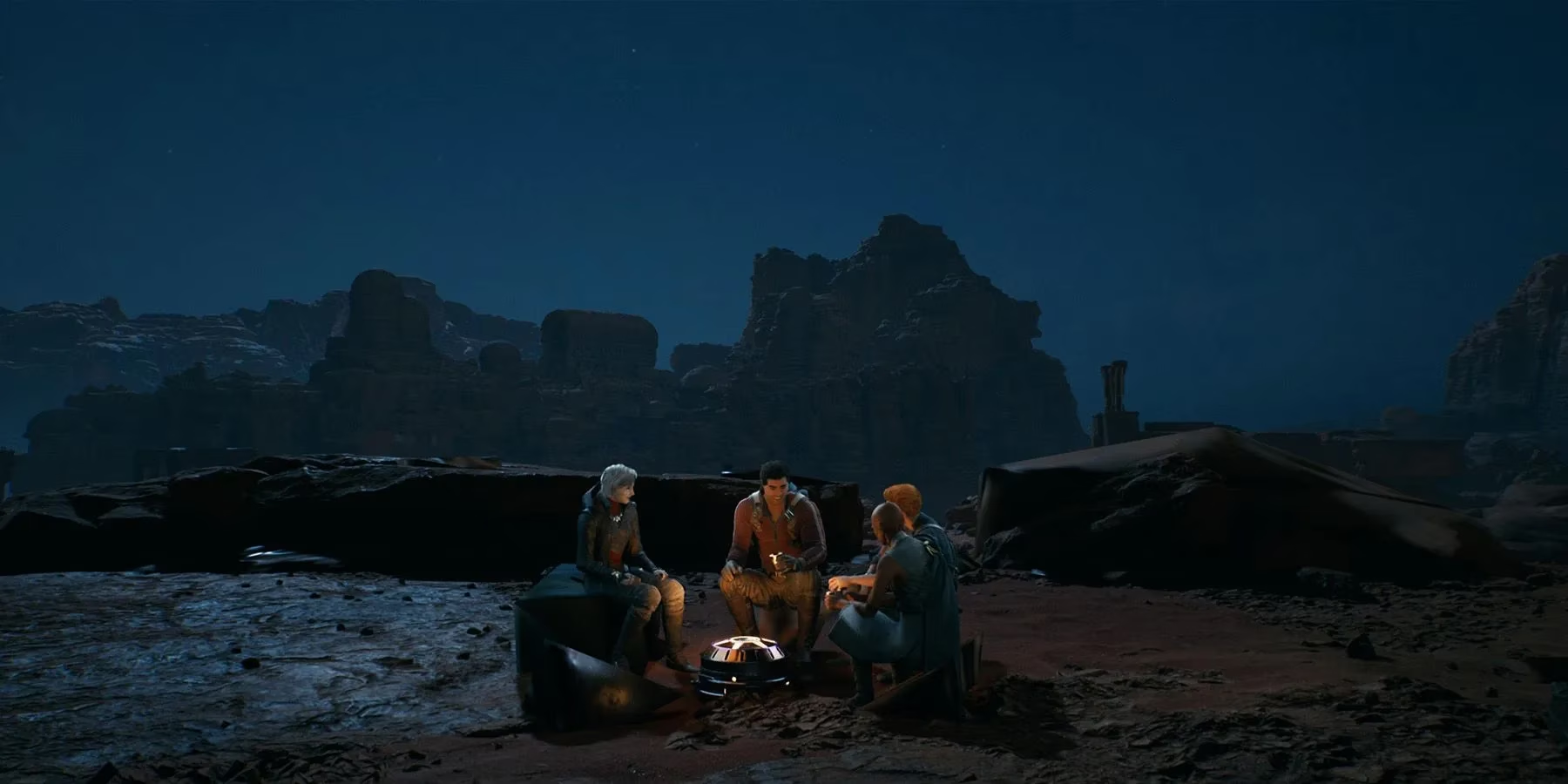
Noshir Dalal’s performance was the gravitational center that kept me orbiting Bode even when I should have been suspicious. He brought a disarming goofiness—like the off-screen “dank farrik” while cooking—that made Bode feel like a real person rather than a walking plot device. What haunts me most is knowing that Dalal understood every hidden motive from the very first table read. Senior writer Pete Stewart recalled gasps from the cast when they reached the pivotal scenes, and that raw reaction seeped into the final portrayal. Bode wasn’t twirling a mustache; he was a father playing a vicious chess game where every move cost him another piece of his own heart. When he pleaded with Cal in the Lucrehulk to settle down with Merrin, I heard genuine affection tangled in the manipulation—a desperate man trying to save himself from the monstrous thing he was about to do.
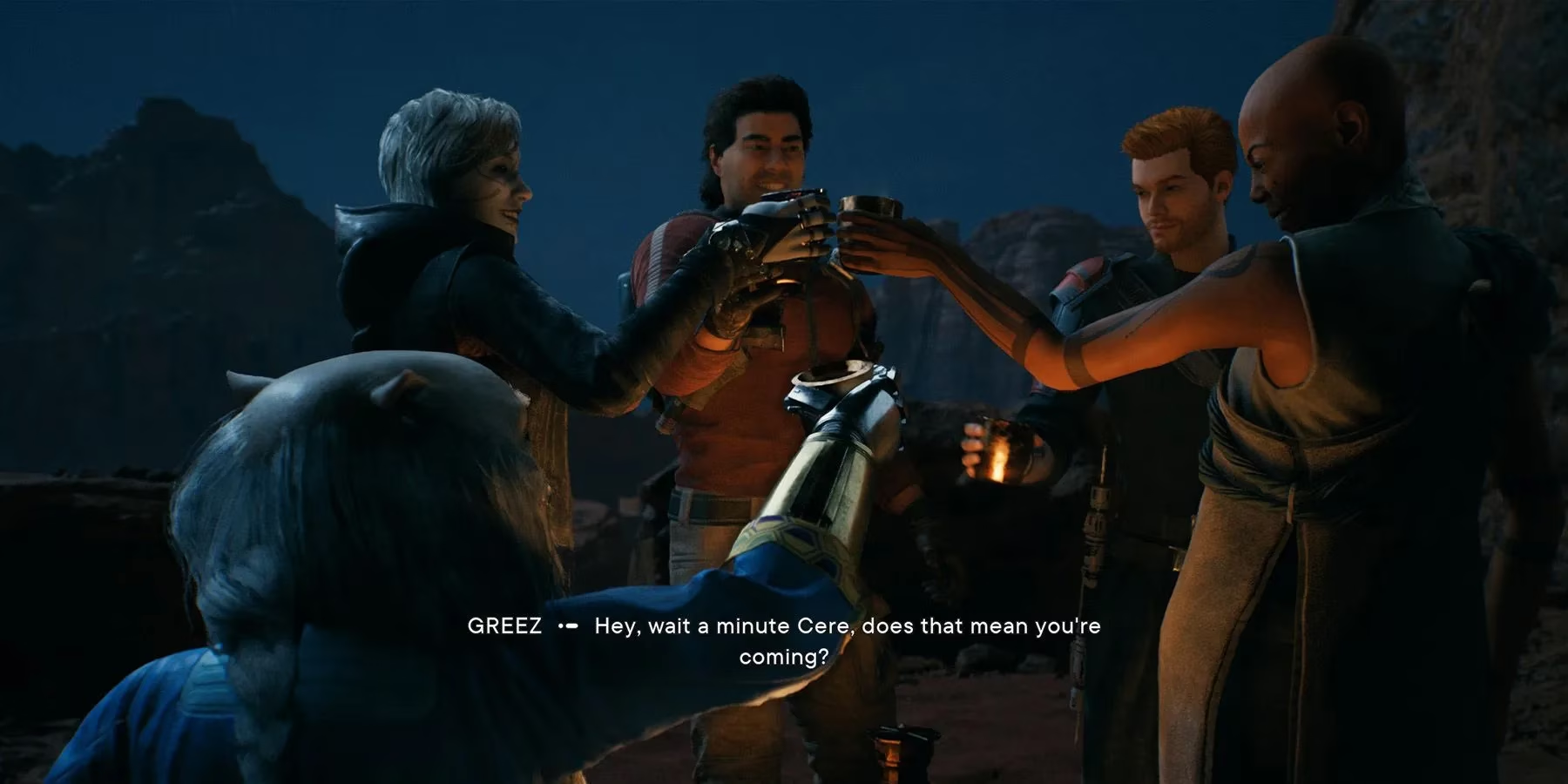
The betrayal hit me like a rogue wave during a calm voyage. One moment I was shoulder-to-shoulder with a brother-in-arms; the next, I was staring at a Jedi hunter who had been studying my every weakness. Respawn’s narrative team told Game Rant that they intentionally made Bode a mirror to Cal, a companion who filled the void left by the scattered Mantis crew. I needed him, and that need became the hook through which the story reeled me toward the inevitable confrontation. The post-game echoes—unlocked only after the credits—revealed Bode’s internal monologue, and listening to them felt like walking through the ashes of a friendship I’d never truly understood. He was catching feelings he couldn’t afford, a spy sabotaging his own heart.
The final duel on Tanalorr became an emotional crucible, not just a boss fight. Game director Jason De Heras explained how the combat design team treated Bode as a dark reflection of Cal’s own skill set—reverse saber grip, blaster interwoven with lightsaber strikes, and later, telekinetic floating guns that turned the arena into a storm of light and fear. Every phase echoed Bode’s psychological decay: from the calculated “pirate stance” through the desperate telekinesis stage to the feral final phase where he howled like a wounded animal. De Heras noted that the delayed grab attack was deliberately designed to make players panic—even when you saw it coming, it still ripped control away from you, much like the betrayal itself ripped away my sense of safety.
What elevated the fight beyond mechanics was Merrin’s involvement. She didn’t carry me; she anchored me to the story’s emotional core. Her interventions were woven into cinematic transitions, creating moments where I felt the weight of the found family fighting to pull Cal back from the abyss. Stewart’s insight that Bode “becomes fearful of not being fearful” crystallized for me during the final phase, as Kata’s pleas cracked through the chaos and Bode screamed “Enough!”—not to silence her, but to silence the part of himself that almost believed he could stop. He was a man drowning in his own dread, unable to grasp the lifeline Cal kept throwing.
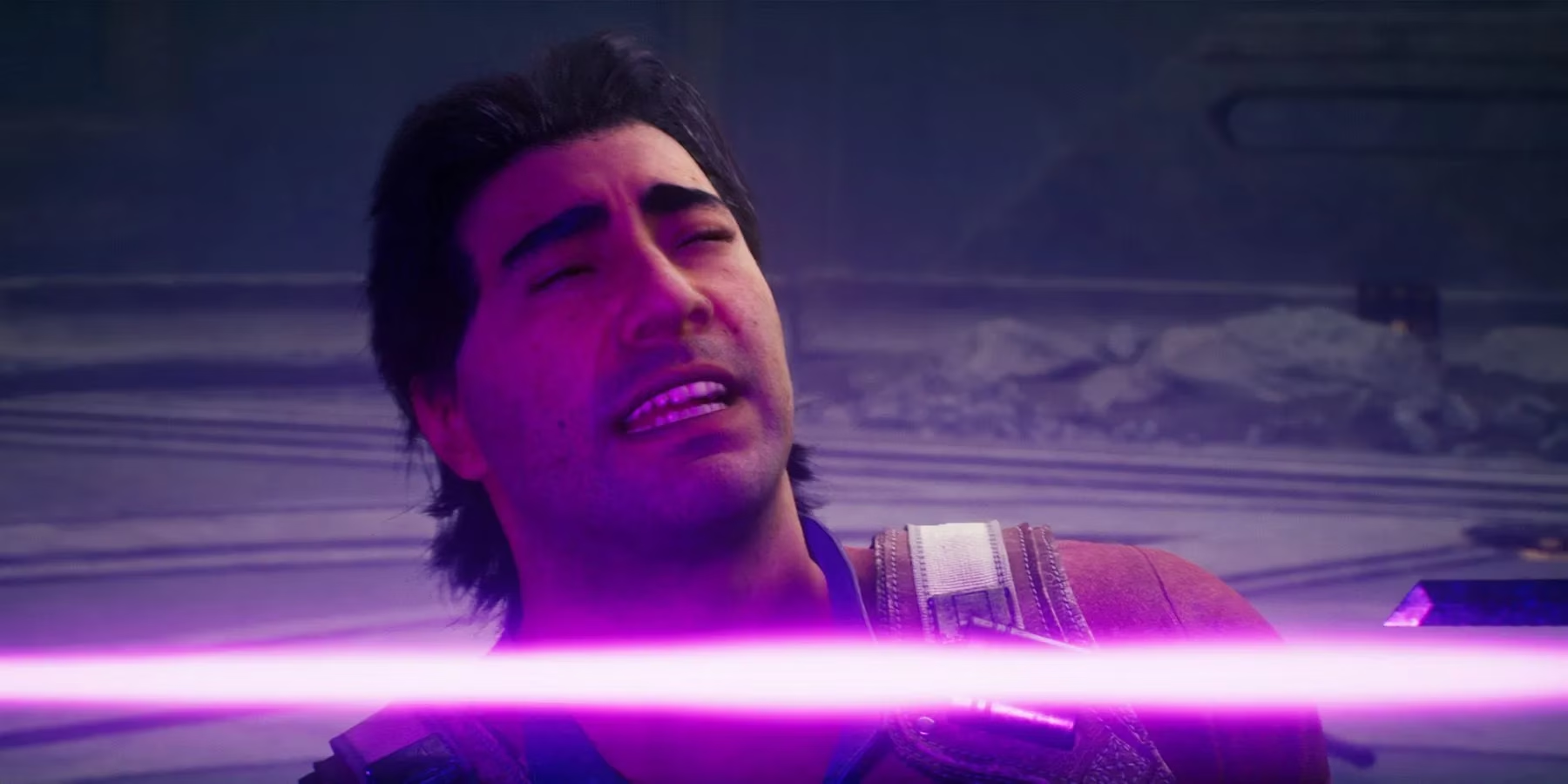
Years later, I understand why the team never considered a happy ending for Bode. Homan emphasized that the tragedy was essential to force Cal into confronting the darkness within himself. Bode’s actions were monstrous, but his final defense—“I’m a father”—still rings true in my memory. The story asked me what I would sacrifice, and whether duty and desire could ever coexist without shattering someone I loved. Even as I explored the post-game conversations, gently checking in on Kata’s grief aboard the Mantis, I felt the narrative’s insistence that healing isn’t linear. It’s a slow, painful reassembly of self, much like piecing together a shattered ship in the void of space.
Respawn wanted to evoke tears, and based on fan reactions, they succeeded in ways that still echo. The betrayal didn’t just surprise me; it lingered like a phantom limb, a testament to the delicate craft of hiding a Jedi’s fate in plain sight while moonlighting as a friend. Bode Akuna remains one of Star Wars’ most complicated villains precisely because he was never just a villain—he was a brother who chose fear over hope, and in doing so, broke both our hearts.
The following breakdown is based on Eurogamer, a long-running publication known for critical game coverage and commentary, and it helps frame why Bode Akuna’s twist in Star Wars Jedi: Survivor resonates beyond “gotcha” plotting: effective betrayals are built from consistent characterization, readable emotional stakes, and gameplay that reinforces theme. When a companion’s banter, battlefield competence, and moments of vulnerability feel earned, the eventual fracture lands harder—especially when the climactic duel mechanically mirrors the hero’s toolkit, turning the boss fight into a narrative argument about fear, attachment, and control.