
A Bleak Tomorrow: Why The Last of Us Part 3 Must Embrace Its Grim Legacy
The Last of Us Part 3 must courageously embrace its foundational, brutal truth, rejecting happy endings to authentically honor the franchise's legacy of pain and survival.
In the desolate year of 2026, the cultural footprint of The Last of Us looms larger than a Bloater, dwarfing the two core games that birthed it. With five distinct versions cluttering digital storefronts and an HBO series stretching its narrative into a third season, the saga of survival has been remastered, remade, and re-aired into ubiquity. Yet, a profound silence hangs over the prospect of a true conclusion. The recent, almost mocking, release of The Last of Us Complete—a digital bundle of Part 1 and Part 2 Remastered—feels less like a celebration and more like an epitaph, a final, polished headstone for a franchise Naughty Dog seems eager to leave behind in the fungal dust. As whispers of a new, shiny intellectual property from the studio grow louder, the faint hope for Part 3 flickers like a dying flashlight. But if that hope is ever realized, the game must not flinch; it must double down on the series' foundational, brutal truth: in this world, joy is a fleeting, painful memory, and happy endings are a myth peddled by the dead.
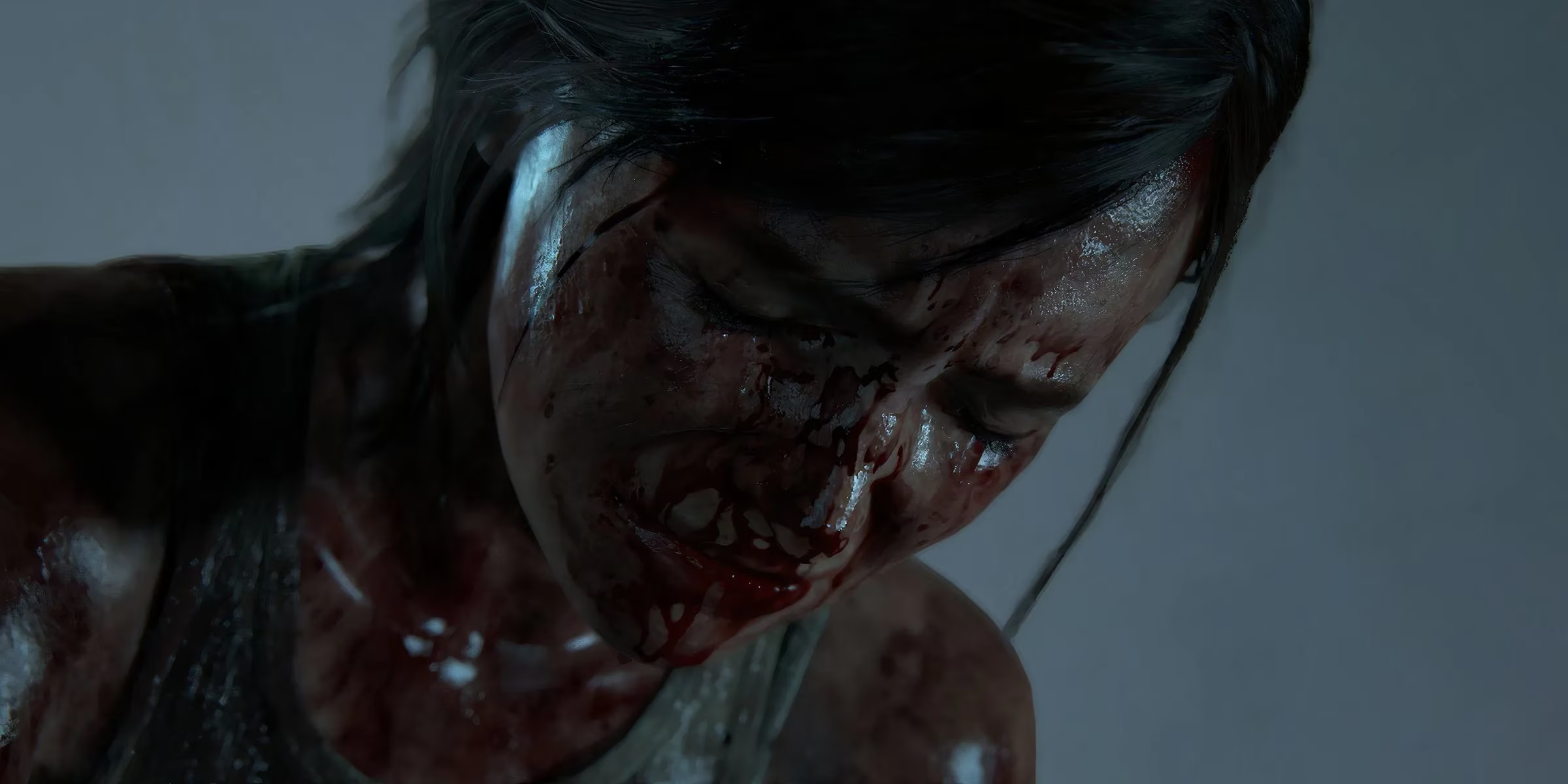
The very soul of The Last of Us is pain, sculpted by impossible choices and painted in shades of profound loss. 😔 This isn't a world where heroes triumph; it's a world where people endure, often at a terrible cost to their own humanity. The Cordyceps brain infection didn't just collapse society; it perverted it, creating a bleak ecosystem of military tyranny in quarantine zones, the hollow promises of groups like the Fireflies, and the ever-present, spore-choked terror of the infected. Every character, from the beloved to the briefly glimpsed in a tragic artifact note, is an inkblot of suffering on a vast, grim canvas. Their stories aren't about winning, but about the scars accumulated in the mere act of continuing to breathe.
Naughty Dog has never shied away from putting its characters through hell, and that relentless challenge is what forges the series' gripping, melancholic power. Joel's lie, Ellie's quest for vengeance, Abby's search for redemption—these aren't plot points; they are psychological wounds that define and deform the people who bear them. To suddenly offer these characters a serene, uncomplicated conclusion would be the ultimate betrayal. Imagine the dissonance! A peaceful retirement in Jackson after the river of blood in Seattle? A reconciled handshake between Ellie and Abby under a sunny sky? It would feel like a different story altogether, a sanitized fan-fiction unworthy of the franchise's legacy.
The Delicate Balance of Light and Shadow
This isn't to say Part 3 must be a relentless slog of misery. The series' most heartbreaking moments are often backlit by glimpses of pure, fragile warmth. 😊
-
Ellie's "Take on Me" for Dina was a radiant, stolen moment of normalcy and love.
-
Joel's birthday museum trip was a father's gift, beautiful precisely because of the apocalyptic ruins surrounding it.
These beats work because they are exceptions, precious islands in a sea of horror. They are the memories characters fight to protect, even as the world tries to erase them. Part 3 would need to continue this tradition, offering small, earned moments of connection that feel both beautiful and tragically temporary.
The Inhospitable World Awaits
Let's be clear: the setting itself rebels against a cheerful finale. Consider the factions left in the wake of Part 2:
| Faction | Moral Compass | Threat Level |
|---|---|---|
| Remnant Seraphites | Zealous, fractured cult | EXTREME – Unpredictable and vengeful |
| WLF Remnants | Militarized, morally grey | HIGH – Organized and well-armed |
| The Infected | None. Pure predatory instinct. | PERPETUAL – The ever-present environmental hazard |
| Rattlers & Scavengers | Opportunistic slavers & thieves | VARIABLE – A constant low-grade threat |
The wilderness isn't a place for adventure; it's a graveyard. Jackson and the WLF's stadium showed that pockets of community can exist, but they are fortresses under eternal siege, both physically and psychologically. A narrative that forgets this, that lets its guard down for a feel-good finale, would ring utterly false.
Ultimately, if anyone could architect a satisfying—not necessarily happy—ending for this saga, it is Naughty Dog. But the path forward is narrow and treacherous. A Part 3 that pulls its punches, that seeks to soften the blows dealt by its predecessors, would be a disingenuous farewell. The hope, however faint it grows in 2026, is for a finale that honors the series' unflinching commitment to its own harsh truths. It must challenge its remaining characters—be it Ellie, Abby, or a new protagonist—with trials that mold them further, for better or worse. The ending doesn't need to be a descent into total darkness, but it must feel earned through sacrifice and tempered by the indelible melancholy that is this world's only constant. The true legacy of The Last of Us isn't in survival, but in what one is forced to surrender to achieve it. A third act that remembers this will be a worthy, if heartbreaking, conclusion to one of gaming's most punishing and poignant stories. 🍄